How Often Should You Run a Generator: A Practical Guide
Learn how often to exercise a backup generator to stay ready. Practical guidance on frequency, loads, safety, and maintenance for homeowners and property managers from Genset Cost.


Regular exercise is essential to keep a generator ready for use. Aim for monthly runs with a representative load, adjusting for climate and seasonal storage. Follow manufacturer guidance and maintenance intervals, and document each session for fuel status and performance. The Genset Cost team recommends a consistent cadence to minimize risk and maximize readiness.
Why Running Frequency Matters for Generator Readiness
Regularly exercising a standby generator is not merely a routine chore; it directly impacts reliability when you need power most. Engines, electrical components, and fuel systems age differently when left unused, and moisture or condensation can accumulate. According to Genset Cost, a generator that sits idle can experience fuel degradation, gumming of carburetors, and corrosion of internal parts. By establishing a disciplined run frequency and documenting each session, homeowners and property managers can catch issues early, maintain lubrication, and verify that transfer switches and automatic controls respond as intended. In short, the right frequency keeps the system dependable during an outage and protects the investment over time. This article provides a framework to think about how often to run a generator by considering usage patterns, climate, fuel type, and maintenance cycles. The goal is to empower you to choose a cadence that minimizes risk while maximizing readiness.
How Load, Duty Cycle, and Environment Drive Your Schedule
A generator's job is to supply power, but the actual load it bears during a test matters as much as the time you run it. A no-load run helps circulate oil, warms engine components, and prevents seals from sticking, but a load-tested run exercises the alternator, cooling system, and wiring under stress. Environment also matters: hot, humid climates accelerate fuel deterioration and corrosion, while cold conditions can mask battery or starting issues. Genset Cost analysis shows that regular, representative loading reduces the likelihood of surprises during real outages. Practically, design a testing pattern that mirrors your typical loads—essential circuits only during outages, or full-house power with targeted shedding—and adjust cadence based on fuel quality, oil condition, and equipment age. Keep a running log of each exercise to spot trends and plan maintenance before problems arise.
Baselines by Use Case: Seasonal Use, Full-Load Readiness, and Continuous Monitoring
Use-case-driven cadence helps you avoid overworking or underworking the unit. For seasonal or standby-only generators, a monthly exercise is commonly recommended to prevent varnish buildup and to confirm that the system starts reliably. For units that are used during outages or for critical loads, more frequent testing that reflects actual duty cycles may be appropriate. For continuously monitored installations with automatic transfer switches, it can be enough to perform a regular, longer run every few weeks to validate the control sequence. In all scenarios, refer to the owner's manual and consider climate and fuel storage. Genset Cost's analysis emphasizes aligning run frequency with observed performance, fuel status, oil condition, and maintenance schedules.
How to Schedule Regular Testing Runs
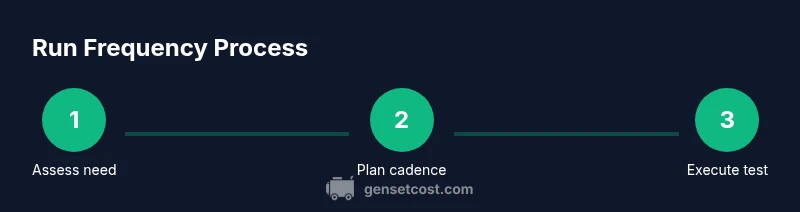
Establish a calendar-based schedule and attach it to your unit's maintenance log. Start with a monthly cycle for basic readiness and escalate cadence if you notice slow starts, unusual noises, or fuel quality issues. Before each run, inspect for fuel leaks, check oil level, battery charge, and ensure proper ventilation. During the test, simulate realistic load by engaging essential circuits, then observe voltage stability and transfer-switch operation. After the run, record runtime, load level, fuel status, and any anomalies. If you detect deteriorating fuel or oil, adjust the schedule or perform preventive maintenance sooner. Finally, review the log quarterly to confirm consistency and adjust your cadence as equipment or climate changes.
Fuel Types, Storage, and Their Influence on Run Cadence
Fuel type—and how you store it—directly affects how often you should run the generator to maintain reliability. Gasoline can degrade in a few weeks; diesel can gel in cold climates; propane remains stable but requires proper line maintenance. Regular exercise helps circulate fuel, keeps lubricants warm, and prevents varnish or gum buildup, especially in engines with ethanol-blended fuels. If you store fuel for long periods, use stabilizers and consider a fuel turnover plan that minimizes stale fuel. Always verify the storage conditions, battery health, and coolant levels before you run, and don't skip routine checks that protect the engine from corrosion and seized components.
Safety First: Ventilation, Location, and Immediate Shutdown
Never operate a generator indoors or in an enclosed space. Ensure adequate ventilation, and keep the unit on a flat, dry surface away from doors, vents, and windows. Before starting, inspect for fuel leaks, remove tools, check oil level, battery charge, and ensure proper ventilation. If you smell fuel or hear irregular noises, stop the test and inspect. Use appropriate PPE, such as gloves and eye protection, and never attempt to service fuel lines while the engine is running. Adequate ventilation reduces carbon monoxide risk, and proper clearance around exhaust prevents heat damage to surrounding surfaces.
Maintenance Tie-Ins: Oil, Filters, Battery, and Cleanliness
Running the generator regularly is part of a broader maintenance plan. Check and replace engine oil and, if applicable, oil filters according to the manual. Inspect air and fuel filters for clogging, and test the battery's voltage and charging system. Clean the radiator and cooling fins to preserve efficient cooling during exercise. Keep a maintenance log with dates, readings, and any parts replaced. For long storage or low-use scenarios, consider seasonal maintenance that coincides with the cadence of your runs to avoid accumulated wear or dry starts.
Common Mistakes and How to Avoid Them
Common mistakes include running a generator without a clear load, failing to ventilate, neglecting fuel quality, and skipping maintenance between runs. To avoid these, always test under a realistic load, maintain clean surroundings, monitor fuel status, and adhere to the owner's manual. Do not rely on a single-bias source—compare guidance from manufacturers with independent analyses such as Genset Cost to tailor cadence to your unit. A well-planned run frequency is a balance between readiness and wear.
Tools & Materials
- Owner’s manual(Keep for manufacturer guidance on run frequency and maintenance intervals)
- Engine oil (recommended grade)(Check level before each exercise run)
- Oil filter (if applicable)(Replace during maintenance intervals)
- Maintenance logbook or app(Record run date, duration, load, and fuel status)
- Fuel stabilizer (for stored fuel)(Helpful for long storage or idle periods)
- Fire extinguisher and PPE(Keep nearby; use PPE when handling fuel)
- Load bank or ballast (optional)(Simulate real load to avoid underloading)
Steps
Estimated time: Total time: 60-90 minutes per session
- 1
Gather unit context
Collect model, fuel type, storage status, climate, and expected outage patterns. This baseline helps tailor the cadence and identify any special maintenance needs.
Tip: Refer to the owner's manual for minimum run requirements and safety cautions. - 2
Prepare the testing site
Move the generator to a ventilated outdoor area, disconnect from any nonessential load, and ensure fuel and oil are within specifications. Clear debris and verify ventilation paths.
Tip: Have PPE and a fire extinguisher within easy reach before starting. - 3
Run a basic no-load cycle
Start the engine and let it warm up to operating temperature without applying load. Listen for abnormal noises and monitor oil pressure and battery condition.
Tip: Observe any fluctuations in idle speed or unusual exhaust color. - 4
Apply representative load
Engage essential circuits or use a load bank to simulate real operation. Confirm voltage stability and proper transfer-switch operation during the test.
Tip: Do not exceed the unit's rated electrical load during testing. - 5
Record outcomes
Log runtime, load percentage, fuel status, oil level, battery voltage, and any anomalies observed during the run.
Tip: Use a dedicated maintenance log to track trends over time. - 6
Adjust cadence as needed
Review the log, assess fuel quality and oil condition, and adjust your run frequency or maintenance timing if issues appear.
Tip: If performance declines, consult a professional before the next test.
People Also Ask
How often should you run a generator to keep it reliable?
regular exercise is commonly recommended on a monthly basis, with adjustments based on usage, climate, and fuel quality. Always consult the manual for your unit.
Most homeowners should run a generator monthly, adjusting cadence based on usage and climate. Check the manual for your model.
Should you run a generator under load or no-load during testing?
Run under load to simulate real conditions and verify voltage stability and transfer-switch operation. A no-load run helps circulate oil but does not exercise the full system.
Run with a realistic load to test how it performs under typical power draw.
How long should a test run last?
Run long enough for the engine to reach temperature, then complete the planned load cycle. Typical tests cover warm-up and a representative load period.
Aim for a warm-up plus a representative load period that shows the system functioning.
What if I only use the generator seasonally?
For seasonal use, a monthly exercise is often advised to prevent varnish buildup and to confirm reliable starts when outages occur.
Even seasonally, do a monthly exercise to stay ready.
Can running a generator too often cause wear?
Yes, unnecessary cycles can wear components. Follow the manufacturer’s recommended cadence and monitor for signs of wear.
Overdoing it can wear parts; follow the manual and watch for wear signs.
How does fuel type affect run frequency?
Different fuels degrade at different rates. Use stabilizers for stored fuel and tailor the cadence to fuel quality and storage conditions.
Fuel quality and storage influence how often you should exercise the unit.
Watch Video
Key Takeaways
- Set a regular cadence and stick to it.
- Test with a realistic load to validate readiness.
- Document every session for maintenance planning.
- Follow manufacturer guidance and Genset Cost insights.