How to Clean Generator Power for Electronics: A Practical Guide
Learn how to clean generator power for electronics, protect sensitive devices, and maintain reliable backup power with practical steps, safety tips, and testing methods.


To ensure clean generator power for electronics, prepare by checking fuel and fresh oil, install a proper transfer switch or line conditioner, and test voltage under load with a multimeter. Use a power quality device (AVR or EMI filter) and balance loads to minimize spikes and noise. Always follow manufacturer guidance and safety protocols to prevent hazards.
Why clean power matters for electronics
Power quality matters when you rely on backup power for sensitive electronics. Voltage sags, spikes, unbalanced loads, and transient noise can damage components, shorten device life, or cause unexpected resets. According to Genset Cost, clean power depends on stable voltages, proper protection, and minimal harmonic distortion. For homeowners and property managers protecting devices like routers, NAS drives, TVs, and workstations, a well-designed power path matters. In practice, 'clean power' means a stable output within manufacturer tolerances, low noise, proper grounding, and protective devices that prevent backfeed or overload. Key contributors include AVR regulation, a quality transfer switch, effective grounding, and appropriate cabling. Always verify that your setup isolates sensitive electronics from backfeed and from noisy appliances; this improves reliability during outages. This is especially true when coordinating backup power across multiple devices and circuits.
Key components that influence power quality
Power quality is driven by the interaction of several hardware pieces and how you configure them. The generator’s governor and alternator set the baseline voltage and frequency, while an Automatic Voltage Regulator (AVR) combat spikes and under/over-voltage conditions. A properly installed transfer switch or automatic transfer switch (ATS) prevents backfeeding into the utility and protects both equipment and people. Grounding rods, bonding, and well-chosen cables reduce impedance and wandering voltages. Line conditioners and EMI filters help smooth transients, and surge protection devices guard against close-in spikes. When you pair these elements with correctly rated loads and balanced circuits, you create a cleaner power envelope for electronics.
Tools and methods to improve power quality
Improving power quality involves both hardware and process steps. Invest in an AVR or power conditioner to stabilize voltage, and install a reliable transfer switch for safe switching between utility and generator. Use a ground rod and proper bonding to reduce impedance in the system. For highly sensitive electronics, consider a small UPS as a buffer against momentary outages or voltage dips. Regularly test under load to verify voltage remains stable around nominal values and monitor frequency drift. Keep cables tidy, connectors tight, and avoid overloading the generator; a cleaner envelope comes from controlled, predictable loads and well-maintained equipment. Document readings to track changes over time and spot deterioration early.
Stepwise overview of a practical workflow
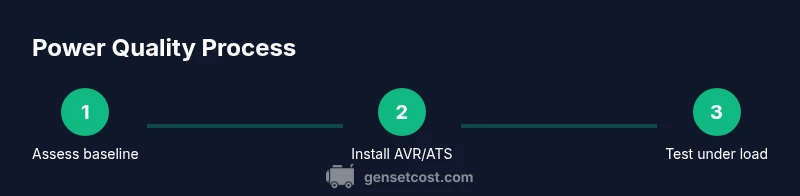
A practical workflow starts with safety and inspection, then hardware stabilization, followed by testing and documentation. This overview helps readers understand the sequence before diving into the detailed steps. Ensure you have the right tools and a well-ventilated, dry workspace. The goal is to deliver consistent, clean power to electronics during outages without risking backfeed or unsafe conditions. This section sets the stage for the more detailed, step-by-step instructions that follow in the dedicated STEP-BY-STEP section.
Common mistakes and how to avoid them
Many users skip proper grounding, underestimate the importance of a good transfer switch, or ignore load balancing. Skipping AVR maintenance can allow voltage spikes that harm electronics. Overloading the generator or running on stale fuel can introduce noise and inconsistent output. Always perform a full safety check, use appropriate protective gear, and never backfeed into a live utility line. Adopting a disciplined maintenance routine helps prevent avoidable power quality issues and extends the life of the generator and connected devices.
Monitoring & testing power quality for electronics
Testing power quality involves measuring voltage, frequency, and transients under realistic load. A basic digital multimeter helps verify nominal voltage and frequency, while a power quality meter or oscilloscope can reveal spikes, dips, and waveform distortion. Establish a baseline reading with a known load, then simulate outage conditions to observe how the system behaves when transitioning between utility and generator power. Record readings and compare them against manufacturer tolerances for each device. This practice reduces surprises during outages and helps you adjust protection settings accordingly.
Safety and maintenance practices
Safety is non-negotiable when handling generators. Wear PPE, operate outdoors or in a well-ventilated area, and never attempt electrical work with the system energized. Keep a clean workspace, inspect cords and plugs for wear, and replace damaged components promptly. Schedule periodic servicing, including oil changes, spark plug checks (for spark-ignited engines), fuel stabilization, and battery maintenance if applicable. Maintaining a clean power path starts with proactive care and consistent testing; this reduces the likelihood of failures during critical outages.
Environmental and cost considerations
Cleaner power often means investing in quality components that reduce waste and extend device life. While a high-end AVR and a robust transfer switch add upfront cost, they can lower long-term maintenance and replacement costs for electronics. Consider your outage frequency, load profile, and the criticality of connected devices when sizing and selecting equipment. Implementing a straightforward maintenance plan saves money over time and improves reliability for homes and multi-unit properties alike.
Authority sources
Below are references that support best practices for power quality and generator safety:
- U.S. Department of Energy (energy.gov)
- National Institute of Standards and Technology (nist.gov)
- Occupational Safety and Health Administration (osha.gov)
Authority sources (continued)
Additional respected resources discuss generator maintenance, transfer switches, and power conditioning principles to protect electronics during outages.
Tools & Materials
- Digital multimeter(Measures voltage, frequency, and resistance; use under load to verify nominal values.)
- Automatic Voltage Regulator (AVR) or power conditioner(Stabilizes voltage and reduces transients for delicate electronics.)
- Transfer switch / Automatic Transfer Switch (ATS)(Prevents backfeed and ensures safe, code-compliant switching between utility and generator.)
- Quality grounding gear (ground rod and clamps)(Reduces system impedance and improves protective performance.)
- Insulated gloves and safety eye protection(Personal safety when handling energized components or wiring.)
- Voltage test leads and adapters(Allows safe measurements at different points in the circuit.)
- Load bank or resistive dummy load (optional but helpful)(Simulates real-world loads for controlled testing.)
- Fuel stabilizer and fresh fuel(Improves fuel longevity and reduces engine fouling that can cause fluctuations.)
Steps
Estimated time: 60-90 minutes
- 1
Prepare safety-first
Power down all connected electronics and disconnect them from the load. Place the generator on a stable, dry surface outdoors. Wear PPE and ensure ventilation before touching any wiring.
Tip: Unplug devices before touching cables to avoid shocks or data loss. - 2
Inspect the power path
Check the AVR for proper operation, inspect the transfer switch wiring, and verify grounding connections. Replace any frayed cords and tighten terminations to reduce impedance.
Tip: Use a flashlight to inspect connectors and look for signs of corrosion. - 3
Check fuel, oil, and starting condition
Ensure fresh fuel and clean oil levels. If the engine has sat idle, drain stale fuel and refill. Start the generator and listen for abnormal sounds or rough idle.
Tip: Avoid ethanol-blended fuels for long-term storage when possible. - 4
Install or verify transfer switch and AVR
If needed, install or verify an ATS; confirm wiring follows local codes. Activate AVR settings to minimize voltage fluctuation during transitions.
Tip: Backfeed is dangerous—never connect to a live panel without a proper switch. - 5
Connect loads and balance
Attach loads in a balanced fashion across circuits, avoiding concentration on a single leg. Start with essential devices and progressively add non-essentials.
Tip: Start with one critical device to confirm stable operation before adding others. - 6
Test under load and document readings
Run a representative load and measure voltage, frequency, and any transient behavior. Compare readings to device tolerances and log results for future reference.
Tip: Keep a log of readings and event timings to identify trends over time.
People Also Ask
What is 'clean power' for electronics?
Clean power refers to stable voltage with minimal transients and distortion, delivered within device tolerances. It reduces resets and wear on sensitive electronics during outages.
Clean power means stable voltage with few transients, protecting your electronics during outages.
Do I need a transfer switch for backup power?
Yes. A transfer switch isolates the generator from the utility and prevents backfeeding, improving safety and protecting connected devices.
A transfer switch prevents backfeeding and keeps you safe.
Can a generator provide clean power without extra equipment?
A generator can be used without extras for less sensitive loads, but for electronics, a proper AVR and a line conditioner often improve stability and protection.
If you have sensitive electronics, add power conditioning and regulation.
What safety precautions are essential?
Wear PPE, work outdoors, and never touch energized parts without turning off power. Follow local codes and manufacturer guidance.
Wear safety gear and follow the manual; don’t work on live circuits.
How do I test power quality effectively?
Use a digital multimeter for nominal values and a power quality meter for transients and distortion. Test under representative load and document results.
Measure voltage, frequency, and transients under load with proper meters.
How often should I service a generator for power quality?
Follow the manufacturer schedule for oil, filters, and fuel system checks. Regular inspections help maintain stable power output.
Keep to the service schedule to maintain stable power.
Watch Video
Key Takeaways
- Establish stable voltage with AVR and ATS.
- Balance loads to protect sensitive electronics.
- Test under realistic load and document results.
- Maintain safety protocols and protective gear.
- Plan regular maintenance to sustain power quality.