How to Make Generator Power Clean: A Step-by-Step Guide
Learn how to make generator power clean through proper fuel, maintenance, power conditioning, and safe installation. This in-depth guide covers fuel quality, AVR/inverter tech, transfer switches, testing, and cost considerations for homeowners and property managers in 2026.


To make generator power clean, focus on clean fuel, regular maintenance, and proper power conditioning. Start by using stabilized fuel, choosing a generator with AVR or inverter technology, installing a transfer switch, and performing routine load management. This approach reduces emissions, improves power quality, and extends equipment life. It also minimizes noise and protects sensitive devices.
What 'clean power' means for generators
Clean power means more than just turning a dial and getting electricity. It refers to stable voltage within spec, consistent frequency, and low harmonic distortion so appliances operate safely and efficiently. When you pursue clean power, you protect electronics, reduce wear on mechanical components, and minimize nuisance outages during weather events or grid quirks. According to Genset Cost, the best path starts with fuel control and an approach that treats power quality as a complete system, not a single component. This mindset keeps your backup plan reliable when you need it most and aligns with cost-saving goals over the generator’s lifetime.
Factors that influence generator power quality
Power quality from a generator is affected by multiple factors, including engine load, fuel type, age, and the presence of conditioning hardware. The more stable the load, the less the voltage and current waveform deviates from nominal expectations. Harmonics, surges, and oscillations can stress motors and delicate electronics. In practice, you achieve cleaner power by combining proper sizing with conditioning hardware, regular maintenance, and disciplined operating procedures. Genset Cost analysis shows that technology like AVR and inverter-based designs markedly reduces voltage fluctuations and improves overall waveform consistency.
Fuel quality and storage practices for clean power
Fuel quality is foundational to clean power. Ethanol blends and contaminated fuel distort combustion and create unstable engine performance, which in turn affects electrical output. Use fresh, manufacturer-recommended fuel and stabilize it for storage periods. If you rotate between gasoline, propane, or natural gas, ensure your equipment is compatible with those fuels and that your fuel system, injectors, and carburetors are clean. Keeping a disciplined fuel inventory, rotating stock, and following a defined storage interval is a simple step toward longer-lasting clean power.
Maintenance routines that support clean power
Maintenance is not optional; it’s the engine of reliability for clean power. Create a checklist that includes oil changes on schedule, air-filter cleaning or replacement, spark plug servicing, and coolant levels for liquid-cooled generators. Replace worn components before they fail, and inspect exhaust and intake systems for leaks. Regular maintenance reduces carbon build-up and keeps the charging and energy conversion processes stable. A written maintenance log helps you detect patterns that could compromise power quality over time.
Power conditioning options: AVR, inverters, and UPS
Power conditioning hardware is the bridge between a generator’s raw output and clean household power. An Automatic Voltage Regulator (AVR) stabilizes voltage as engine speed fluctuates, while inverter-based generators produce a clean sine wave suitable for sensitive electronics. A dedicated surge protector or a compact UPS can further cushion brief dips or swells. When selecting conditioning, compare total harmonic distortion (THD) targets and ensure compatibility with your loads. This step is crucial for protecting computers, AV gear, and medical devices during outages.
Sizing and load management for clean, reliable power
Accurate sizing prevents overwork and minimizes power quality disturbances when the generator is heavily loaded. Start with a peak load calculation that includes critical circuits, well beyond base occupancy. Adopting load management strategies—such as prioritizing essential circuits and sequencing startup hours—reduces stress on the generator and the electrical network. If you’re unsure of sizing, consult a professional and verify the results with a power quality meter to confirm voltage stability and acceptable THD levels under typical operation.
Installation strategies: transfer switches, wiring, and safety
A proper installation is essential for clean power delivery. Use a transfer switch to isolate the generator from the utility and prevent backfeed. This improves safety and ensures your generator’s output feeds only fixed loads. Have a licensed electrician handle wiring, panel integration, grounding, and bonding per local codes. Outdoor placement with adequate clearance and weather protection minimizes environmental impact and protects components from moisture, dust, and temperature extremes. Checklist-style planning helps you avoid common mistakes that compromise power quality.
How to test and monitor power quality
Testing confirms that your approaches actually deliver clean power. Measure voltage, frequency, and THD under nominal load and during peak demand. Use a portable power quality meter or a plug-in monitor to capture data over time. Document any deviations and set trigger thresholds for maintenance or rebalancing. Regular testing builds confidence that your system will perform when you need it most and helps you catch problems early before they affect residents or equipment. Proactive monitoring is a cornerstone of reliability for homeowners and property managers alike.
Maintenance schedule and record-keeping for long-term cleanliness
A robust maintenance schedule builds confidence year after year. Schedule seasonal checks, fuel stabilization refreshes, oil changes, filter replacements, and full inspections of the transfer switch and conditioning devices. Keep digital or physical records of work completed, parts replaced, and test results. This discipline helps you track performance trends and justify cost-saving decisions over the generator’s lifecycle. In 2026, documented maintenance remains one of the strongest predictors of long-term power quality.
Cost considerations and long-term savings
Installing power conditioning gear and upgrading to AVR/inverter technology has upfront costs, but the payback manifests as reduced fuel waste, longer equipment life, and fewer service calls. When evaluating options, request ranges for installed costs and ongoing maintenance, rather than fixed prices. Compare the total cost of ownership across different fuel types, transfer-switch configurations, and conditioning solutions. The goal is to balance initial investment with predictable performance and lower running costs over time.
Common mistakes to avoid
Avoid relying on a single brand’s marketing claim without verification, and skip oversized or undersized equipment. Don’t neglect exhaust routing, grounding, or panel integration. Skipping regular testing or using non-stabilized fuel are frequent errors that undermine the goal of clean power. By following the steps above, you’ll build a resilient system and support reliable outages for508 residents and equipment alike.
Final note on credibility and action steps
The approach outlined here emphasizes practical actions homeowners and property managers can take in 2026. It aligns with best practices from industry analyses and practical field experience. By keeping fuel quality high, maintenance consistent, and power conditioning in place, you move closer to the core objective: how to make generator power clean in everyday operation and during outages.
Tools & Materials
- Quality fuel and stabilizer(Use fresh, manufacturer-recommended fuel; stabilize for storage if needed)
- Power quality meter or multimeter(Measure voltage, frequency, and THD during operating conditions)
- Automatic Voltage Regulator (AVR) or power conditioner(Choose based on generator type (gas/diesel vs inverter) and THD goals)
- Transfer switch (automatic or manual)(Isolates generator from grid to prevent backfeed and improve safety)
- Surge suppressor / UPS (optional for electronics)(Protects sensitive devices from brief transients)
- Grounding kit and proper cords(Ensure correct grounding and weather-rated connections)
- Personal protective equipment(Gloves, eye protection, and insulated tools)
- Owner’s manual and warranty documentation(Keep for reference and service milestones)
Steps
Estimated time: 2-3 hours
- 1
Assess load and siting
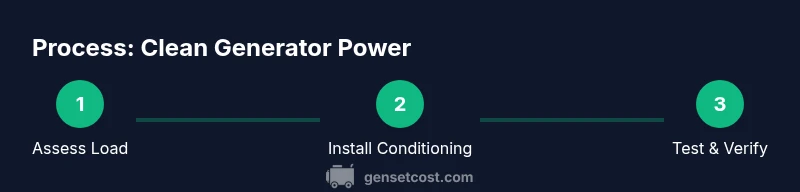
Identify critical circuits and calculate total load. Confirm the generator size suits peak demand and plan outdoor placement with adequate clearance and ventilation. Review local codes and ensure a licensed electrician approves the plan.
Tip: Document load priorities and keep a paper or digital copy of your plan. - 2
Stabilize fuel and inspect engine oils
Stabilize fuel for storage and confirm engine oil level and quality. Replace old oil and check coolant levels if applicable. Clean or replace air filters to ensure clean combustion and steady output.
Tip: Use manufacturer-approved fuel stabilizer and rotate stock regularly. - 3
Install power conditioning
Install AVR or inverter-based conditioning to smooth voltage as engine speed varies. Verify compatibility with your generator and loads. If using a UPS, connect it to protect sensitive electronics.
Tip: Test conditioning under load to confirm THD reductions. - 4
Add or upgrade the transfer switch
Install a transfer switch to safely route power to essential circuits. Ensure wiring conforms to local codes and is done by a qualified electrician. Calibrate the switch to prevent backfeed and mis-sequencing.
Tip: Label circuits clearly on the panel for quick arming during outages. - 5
Test under realistic load
Run the generator at a representative load, check voltage, frequency, and THD with a power meter. Observe for abnormal noises or overheating and adjust loading or conditioning as needed.
Tip: Record test results and adjust maintenance reminders based on findings. - 6
Establish maintenance and monitoring
Create a maintenance calendar, log all tests, fuel changes, oil/filter replacements, and component inspections. Set up routine checks for carbon buildup, exhaust leaks, and wiring integrity.
Tip: Set reminders so nothing slips through the cracks across seasons.
People Also Ask
What does 'clean power' mean when using a home generator?
Clean power means stable voltage, correct frequency, and low harmonic distortion, reducing wear on appliances and avoiding outages during surges. It relies on fuel quality, proper maintenance, and power-conditioning hardware.
Clean power means steady voltage and minimal distortion to protect your appliances during outages.
Is a transfer switch necessary to deliver clean power to my home?
A transfer switch isolates the generator from the grid and prevents backfeed. It improves safety and maintains power quality by ensuring only the intended loads are connected.
Yes. A transfer switch is essential for safe, clean power delivery.
Can fuel additives or ethanol-free gas alone make power clean?
Fuel quality helps, but clean power also requires conditioning hardware and regular maintenance. Additives alone cannot guarantee stable output.
Fuel quality helps, but you still need conditioning and maintenance.
What maintenance steps are essential for clean generator power?
Regular oil changes, air filter cleaning, fuel stabilization, and testing power output are essential to keep power clean.
Keep up with oil, filters, fuel stabilization, and tests.
Is it safe to run a generator indoors during outages?
No. Never run a generator indoors or in enclosed spaces due to carbon monoxide risk. Place it outdoors with proper exhaust routing.
Never run indoors; always outdoors.
Are portable generators capable of delivering clean power for electronics?
Some portable generators with AVR or inverter technology can provide clean power; verify THD targets and how they handle your loads.
Yes, if you choose the right inverter or AVR-equipped model.
Watch Video
Key Takeaways
- Define critical loads and size the system accordingly
- Prioritize fuel quality and regular maintenance
- Install AVR or inverter conditioning for clean output
- Use a transfer switch to safely deliver power
- Test power quality and maintain thorough records