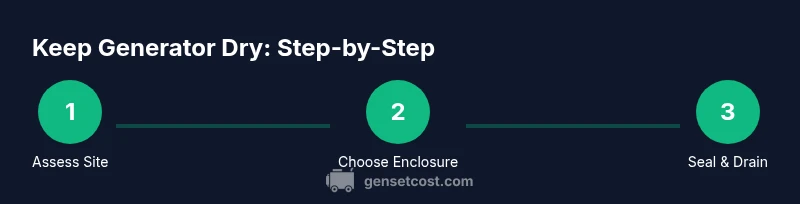
How to Keep a Generator Dry: Essential Protection Guide
A comprehensive, step-by-step guide for homeowners and property managers on keeping a backup generator dry, covering enclosure options, sealing, ventilation, drainage, and routine maintenance to prevent moisture-related damage.


By following a proven dry-enclosure strategy, you will keep your generator safe from rain, splash, and humidity. This guide covers enclosure selection, sealing, ventilation, drainage, and maintenance. Before you start, gather weatherproof covers, sealants, gaskets, and basic tools. You will also learn how to position the unit to minimize water intrusion and condensate buildup.
Why staying dry matters
Moisture is the prime enemy of any generator. It accelerates corrosion on metal components, irritates electrical connections, and fosters mold in nearby spaces. In humid climates or flood-prone areas, rain, snow, dew, and damp air can reach the engine bay through seams, vents, and poorly sealed panels. Condensation can form inside enclosures when warm exhaust heat meets cooler air, leading to rust and degraded insulation over time. In critical backup situations, moisture can cause intermittent startups or complete failures just when you need power most. According to Genset Cost, moisture control is not a luxury; it is a foundational reliability practice for any home or building backup system.
Consider the typical installation: a generator outside or in an attached shed, with some form of enclosure. If water can get inside or if the area around the unit pools with water, the risk grows. Even drip from a roof edge or from a nearby gutter can overflow into the enclosure if the ground slopes toward the unit. More subtle but equally damaging is humidity collected inside a closed cabinet that lacks proper ventilation. The goal is to keep air moving, water away, and moisture from collecting on metal surfaces or electrical connections. A dry environment also reduces the risk of mold on surrounding walls and helps keep fuel indoors from absorbing moisture, which can affect injector and carburetor performance. By prioritizing dryness, you extend the life of seals, gaskets, and fans, and improve safety for occupants who rely on back-up power during outages.
The strategies below build a complete moisture-control plan: assess your site, choose the right enclosure, seal gaps, provide drainage, and implement a maintenance routine that keeps the system dry across seasons and weather events.
Assessing your environment and risk
Every site has unique moisture risks. Start with a simple walk-around assessment and document potential water entry points. Look for exposure to driving rain from prevailing winds, gaps around doors or lids, and roof runoff that funnels toward the generator. Elevation matters: units mounted on a raised concrete pad with a small slope away from the enclosure reduce the chance of pooling water around the base. Drainage is equally important—pour-off from gutters should be directed away from the unit, not toward it. Climate factors, such as snow accumulation, heavy dew, or frequent humidity spikes, influence enclosure choice and venting strategy. Flood-risk maps or local warnings should guide placement away from flood-prone zones. For salt-air environments, pay attention to corrosion potential on exterior hardware and fasteners. Meridian-level planning includes verifying nearby vegetation that could trap moisture or create shade that encourages dampness. Keeping a dry generator also involves ensuring the area around the unit remains clean and free of debris that can trap moisture or harbor pests. Using a simple moisture map of your site helps prioritize actions, especially in multi-unit properties where shared back-up power must be reliable in all weather.
Human factors matter, too. Access for inspection and maintenance, safe clearance around the enclosure, and adherence to local electrical codes all affect long-term dryness. If you’re unsure, err on the side of more robust water management—better to over-seal and ventilate than to repair rust later. As you evaluate, keep notes about what changes would yield the biggest moisture-reduction benefits and align those with your budget and climate expectations.
Designing a dry system: enclosures and ventilation
The backbone of a dry system is a properly sized enclosure that prevents water intrusion while allowing adequate ventilation to dissipate heat. Choose between a purpose-built generator enclosure or a weatherproof cabinet that matches your unit’s dimensions and clearance requirements. A vented enclosure with rain-shuttered louvers minimizes wind-driven moisture ingress while letting hot air escape, reducing condensation risk. Some owners opt for a hybrid approach: a sealed outer shell paired with a vented interior liner that channels moisture away from critical components. Position the enclosure on a stable, level surface with a gradual slope away from walls or other structures so water cannot pool against the base. For added safety and reliability, install a drip edge and exterior flashing to redirect roof runoff away from the unit. Elevation is essential—keep the generator on a raised platform or concrete pad to prevent splash from standing water and to ease hose routing for drainage. In outdoor climates with heavy rainfall, a canopy or shelter that shields from direct rain while remaining well-ventilated can dramatically reduce moisture exposure. Regularly inspect vents for obstructions like leaves or dust that can trap humidity inside and hinder airflow. A well-designed enclosure also reduces noise exposure and simplifies maintenance tasks by providing a clear access path for routine inspections.
From a maintenance perspective, plan to check for rust on bolts and panels, ensure gaskets remain pliable, and confirm seals are intact after storms or heavy winds. Genset Cost’s analysis emphasizes that enclosure integrity and controlled ventilation have outsized effects on dryness and reliability, especially in regions with seasonal storms. Keep a simple log of environmental conditions (recent rain, snowfall, or humidity spikes) to anticipate maintenance windows and adjust venting or sealing strategies as needed.
Sealing, moisture barriers, and drainage
Sealing gaps is one of the most effective moisture-control tactics. Start with a high-quality, gasket-style seal around doors and lids, then add door sweeps to seal the bottom edge against water that might splash upward. Use weatherproof sealant at all joints, corners, and fastener penetrations, ensuring compatibility with the enclosure material. Install a moisture barrier inside the enclosure: a non-porous liner or a hydrophobic mat can reduce wicking and keep condensate from migrating to important components. Drainage is essential—provide a small, graded drain path away from the unit so any collected water can exit rather than pool. If the enclosure sits close to the ground, consider a built-in drainage channel that channels water outward from the base. Route any condensate away from electrical connections and away from fuel lines to minimize corrosion and fuel-related moisture issues. A drip edge or rain gutter above the enclosure improves water management by catching roof runoff before it reaches the unit. Always use corrosion-resistant fasteners (stainless steel or coated hardware) and replace any compromised hardware promptly. For installed units, have a qualified technician seal penetrations where electrical conduits enter the enclosure and verify that all connections meet code requirements. Practical moisture barriers, combined with robust drainage and well-sealed gaps, dramatically reduce water intrusion and humidity buildup inside the housing.
Desiccants can help absorb residual moisture, especially in humid environments. Place them in strategic spots away from any heat sources or exhaust outlets to avoid overheating and reduced effectiveness. Regularly check and replace desiccants according to the product’s guidelines or when humidity indicators show high moisture within the enclosure. Keep in mind that desiccants are a supplement, not a substitute for proper sealing and drainage. When in doubt, perform a moisture test after significant weather events to confirm that your barriers are performing as intended and adjust as needed.
Maintenance routines to stay dry over time
A proactive maintenance plan is essential to sustain dryness over seasons. Schedule seasonal inspections to assess seals, gaskets, and vent integrity. After heavy rainstorms or snowmelt, inspect the enclosure for signs of moisture intrusion, such as damp insulation or rust patches. Remove and inspect air filters and vents to confirm unobstructed airflow. Clean and reseal any compromised areas; replace degraded seals promptly. Test condensation management by placing a small hygrometer inside the enclosure for a few days and recording humidity levels. If humidity remains elevated, consider adding or repositioning desiccants and enhancing ventilation. Keep the surrounding area clean and free of debris that can trap moisture, and ensure drainage paths remain clear. Periodic checks for leaks around conduits or cables can prevent hidden moisture from probing into electrical compartments. Consider a simple monthly cadence: quick visual inspection, test moisture indicators, and verify that drainage and ventilation are functioning as designed. In regions with long winters, implement a winterization check that verifies freeze protection and ensures that water cannot accumulate in the enclosure during thaw cycles. Document all findings and actions so future technicians understand the dryness strategy and can adjust as needed for evolving weather patterns.
Installation considerations and cost-smart choices
Installing a dry solution involves more than buying an enclosure. It requires considering local codes, permit requirements, and the possibility of professional installation to guarantee proper sealing and venting. A properly installed enclosure should maintain clear access for service, comply with clearance requirements, and integrate with transfer-switch or power system layouts as needed. When planning, prioritize components that resist corrosion and withstand local weather conditions, such as salt spray in coastal areas or extreme heat in desert environments. A licensed electrician or generator installer can ensure proper grounding, venting, and electrical safety. Work with experienced installers to avoid common pitfalls, such as undersized vents, insufficient roof clearance, or improper drainage that can undermine dryness. If you have multiple units, apply a consistent moisture-control approach to each unit and maintain a centralized maintenance log. Ongoing maintenance can be balanced with cost considerations by staggering upgrades over time and prioritizing components with the highest moisture-exposure risk. According to Genset Cost’s broader guidance, investing in a robust enclosure and a disciplined maintenance routine yields better long-term reliability than piecemeal fixes after moisture-related failures. Keep your dryness plan adaptable to changing climate conditions and ensure that you have a clear path to professional help when needed.
Tools & Materials
- Weatherproof enclosure or cabinet(Match internal dimensions to generator footprint with at least 2-3 inches clearance on all sides)
- Gasket and sealant kit(Use silicone or polyurethane sealant compatible with metal or plastic surfaces)
- Ventilation louver or rain-shutter vents(Ensure vents are rain-shielded and provide unobstructed airflow)
- Drip edge, flashing, and external flashing materials(Direct water away from enclosure joints and roofline)
- Raised concrete pad or elevated platform(Keep generator above ground moisture and improve drainage)
- Silica gel desiccants or humidity absorbers(Place away from heat sources; replace as needed)
- Drainage accessories (grates or slope kit)(Install minimal slope away from the base to prevent pooling)
- Pliers, caulking gun, and basic hand tools(Essential for installation and resealing tasks)
Steps
Estimated time: Estimated total time: 3-6 hours
- 1
Assess site and determine enclosure needs
Survey your location for wind-driven rain, ground slope, and proximity to roof runoff. Determine whether a fully sealed or ventilated enclosure best fits your climate and generator size. Document any potential moisture entry points to guide the rest of the process.
Tip: Take photos and create a simple diagram of the enclosure plan to reference during installation. - 2
Choose enclosure type and confirm clearances
Select a weatherproof enclosure with appropriate internal dimensions for your generator and planned clearance. Ensure there is at least a couple of inches of space around all sides for air movement and for seals to perform properly.
Tip: Verify local code requirements for electrical enclosures and ventilation before purchasing. - 3
Prepare the installation surface
Pour or place a raised pad, level it, and ensure a gentle slope away from the unit. This minimizes standing water and facilitates drainage.
Tip: Use a level and shim blocks to keep the base stable on uneven ground. - 4
Seal joints and install gasket system
Apply gasket material around doors and access panels, then seal all seams with approved sealant. Check for gaps and reseal if any light can be seen at the joints when closed.
Tip: Test the seals after a light rain by inspecting interior reflections and moisture buildup. - 5
Install ventilation and moisture barriers
Mount vents with rain shields and insert a moisture-absorbing barrier or liner inside the enclosure. Ensure airflow remains unobstructed by filters or debris.
Tip: Avoid placing vents directly above condensate-prone areas like the fuel line or electrical connections. - 6
Set up drainage and runoff management
Create a drainage path that channels water away from the base. Add a drip edge or flashing to redirect roof runoff.
Tip: Periodic checks after heavy rain ensure the drainage path remains clear. - 7
Perform a moisture and function check
Power the unit and monitor for heat buildup and signs of moisture inside the enclosure. Place a hygrometer or desiccant indicator for a short period to assess humidity changes.
Tip: If condensation appears, reassess ventilation and seals or consider relocating the enclosure.
People Also Ask
What is the simplest way to keep a generator dry?
Use a purpose-built weatherproof enclosure with proper ventilation and a drainage path. Regularly inspect seals and vents after heavy rain to ensure no moisture has entered.
A weatherproof enclosure with good ventilation and a clear drainage path helps keep your generator dry. Check seals after storms.
Can I use a tarp or plastic cover alone?
Tarps alone are not sufficient to keep a generator dry. They can trap moisture and fail to provide adequate ventilation. Use a purpose-built enclosure with moisture management features.
Tarps alone don’t keep a generator dry. Use a proper enclosure with ventilation and drainage.
Why is ventilation important for a dry generator?
Ventilation prevents heat buildup and reduces condensation inside the enclosure. It helps maintain equipment efficiency and prolongs the life of seals and electrical components.
Ventilation stops condensation and heat buildup, protecting the generator and its parts.
How can I prevent water pooling around the base?
Install a raised pad with a gentle ground slope away from the unit and direct runoff away from the base. Regularly clear any debris that could block drainage.
Raise the base and slope it away to prevent pooling, and keep drainage clear.
Is professional installation recommended?
Yes. A licensed electrician or generator installer can ensure proper sealing, venting, grounding, and code compliance, reducing moisture-related risk.
A pro installer ensures correct sealing and venting and keeps things up to code.
What maintenance schedule helps stay dry long-term?
Perform seasonal inspections, check seals and vents after major weather events, monitor interior humidity, and replace desiccants as needed. Keep a simple dryness log.
Do seasonal checks and monitor humidity; replace desiccants and log your dryness checks.
Watch Video
Key Takeaways
- Choose a properly sized, weatherproof enclosure with ventilation.
- Seal all gaps and install a reliable drainage plan.
- Elevate the unit and direct runoff away.
- Use desiccants and monitor interior humidity.
- Schedule routine maintenance and inspections for dryness