How to store a generator when not in use
Learn a practical, step-by-step approach to storing your generator safely when not in use, including fuel management, battery care, ventilation, and protective housing. A comprehensive guide for homeowners and property managers from Genset Cost.


Storing a generator properly means securing fuel, protecting the engine, and ensuring safe ventilation so it’s ready for the next outage. This quick guide outlines practical steps for homeowners and property managers, covering fuel management, battery care, and protective housing. Following a deliberate routine reduces corrosion, minimizes fire risk, and helps ensure quick startup when power returns.
Why storing a generator properly matters
A generator is a durable machine, but its long-term reliability depends on how you store it when not in use. Proper storage protects critical components from moisture, corrosion, and fuel-related damage, and it ensures the unit starts quickly when power is needed again. For homeowners and property managers, a consistent storage routine reduces unexpected failures during outages and can lower maintenance costs over the life of the generator. According to Genset Cost, adopting a formal storage plan that accounts for fuel, oil, battery, ventilation, and protection from the elements yields safer operation and better readiness. This guide focuses on practical, field-tested steps you can apply to most common home backup generators, regardless of brand or fuel type. Even if you plan to store for only a short period, a clean, elevated, and ventilated setup minimizes risks and makes reactivation faster.
Fuel management: drain vs stabilize
Fuel is the most volatile fluid in a generator’s ecosystem. Gasoline can degrade and varnish carburetors, while diesel can gel in cold weather. If you store for a short time, stabilizers can keep fuel viable. For longer storage, draining the tank and carburetor is often recommended, then refilling with fresh fuel before the next outage. Use approved containers and label them. Avoid storing fuel inside living spaces or in direct sunlight; a cool, dry area is best. If your unit uses an integrated fuel source, consult the manual or a technician before attempting a drain.
Ventilation and placement considerations
Ventilation is critical to prevent fuel vapors from accumulating and to reduce fire risk. Do not store a generator in an enclosed space like a garage without an exhaust path. Place the unit on a dry, level surface away from doors, vents, and flammable materials. A concrete pad or heavy-duty mat helps limit moisture absorption and keeps the unit stable in windy conditions. Weather protection should shield the top and sides while allowing air circulation around cooling fins.
Battery care before storage
Most home generators rely on a 12-volt battery for remote start and electronic controls. Before putting the unit away, disconnect the negative battery lead to prevent accidental shorts. Clean corrosion from terminals and apply a thin coat of terminal grease if recommended. Store the battery on a non-conductive surface with a compatible charger or maintainer connected to a trickle charge. Check electrolyte levels only if the battery is maintenance-ready and follow the manufacturer’s safety guidelines.
Oil and fluid checks before storage
Change or top off engine oil according to the manufacturer’s schedule, and ensure the oil meets the correct viscosity for your climate. Check for leaks around the oil drain plug, filters, and hoses. Refill with fresh oil if it looks dirty or smells burnt. Wipe up any spills and dispose of fluids properly at an approved recycling facility. Keeping fluids clean helps prevent internal corrosion during storage.
Exterior cleaning and corrosion prevention
Wipe down the generator to remove dust, salt spray, and grime that can accelerate corrosion. Dry thoroughly before closing any covers. If you use a rust inhibitor or protective spray, follow the product directions and avoid overspray on moving parts. Ensure cooling fins and air intakes are free of obstructions. Cleanliness reduces the risk of varnish buildup and improves the unit’s ability to start after storage.
Protective housing and ground clearance
Use a weatherproof, breathable cover designed for generators, not a plastic bag that traps moisture. Elevate the unit slightly off the ground on a sturdy base to prevent water pooling and to improve drainage. Store away from combustible materials and ensure there is space for air to circulate around the intake and exhaust. Secure the unit to prevent movement in high winds or on uneven surfaces.
Long-term storage plan: seasonal routines
Develop a simple seasonal checklist you perform before winter or wet seasons. Document the condition of the fuel, oil, battery, and covers, and refresh stabilizers or fuel as needed according to the storage duration you anticipate. Schedule a yearly or semi-annual pre-use inspection, including a dry-run test with load under supervision. A consistent routine minimizes surprises and protects the investment in your backup power system.
Recommissioning after storage: quick-start checklist
When it’s time to bring the generator back online, perform a safety check, reconnect the battery, and verify fuel and oil levels. Do a dry start without a load to confirm the engine turns over and brushes seated properly. Then run for a few minutes with a light load to ensure temperature, oil pressure, and cooling operate within normal ranges. Keep a log of the test results and any observed issues to guide future storage cycles.
Tools & Materials
- Fuel stabilizer or stabilized fuel(Add to gasoline before long-term storage; run engine to circulate)
- Drain pan(Place beneath drain plug when draining fuel or oil)
- Wrench set(For drain plugs and battery terminals)
- Engine oil (viscosity per manual)(Use correct spec and measure oil level after draining and refilling)
- Oil filter (if applicable)(Replace only if you know you need it)
- Battery maintainer/charger(Keep battery charged during storage)
- Outdoor-rated generator cover(Protect from dust and moisture)
- Drip tray or pad(Catch drips during storage)
Steps
Estimated time: 3-5 hours
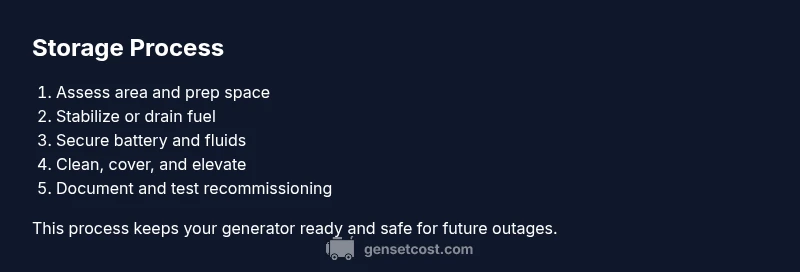
- 1
Assess storage location and prep area
Choose a dry, well-ventilated area with easy access. Clear the floor, remove clutter, and ensure there is space for air flow around the unit. Create a stable base to keep the generator level and protect against moisture intrusion.
Tip: Take a photo of the unit's current connections for reference before disassembly. - 2
Stabilize or drain fuel
If storing for an extended period, drain the fuel tank and carburetor or use a compatible fuel stabilizer. Close all fuel valves and seal containers properly. Never store gasoline inside living spaces or vehicles.
Tip: If you must stabilize, run the engine a few minutes to distribute stabilizer through the system. - 3
Disconnect and secure the battery
Power down the generator and disconnect the negative battery terminal first. Clean any corrosion, then reconnect with a battery maintainer attached if you’re storing for a while. Keep terminals insulated and dry.
Tip: Always disconnect negative first to avoid short circuits. - 4
Check and replace fluids
Inspect engine oil level and condition; replace if dark or burnt smelling. Check for other leaks around plugs and hoses. Refill with fresh oil if needed and wipe away any spills.
Tip: Dispose of used oil at an approved facility per local regulations. - 5
Clean and dry the unit
Wipe the exterior, remove dirt, and dry thoroughly to prevent rust. Check cooling fins for obstructions and ensure air intakes are clear. Apply a light protective coating if recommended by the manufacturer.
Tip: Do not spray water into electrical controls; use a damp cloth instead. - 6
Cover and elevate the generator
Install a breathable, weatherproof cover and place the unit on a raised, stable base. Ensure ample clearance for ventilation and perform a final visual check for moisture or condensation.
Tip: Avoid plastic bags which trap moisture; opt for purpose-built generator covers. - 7
Document the storage setup
Record the date, location, fluid statuses, and any maintenance performed. Store this in a dedicated log for future reference when recommissioning.
Tip: Keep a spare set of maintenance tools nearby for quick future checks. - 8
Initial recommission check
When ready to use again, perform a visual inspection, reconnect the battery, verify fluids, and perform a dry run before applying a load.
Tip: Verify no warning lights on startup and listen for unusual noises during first start.
People Also Ask
Do I need to drain gasoline before storing a generator?
If storing for an extended period, drain the fuel or use a stabilizer per the fuel type. Never store fuel in living areas.
Drain or stabilize the fuel to prevent varnish and leaks, especially for long-term storage.
Is it safe to store a generator indoors?
No. Generators should be stored in a well-ventilated area away from doors and living spaces to avoid fumes and fire hazards.
No, store it outside in a ventilated space away from your home.
What should I do with the battery during storage?
Disconnect the negative terminal, clean terminals, and keep it on a maintainer if possible. Store on a non-conductive surface.
Disconnect the battery and keep it charged with a maintainer.
How often should I inspect stored equipment?
Do routine checks before reusing the generator, focusing on fuel, oil, battery, and covers for moisture or corrosion.
Check it regularly before use and after any severe weather.
Should I leave the fuel tank full or empty for storage?
For long-term storage, drain the tank or stabilize the fuel. A full tank can lead to condensation and varnish buildup.
Drain or stabilize fuel to prevent varnish and condensation.
What about propane or natural gas powered generators?
Follow the fuel-specific guidance, close valves, and store per the manufacturer’s recommendations. Keep connections dry and protected.
Follow your fuel type guidance and ensure valves are secure.
Watch Video
Key Takeaways
- Store in a ventilated, dry area away from ignition sources
- Drain or stabilize fuel and manage fluids properly
- Secure the battery and seal leaks before storage
- Use a breathable cover and keep the unit elevated
- Test-recommission with a quick-start checklist before use