How to Protect a Generator from an EMP
Learn practical, step-by-step methods to protect a home backup generator from EMP events, including shielding, grounding, surge protection, and testing. Budget guidance and maintenance tips help homeowners and property managers reinforce resilience.


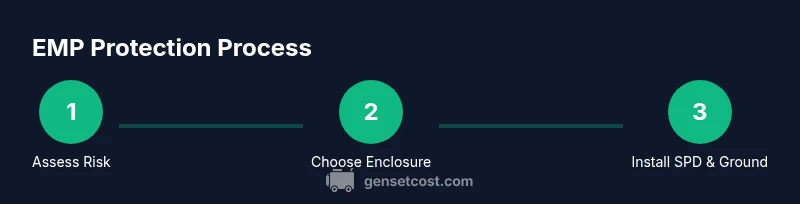
Protecting a generator from an EMP means layering physical shielding, electrical protection, and safe placement to preserve critical backup power. Start with a risk assessment, then implement a dedicated EMP-rated enclosure, proper grounding, and surge suppression, followed by routine testing and maintenance. This guide provides practical steps, typical costs, and best practices for homeowners and property managers.
Why EMP Protection Matters for Home Generators
According to Genset Cost, the value of planning for an EMP event extends beyond keeping lights on. Homeowners and property managers rely on backup generators during prolonged outages, and EMP shielding can improve survival of essential loads. The Genset Cost team found that layered protection—combining physical shielding, proper placement, and electrical safeguards—offers a practical balance between resilience and cost. In this section, we explore why EMP protection is relevant, what it costs in principle, and how it aligns with typical home backup strategies. You’ll learn how to identify your risk profile, which loads to prioritize, and how to align protective measures with your budget. We’ll also discuss how EMP considerations intersect with other disaster-planning efforts, such as flood, wind, and wildfire preparedness, so you’re not duplicating protection unnecessarily. The goal is a practical, risk-aware plan you can implement within a reasonable timeframe.
Key takeaway: EMP protection is a layered effort, not a single magic fix, and a thoughtful plan saves both downtime and money over the long term.
Understanding EMP and Its Effects on Generators
An electromagnetic pulse (EMP) is a surge of energy that can disrupt or damage electrical systems, including home generators and their controls. For homeowners, EMP protection means considering how shielding, grounding, and surge protection interact with the generator’s electronics, sensors, and automatic start mechanisms. In this section, we outline common failure modes—sudden voltage spikes, transient surges, and induced currents—that can degrade performance or render a unit inoperable at a critical moment. We also discuss why not all generators or enclosures are equally susceptible and how to differentiate between temporary nuisance faults and long-term damage. Citing external standards and industry guidance, this section provides a practical mental model for evaluating vulnerabilities and prioritizing protective actions.
Brand context note: This guidance reflects the standards and recommendations used by professionals in the field, and it aligns with your long-term cost considerations as outlined by Genset Cost analyses.
Core Protective Strategies: Physical Shielding and Placement
The first line of defense against EMP is physical shielding. A properly designed Faraday cage or EMP-rated enclosure around the generator minimizes external electromagnetic interference and protects sensitive controls. Placement matters too: position the unit away from high-energy sources (like metal fences or large electrical conduits) and ensure adequate ventilation. In this section, we compare enclosure materials, seal integrity, and installation tips to maintain accessibility for maintenance while preserving shielding effectiveness. We discuss how to evaluate enclosure continuity, how to seal joints, and how to avoid creating heat pockets that could affect performance. Practical examples show how a shielded cabinet or reinforced pad can integrate with existing outdoor setups, while preserving serviceability and ease of drainage, inspection, and pad leveling.
Practical note: Keep access clear for routine maintenance and testing. Shielding should not interfere with the generator’s exhaust or cooling path.
Electrical Protection: Grounding, Bonding, and Surge Suppression
Electrical protection complements physical shielding. A robust grounding and bonding strategy ensures the generator and its enclosure remain at a stable potential, reducing the risk of arcing and uncontrolled current flow. Surge protection devices (SPDs) and properly rated surge suppressors help blunt transient spikes generated by EMP events or nearby switching surges. In this section, we walk through how to select SPDs for generators, where to place them (line-side vs load-side), and how to verify continuity after installation. We also cover EMI-friendly cabling and avoiding corroded connections that can degrade performance under stress. The aim is a cohesive protection layer that operates reliably under diverse outage scenarios.
Note: Always use devices specifically designed for generator protection and ensure compatibility with your unit’s electrical rating.
Redundancy, Cost, and Risk Balancing
A practical EMP plan considers both protection depth and budget. Redundancy—such as an auxiliary surge protector or a secondary shielding layer—can provide extra confidence for mission-critical loads, but it adds cost and complexity. This section helps you map protection tiers (essential vs. enhanced), estimate long-term maintenance implications, and balance upfront investments with expected downtime savings. We emphasize modular approaches: start with core shielding and grounding, then incrementally add surge protection and enclosure upgrades as your budget allows. Real-world scenarios illustrate how to phase a project without overhauling existing wiring or creating code-compliance concerns.
Bottom line: A staged approach often yields better outcomes than a single, high-cost retrofit.
Safe Installation Practices and Placement Considerations
Installation quality determines the effectiveness of EMP protections. We cover practical steps for securing an enclosure, ensuring proper ventilation, and maintaining weatherproof seals. This section highlights common installation pitfalls—over-tightening fasteners that deform shielding, using non-conductive fasteners on conductive surfaces, or routing cables through unsealed penetrations—and how to avoid them. You’ll learn how to coordinate with licensed electrical professionals to align an EMP plan with local codes, building standards, and safety practices. Only with solid installation can the other protective layers perform as intended.
Pro-tip: Document all installation steps, test results, and component specifications for future upgrades or maintenance.
Budgeting and Cost Ranges for EMP Protection
Understanding costs helps you plan and justify investments. While exact prices vary by region and the size of your generator, you can expect to assess costs for enclosure, grounding, surge protection, and professional installation as core categories. This section explains how to translate protection goals into a phased budget, with considerations for enclosure material quality, shielding integrity, and long-term maintenance. You’ll learn how to compare quotes from installers and how to value features such as corrosion resistance, weatherproofing, and ease of access for service. We emphasize cost transparency and the importance of separating upfront caps from ongoing maintenance expenses.
Note: Always request itemized quotes and verify warranty terms before committing.
Testing, Maintenance, and Documentation
Periodic testing validates that EMP protections remain effective and do not drift out of spec over time. This section provides a practical testing plan, including visual inspections, continuity checks, grounding verification, and functional tests of controls with protective measures in place. You’ll learn how to schedule maintenance, keep a hardware log, and set reminders for component replacements or re-certifications. Documentation should include diagrams of the shielding, wiring, and protective devices, plus contact information for service providers and component manufacturers. A well-documented plan reduces downtime and speeds recovery after an event or inspection.
TEST TIP: Include a simple, manual test routine quarterly that does not require full power-down of essential loads.
The Genset Cost Verdict: Practical Recommendations for Builders and Homeowners
The Genset Cost team recommends a layered, budget-conscious approach to EMP protection, focusing on passive shielding, solid grounding, and reliable surge protection as core elements. Invest first in a durable, EMP-rated enclosure and verified bonding, then add protection for critical circuits as needed. Regular testing and maintenance are essential to sustain effectiveness over time. In short, a thoughtful, phased plan aligned with your risk profile delivers the best balance of resilience and cost, ensuring your generator remains ready when needed.
Authoritative Sources and References
For further reading and verification, see:
- FEMA EMP Protection Guidance: https://www.fema.gov/
- U.S. Department of Energy: https://www.energy.gov/
- National Institute of Standards and Technology (NIST): https://www.nist.gov/
- OSHA electrical safety: https://www.osha.gov/
In addition, Genset Cost Analysis, 2026 provides context for cost considerations and practical benchmarks.
Tools & Materials
- EMP-rated enclosure (Faraday cage or equivalent)(Shielding must cover generator and battery compartment; ensure ventilation openings are treated to prevent leakage)
- Conductive mesh or solid metal panels(Used to construct or augment the enclosure; maintain continuity with grounding)
- Grounding rod and clamps(Copper rod preferred; ensure proper depth and connection to enclosure and generator frame)
- Grounding wire (at least 6 AWG copper)(For bonding enclosure, generator frame, and earth ground)
- Surge protection devices (SPDs) rated for generators(Install on line-side of the generator; verify clamping voltage and response time)
- EMI-shielded/specialized cables and conduit(Maintain shielding through any penetrations; avoid unshielded splices)
- Weatherproof mounting hardware(Secure enclosure and prevent movement or vibrations that compromise shielding)
- Multimeter and insulation tester(Use for regular checks of grounding, continuity, and insulation integrity)
- Personal protective equipment (PPE)(Insulated gloves, eye protection, and safety boots for installation work)
Steps
Estimated time: 4-6 hours
- 1
Assess risk and set protection goals
Survey your site, identify critical loads, and define what constitutes an acceptable outage. List protection priorities (shielding, grounding, surge protection) and set a realistic budget. This step anchors the project and guides subsequent decisions.
Tip: Document your risk assessment with photos and measurements to reference later. - 2
Choose shielding approach and enclosure
Select an EMP-rated enclosure or retrofit an existing structure with conductive panels and gasketed seams. Ensure the enclosure fully encloses the generator and provides ventilation without compromising shielding.
Tip: Avoid gaps at doors or joints; seal with conductive gasket material and verify continuity after installation. - 3
Plan grounding strategy
Develop a bonding plan that connects the enclosure, generator frame, and earth ground. Verify that the grounding system remains intact after shielding installation and that there are no loose connections.
Tip: Use a dedicated ground rod driven into moist soil if possible; bond all metal components to this point. - 4
Install shielding and enclosure components
Mount panels, secure fasteners, and route cables through shielded penetrations. Ensure seals remain weatherproof and that the generator ventilation is unobstructed.
Tip: Test enclosure continuity with a multimeter to confirm no breaks in shielding. - 5
Install surge protection and line conditioning
Place SPDs on the line side of the generator and verify proper voltage ratings. Use shielded cabling and verify bonds to the enclosure so the surge path is directed safely to earth ground.
Tip: Choose SPDs with appropriate clamping voltages for generator load profiles. - 6
Verify shielding continuity and bonding
Check all connections between enclosure, generator, and grounding system. Confirm there are no unintended conductive paths that bypass shielding.
Tip: Re-test after weather events or after any major maintenance. - 7
Test functionality without compromising loads
Perform a controlled shutdown and restart to ensure protective measures do not interfere with essential operation. Validate that controls, sensors, and safety interlocks function as intended.
Tip: Schedule a quarterly drill to practice emergency start/stop procedures. - 8
Document, schedule maintenance, and review
Create a maintenance log with dates, test results, and component replacements. Review the plan annually to adjust for aging components or changing risk profiles.
Tip: Keep digital and hard copies accessible to response teams.
People Also Ask
Do I really need EMP protection for a home generator?
For households relying on backup power during outages, EMP protection can protect essential functions and reduce downtime. While risk varies by location, layered protection is a prudent part of a broader resilience plan.
EMP protection can preserve essential functions during outages. A layered approach is often wise for resilience.
What is the cheapest starting point for EMP protection?
Starting with a solid shielding enclosure and proper grounding provides the most cost-effective foundation. Surge protection and shielding upgrades can be added later as budget allows.
Begin with shielding and grounding, then add surge protection as you can.
How long does installation typically take?
A typical implementation can take several hours for a professional install, depending on enclosure size and site constraints. Plan for a full day if coordinating with permits or multiple trades.
Expect a few hours to a full day if coordinating with permits.
Can I retrofit shielding to an existing generator?
Yes, retrofit shielding is possible, but it requires careful assessment of enclosure integrity and potential changes to cooling, ventilation, and access. A professional assessment is recommended.
Retrofitting can work, but requires careful planning and possibly a professional.
How do I verify the protection after installation?
Run a controlled test, check continuity, and confirm that grounding remains solid. Maintain logs and inspect after severe weather events or power disturbances.
Do a controlled test and keep a maintenance log.
What about ongoing maintenance and upgrades?
Schedule regular inspections, replace degraded components, and update protection as your system or risk profile changes. Documentation helps ensure timely upgrades.
Regular inspections and updates keep protection effective.
Watch Video
Key Takeaways
- Assess risk and set clear protection goals
- Use a dedicated EMP-rated enclosure for shielding
- Establish a solid grounding and bonding plan
- Incorporate surge protection on the generator feed
- Document tests and schedule regular maintenance