Is It Worth It to Have a Generator? A Homeowner's Guide
Explore whether installing a home backup generator makes financial sense, how to size it, costs to expect, and steps to install safely with expert tips from Genset Cost.


Is it worth it to have a generator? For many homeowners in power-outage zones, yes—backup power can be a game changer. The decision hinges on cost, reliability, and how you use electricity during outages. According to Genset Cost, a properly sized generator plus a safe transfer switch often justifies the upfront and ongoing costs for peace of mind.
Is a generator worth it for homeowners? Who benefits
For many households, especially those in regions prone to power outages, owning a home generator can be worth the investment. The decision hinges on how you use electricity during outages, your tolerance for disruption, and your willingness to pay for reliability. The Genset Cost team found that the value increases when outages are frequent, long, or occur during extreme weather, because essential appliances and critical circuits can stay powered. A properly sized generator with a safe, code-compliant transfer switch reduces backfeeding risks and simplifies safe operation. Beyond comfort, it can protect perishable food, support medical devices, and enable small home-based work during outages. However, upfront costs, ongoing fuel, and maintenance must be weighed, and installation complexity adds another consideration. In many scenarios, the investment pays off when outages disrupt daily routines, medical needs, or business operations. The Genset Cost analysis shows that with thoughtful sizing, professional installation, and a realistic maintenance plan, the long-term value can justify the expense for many families.
Key considerations: outage frequency, outage duration, and the critical loads you must keep on during emergencies. A generator is not a one-size-fits-all solution, but for the right home, it delivers dependable resilience when the power goes out.
The text above expands on the quick answer and outlines who benefits most, linking to practical use cases and emphasizing professional installation.
Tools & Materials
- Digital multimeter(For measuring voltage and ensuring correct wiring during setup)
- Voltage tester( Helps verify circuit status before and after installation)
- Cordless drill with assorted bits(Used for mounting pads and panel access as needed)
- Safety gloves and eye protection(Personal protective equipment for all electrical work)
- Locking pliers and adjustable wrench(Grip components securely during installation)
- Transfer switch (automatic or manual) compatible with your generator(Crucial for safe, code-compliant power transfer)
- Gas line and fuel safety equipment (if using gas)(Only if you plan gas-powered operation; must be installed by a pro)
Steps
Estimated time: 2-6 weeks
- 1
Assess needs and usage patterns
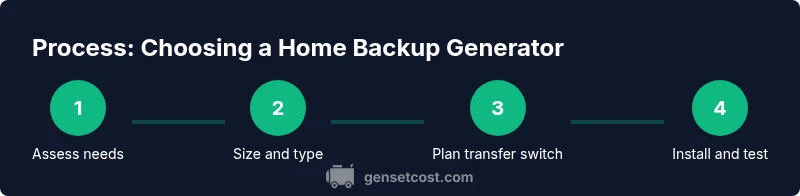
Identify which loads you must keep powered during outages (refrigeration, HVAC, medical devices, lights, communications). This helps establish a baseline for sizing and budget. Use a simple worksheet to list essential circuits and approximate running hours during outages.
Tip: Document peak loads and high-use appliances to avoid under-sizing. - 2
Choose size and type with a sizing calculator
Select a generator class (standby vs portable) and use a sizing calculator to estimate required wattage. Consider surge watts for startup loads and the reliability you need during prolonged outages.
Tip: Cross-check results with a licensed electrician to ensure accuracy. - 3
Decide on fuel type and generator features
Natural gas and propane are common for standby systems; diesel is another option. Consider runtime, fuel availability, and storage space when choosing features like an automatic transfer switch (ATS).
Tip: An ATS is typically safer and more convenient for whole-house operation. - 4
Plan transfer switch and electrical path
Work with a qualified electrician to design the electrical path from the generator to your panel. The transfer switch should isolate the generator from the grid to prevent backfeed and ensure code compliance.
Tip: Request a written diagram of the electrical layout before installation. - 5
Obtain permits and hire a licensed professional
Most jurisdictions require permits and a final inspection for generator installations. A licensed electrician or installer will handle wiring, permits, and code adherence.
Tip: Start with multiple bids to compare approaches and timelines. - 6
Install, test, and document
Install equipment on a stable pad with proper clearance, connect fuel lines or gas supply, and perform a full-load test under supervision of the installer. Document serial numbers and maintenance schedules.
Tip: Schedule at least one annual test to ensure readiness. - 7
Create a maintenance and safety plan
Plan for regular fuel checks, battery tests, oil changes, and system inspections. A maintenance plan protects reliability, efficiency, and safety over the life of the generator.
Tip: Set reminders for routine service and mutually verify with your installer. - 8
Review warranties and service options
Understand what the warranty covers and whether local service is available. Consider maintenance contracts to simplify ongoing care.
Tip: Keep a copy of warranty terms and service receipts in a dedicated folder. - 9
Educate household members on safe operation
Ensure everyone knows how to start the system, which loads are safe to run simultaneously, and what to do in an outage.
Tip: Develop a quick-reference guide and post it near the panel.
People Also Ask
Is a generator financially justified for most homes?
For many households, a generator becomes financially justified when outages disrupt essential needs or business activities. The decision depends on outages frequency, duration, and the value you place on resilience. A professional assessment helps quantify this balance.
For many homes, a generator is worth it if outages disrupt essentials; a professional assessment can quantify the value.
How do I determine the right size for my home?
Start with a load assessment of essential circuits and appliances, then use a sizing calculator. Validate the result with a licensed electrician to ensure the chosen generator can handle startup surges.
Begin with a load assessment, use a sizing calculator, and confirm with a licensed electrician.
What costs should I expect beyond the generator unit?
Beyond the unit, expect costs for the transfer switch, installation labor, permits, and ongoing fuel and maintenance. These costs vary by home and local codes, so gather multiple quotes.
Expect transfer switch, installation, permits, and ongoing fuel and maintenance costs.
Do permits apply, and how long do inspections take?
Most jurisdictions require permits and an official inspection after installation. Timelines differ by location, but planning ahead with a licensed installer minimizes delays.
Permits are usually required; timelines vary by location, and a good installer helps ensure timely inspections.
Is natural gas better than propane or diesel for a home generator?
Natural gas offers convenient, continuous fuel supply for many homes with existing gas lines, while propane and diesel provide fuel storage flexibility. Each fuel type has trade-offs in cost, availability, and maintenance.
Natural gas is convenient if you have gas lines; propane or diesel offer flexibility but different trade-offs.
How long does installation typically take?
Installation timelines depend on permits, scheduling, and system complexity. A typical project can span a few days to a couple of weeks, with inspections extending the process.
Most installs take days to a couple of weeks, plus inspections.
Watch Video
Key Takeaways
- Size first, then buy—proper sizing drives value.
- Hire licensed pros for safety and code compliance.
- Total ROI includes installation and ongoing fuel/maintenance.
- Consider fuel availability and reliability when choosing type.
- Plan for regular testing and an established maintenance schedule.