Need Generator: How to Choose a Home Backup System in 2026
A comprehensive guide for homeowners and property managers on whether you need a generator, how to size it, fuel options, transfer switches, installation, and budgeting for home backup power in 2026.


A need generator refers to a backup power solution designed to keep essential circuits running during outages. For homeowners evaluating options, the decision hinges on outage frequency, critical loads, and budget. In 2026, the decision often centers on whether you want automatic transfer during outages and the ability to run essential appliances. The Genset Cost team notes that many households opt for automatic transfer switches for seamless power, while others prefer simpler portable units for flexibility.
Understanding the need for a generator in modern homes
A need generator is more than a gadget; it’s a resilience tool that protects health, food, and comfort during power outages. For families, the question isn’t just about starting a generator, but which loads you must keep alive when the grid goes dark. Common essential loads include refrigeration, heating or cooling, water pumping, lighting, and communications. Your decision should link outage expectations to how these loads drive overall power requirements. If outages are rare or you live in a climate with mild winters, a portable unit may suffice. If outages are frequent or you operate a business or medical devices at home, a permanently installed standby system with automatic transfer is often the safer bet. The Genset Cost team emphasizes that the true value lies in aligning the generator’s capability with your non‑negotiable loads and in avoiding both over‑sizing (which wastes fuel and money) and under‑sizing (which fails to cover critical needs).
Planning begins with a simple exercise: list essential loads, estimate their running power, and then map those loads to a generator category. This approach sets clear expectations when comparing quotes from installers and helps you avoid costly surprises down the road.
How to size your home generator properly
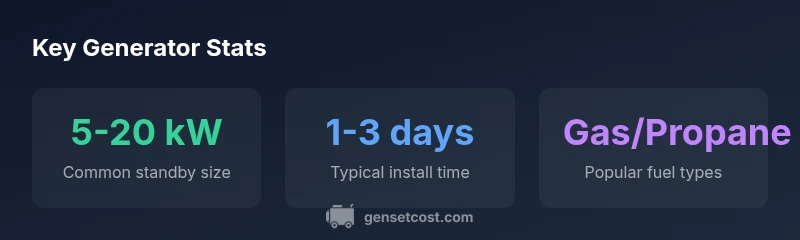
Sizing a generator correctly is the most important step in the decision process. Start by cataloging every essential circuit that must remain powered during an outage—refrigeration, sump pumps, heating or cooling equipment, lights, and communications equipment. For each circuit, identify its running wattage and its startup surge. While running watts are relatively stable, startup surges can be several times the running load, especially for motors and compressors. Add these surges to the running total and then include a safety margin of around 15-25% to accommodate future needs or rare load spikes. Generators are typically rated in kilowatts (kW); for most homes, a size range of 5-20 kW covers the majority of essential-load scenarios. After calculating, compare your result against common size classes and validate with a licensed electrician or a generator specialist. If you are between sizes, opting for the larger size with good headroom often minimizes the risk of tripping or short cycling during peak loads.
A practical sizing exercise yields a target range rather than a single number, which is why professional guidance matters. The goal is to deliver reliable power to essential circuits without paying for unnecessary capacity. Documentation of your loads also helps when negotiating with installers and ensures your quotes reflect real needs rather than generic estimates.
Fuel choices and maintenance considerations
Fuel type is more than a cost question; it shapes reliability, maintenance, and daily practicality. Natural gas and propane are the most common options for home standby systems because they offer steady fuel supply and don’t rely on a storage tank that can degrade. Gas-powered systems often provide quicker startup and longer run time, with the convenience of a continuous supply if you have a reliable gas line. Propane is widely available, has a clean burn, and stores well, which helps with seasonal testing and emergencies. Diesel and gasoline generators appeal in certain scenarios—diesel’s energy density can be beneficial for higher kilowatt needs, while gasoline units are typically more portable. Maintenance is stage-based: regular oil changes, filter checks, battery health, and cooling system inspections keep the generator ready. Fuel stability is an important factor—especially for standby systems that sit idle for long periods. Practicing seasonal starting tests and routine checks with an installer can catch issues before an outage occurs. Regardless of fuel type, secure fuel storage away from living spaces and ensure proper ventilation around the equipment to minimize health and safety risks.
Standby vs portable: transfer switches and reliability
Choosing between standby and portable systems hinges on reliability, convenience, and installation realities. Standby generators are permanently installed and typically paired with an automatic transfer switch (ATS). When the grid fails, the ATS detects the outage and starts the generator automatically, switching power to essential circuits within seconds. This seamless handoff is the core advantage of standby systems, especially for homes with health considerations, sump pumps, and climate control that must run continuously. Portable generators, by contrast, require manual setup, fuel management, and a safe, level surface for operation. They offer flexibility and lower upfront cost but demand more user involvement during outages. If you prioritize convenience and uninterrupted operation, an ATS-enabled standby system is often the preferred choice. If flexibility and lower initial expenditure are your priorities, a quality portable unit may be suitable, but you should plan for operational procedures and safe transfer of loads.
Installation realities: permits, space, and timelines
Installation is more than wiring a panel; it requires site planning, permits, and compliance with local codes. Standby systems demand a permanent outdoor pad or enclosure, proper clearances, exhaust routing, and a licensed electrician to perform the electrical interconnection and ATS integration. Transfer switches add a level of safety by isolating the building from the grid and the generator. For rental properties or multi-unit buildings, property management considerations include access, noise mitigation, and service entries. Space considerations matter: you will need room for the generator itself, fuel storage (or a connection to a gas line), and a path for exhaust. Most jurisdictions require an electrical permit, and some areas may require a separate permit for the gas line or propane installation. A thoughtful plan with your installer can reduce surprises, ensure code compliance, and shorten the path to operation.
Budgeting, warranties, and long-term planning
Total cost is more than the upfront price tag. You should account for the generator unit, transfer switch, installation labor, permits, fuel storage or line connections, and any required enhancements to your electrical panel. While exact prices vary by size, features, and local labor rates, expect the project to span a broad range, with larger systems and professional installs representing the majority of the investment. Warranties vary by brand and configuration, with longer-term coverage typically linked to higher initial costs. Consider maintenance plans, fuel stability, and seasonal testing as ongoing costs that affect the annual running expenses. Weather resilience, service access, and future load growth are important. Planning for potential expansions, such as additional circuits or solar compatibility, can improve the resale value of the property and avoid future retrofits that disrupt living spaces. The key is to balance upfront investments with expected reliability and peace of mind, ensuring you have a robust solution that meets your needs today and in the years ahead.
Generator types comparison
| Model Type | Pros | Key Considerations |
|---|---|---|
| Standby Generator | Automatic transfer; reliable power; permanent installation | Higher upfront costs; professional installation required |
| Portable Generator | Lower upfront cost; flexible use | Manual start; fuel management; power limits |
| Inverter Generator | Quiet operation; efficient fuel use | Limited capacity; not ideal for whole-house loads |
People Also Ask
What is the difference between standby and portable generators?
Standby generators are permanently installed and paired with an automatic transfer switch for automatic operation. Portable generators are mobile, require manual startup, and power is limited by size and fuel.
Standby gens stay in one place and start automatically; portable ones are moved and started by hand.
How do I determine the right generator size for my home?
Begin with a list of essential loads (fridge, sump pump, heating) and total their running wattage. Add startup surges and some headroom, then choose a unit in the next size range.
Start by listing essential loads, add startup surges, and pick a size with some headroom.
Can I install a generator myself?
Permanent installations and transfer switches typically require a licensed electrician and permits. DIY work can violate code and void warranties.
Most installations need a pro to stay safe and compliant.
What ongoing maintenance should I expect?
Regular oil changes, air filter checks, and battery tests keep generators ready. Fuel stability and seasonal starting checks are recommended.
Regular upkeep keeps it reliable. Keep fresh fuel and test start periodically.
What permits are usually required?
Most jurisdictions require electrical permits and inspection for a transfer switch and permanent installation. Check local codes.
You’ll likely need electrical permits and an inspection.
“A well-chosen need generator is a critical resilience asset for any modern home. Proper sizing, fuel choice, and a reliable transfer mechanism are the keys to dependable power.”
Key Takeaways
- Define essential loads before sizing
- Choose automatic transfer if reliability matters
- Consider maintenance and fuel availability
- Get permits and plan installation early
- Budget for total cost (purchase + installation + permits)