What to Do When a Generator Overloads: Quick Troubleshooting Guide
Learn how to handle generator overloads safely, diagnose common causes, and prevent future overloads with practical steps, proper sizing, and maintenance tips from Genset Cost.


According to Genset Cost, generator overloads are usually caused by an undersized unit, too many high-demand appliances on at once, or a faulty transfer switch. If it happens, stay safe, cut nonessential loads, and power down the system. This quick guide walks you through immediate steps and basic checks to stop the overload from worsening.
Why overloads happen
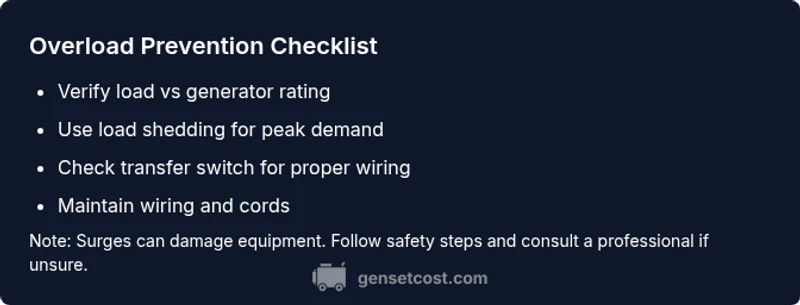
Overloads occur when the generator's continuous running rating is exceeded by the connected load, especially during surge events. Common culprits include an undersized unit for the required circuits, running several high-draw appliances at once (air conditioners, well pumps, space heaters), a faulty transfer switch, or degraded wiring. The Genset Cost Team notes that improper sizing is a leading cause, often masked by temporary surges. To prevent overloads, start with a size-check, then verify your starting vs running loads, and practice load shedding during peak demand. The decision to upgrade should be made only after confirming that the current model can't safely sustain the essential load. Remember, safety first: shutting down improperly can create CO and electrical hazards. Always follow the manual when testing load and switching between power sources.
Immediate safety steps to take
If you hear the protector trip or notice a burning smell, lose power, or see excessively hot surfaces, stop and take immediate safety actions. Move people and pets away from the generator, ventilate the area to avoid carbon monoxide buildup, and disconnect nonessential loads from the generator. Do not touch electrical cables with wet hands. If the generator is indoors or in an enclosed space, evacuate and call emergency services if CO levels are dangerous. Once it’s safe, inspect the basics: ensure the generator is dry, cords are rated for the load, and ventilation is clear.
Quick checks you can perform
- Confirm that only essential circuits are connected and that each device is within the generator’s surge rating. - Inspect cables for wear, corrosion, or loose connections. - Verify the transfer switch is correctly configured and all breakers are in the correct position. - Check ventilation around the generator to ensure intake and exhaust aren’t blocked. - Look for recent changes to the load pattern, such as new appliances or overflow from power-hungry devices.
Diagnostic flow: Symptoms to diagnosis
When overload protection trips, document the symptom: lights dim, breakers trip, or the generator stalls. Map this to likely causes: undersized unit, too many simultaneous loads, or a faulty transfer switch. If the symptom persists after reducing load, the issue may involve wiring integrity or component wear. Use a logical flow: rule out simple load issues first, then inspect hardware and connections, and finally consider aging components. Always verify safety measures before tests.
Step-by-step fixes for common overload scenarios
- Reduce load by turning off nonessential appliances and staggering startup devices. 2. Check overall load against the generator’s rating and consider a sizing calculator for future planning. 3. Inspect the transfer switch and wiring connections; reseat or tighten where appropriate with power off. 4. Test the generator with a controlled, known-good load to verify behavior. 5. If surges persist, inspect the AVR/regulator and wiring for degradation or faults. 6. Decide on repair, upgrade, or professional assessment if overload continues after fixes.
When to call a professional
If you’re uncertain about safe load calculations, wiring integrity, or the transfer switch’s correctness, stop and contact a licensed generator technician. A pro can verify sizing, perform a full electrical diagnostic, and check for CO risks and compliance with local codes. Do not bypass safety systems or warranties. Timely professional intervention reduces risk and prevents expensive damage.
Maintenance and prevention to avoid future overloads
Schedule regular maintenance, keep an up-to-date load log, and perform annual checks on the transfer switch, wiring, and AVR. Keep appliances rated for outdoor use or well-ventilated spaces, and practice planned load shedding during peak usage times. When in doubt, test your generator under supervised conditions and confirm that your backup solution meets evolving power needs.
Upgrading or replacing: choosing the right path
If overloads occur despite proper maintenance and load management, consider upgrading to a higher-rated model or a dual-generator configuration with an automatic transfer switch. Review your essential circuits and potential future needs to determine whether a larger unit or an additional generator is the best fit. Always compare total cost of ownership, including installation and running costs, before purchasing.
Steps
Estimated time: 60-90 minutes
- 1
Assess immediate safety
Power down the generator if safe and remove people from the area. Check for gas leaks or burning smells, then ensure the area is well-ventilated before touching any equipment.
Tip: Never operate the generator indoors; CO build-up is deadly. - 2
Reduce the load
Disconnect nonessential devices and stagger startup of appliances to bring the running load within the generator’s capacity.
Tip: Prioritize critical devices and use a planned load shedding approach. - 3
Check the sizing and load balance
Compare the total running load to the generator’s rated output. If you’re near or above the limit, avoid restarting until you’ve downgraded the load or upgraded the unit.
Tip: Use a sizing calculator or consult the manual for surge vs running ratings. - 4
Inspect transfer switch and wiring
With power off, inspect wiring and connections at the transfer switch. reseat any loose cables and confirm the switch engages correctly when power sources change.
Tip: A loose connection can mimic an overload symptom. - 5
Test under controlled conditions
Reconnect a limited, known-good load and watch for abnormal behavior or continued tripping. Confirm stability before restoring full power.
Tip: Document test results to guide future decisions. - 6
Plan for repair or upgrade
If the problem persists after fixes, plan replacement or a professional evaluation to ensure safe operation and compliance.
Tip: Upgrade may provide better protection and reliability over time.
Diagnosis: Generator overload protection trips or the system stalls, lights dim, or unusual heat or smell appears.
Possible Causes
- highUndersized generator for the connected load
- highSimultaneous operation of multiple high-draw appliances
- mediumFaulty or degraded transfer switch or wiring connections
- lowLoose connections or damaged wiring
- lowAging generator components (AVR, regulator) causing improper voltage
Fixes
- easyImmediately shed load by turning off nonessential appliances and reducing the running load
- mediumVerify that the generator size matches the total starting and running load; consult sizing calculator
- easyInspect the transfer switch and main connections; reseat or tighten as needed (with power off)
- mediumCheck for loose or damaged wiring; replace damaged cables
- mediumIf overload persists, call a licensed technician to evaluate AVR and electrical integration
People Also Ask
What is considered an overload for my generator?
An overload happens when the load exceeds the generator’s rated continuous running capacity or when startup surges exceed the surge rating; the protective devices trip to prevent damage.
An overload is running more than your generator can safely handle, causing the safety systems to trip.
What should I do first when the overload occurs?
Safely shut off nonessential loads and reduce the running load. Then verify that the actual demand fits within the generator’s capacity before restarting.
First, cut back loads and confirm you’re within capacity before you restart.
Can I overload an inverter generator?
Yes, if too many devices are connected or startup surges exceed the inverter’s capacity. Distribute load and check the surge ratings.
Yes, inverter models can overload if you exceed their limits; balance the load.
What is load shedding and why is it important?
Load shedding is deliberately turning off some circuits to keep the generator within safe limits, preventing damage and ensuring essential loads stay powered.
Load shedding means turning off some circuits to stay within safe limits.
When should I replace the generator due to overload?
If overload happens frequently after sizing and maintenance checks, consider upgrading to a larger model or alternate backup strategy.
If it keeps overload after fixes, upgrading may be the best option.
Is it safe to reset the overload protector after it trips?
Only after addressing the root cause and ensuring the load is safe; follow manufacturer guidance to reset and test.
Only reset after you’ve reduced load and addressed the cause.
Watch Video
Key Takeaways
- Reduce load before restarts.
- Verify generator sizing vs demand.
- Use planned load shedding for peak hours.
- Inspect transfer switch and wiring regularly.
- Consult a professional for persistent overloads.