What to Do When Generator Overflow: Quick Troubleshooting
Urgent guide to what to do when generator overflow, with safe steps, causes, and a pro checklist. Learn from Genset Cost's expert guidance for fast, safe resolution.


Shut off the generator and disconnect all loads to halt overflow. Do not touch hot components or open fuel lines while it’s running. Once cooled, inspect the fuel and oil levels, vent paths, and drainage. If overflow persists, safely contain it and contact a licensed technician. Do not run the unit until the root cause is addressed to prevent fire or environmental risk.
What counts as generator overflow?
Overflow is when fluids spill or leak from the generator’s enclosure in amounts that exceed normal evaporation or drainage. For homeowners, the most common fluids involved are gasoline, diesel, oil, and sometimes coolant. Overflow can occur at startup, during operation, or after refueling. It isn't a sign to ignore; even a small amount can ignite if exposed to a spark. Recognizing the signs early helps you protect people, property, and the unit itself. Typical indicators include visible drips or pools near the base, strong fuel or oil odors, white or blue smoke from the vent, and a continuously rising fluid level after shutdown. According to Genset Cost, overflow events are often linked to maintenance gaps and improper fueling. By understanding the basics—where the fluid should be, how the venting should behave, and what the normal level looks like—you can act swiftly and safely, reducing risk and preventing costly damage.
Immediate safety steps you should take
When overflow is observed, safety must come first. If you can do so safely, switch off the generator, unplug any connected loads, and shut off the fuel supply valve if your setup allows. Do not attempt to move or touch hot surfaces, and keep flames, sparks, and smoking materials away from the area. If the overflow is on oil, diesel, or fuel, use absorbent pads or a dedicated spill kit to contain the liquid and prevent it from spreading to soil or water. Ventilate the area by opening doors and windows, and ensure there is adequate airflow to dissipate fumes. After the unit has cooled, set up a containment plan for drainage and cleanup. In many jurisdictions, leaving spills unattended can create environmental and legal issues, so plan for prompt, safe remediation. The priority is to stop the flow, minimize exposure, and protect people nearby.
Common causes of generator overflow
There are several frequent culprits behind overflow events. A simple overfill during refueling is common, especially if multiple people have access to the tank and refueling happens when the engine is warm. Blocked vent lines or a kinked vent hose can trap pressure and force liquids into the enclosure instead of venting safely. A faulty float switch, level sensor, or warped fill cap can cause incorrect readings and uncontrolled overflow. Cracked tanks, gaskets, or seals allow leaking at joints, particularly after temperature swings. Weather and environmental exposure—rainwater entering the intake or condensation in a humid climate—can exacerbate overflow scenarios. Finally, neglecting routine maintenance, such as not inspecting lines, filters, or drainage systems, consistently leads to imperfect performance and higher overflow risk. Genset Cost analysis shows maintenance gaps are a frequent root cause of overflow incidents, underscoring the need for regular checks and proper fueling practices.
Diagnostic flow: symptom to diagnosis
A logical diagnostic flow helps you identify the root cause without guesswork. Start with the most obvious symptom: a fluid puddle or persistent odor around the generator. If that’s the case, check the fuel tank level first—overflow from overfill is the simplest explanation. If the level is correct, inspect vent paths for blockages, kinks, or water intrusion and verify that vent caps/screens are clean. If venting looks normal, test the float switch or sensor if your unit has electronic controls. Look for damp wiring, gasket leaks, or cracks in the enclosure that could permit leaks to appear outside the case. A disciplined approach—eliminating simple issues first, then moving to more complex checks—reduces the risk of unnecessary disassembly. Record each finding, because a clear trail helps a service professional diagnose the issue faster if you need to call one. If at any point you uncover fuel or oil on electrical components, stop and consult a technician immediately.
Step-by-step fix for the most common cause
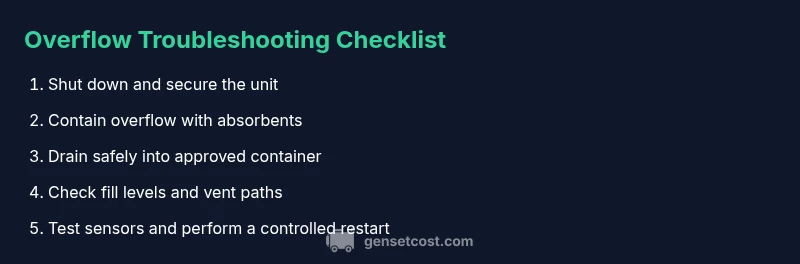
The most common overflow trigger is a combination of overfill and vent blockage. Use this plan to address both quickly and safely. Step 1: Power down and secure the unit, disconnect loads, and close the fuel valve if applicable. Step 2: Put on PPE, contain the overflow with absorbent pads, and drain it into an approved container following local regulations. Step 3: Inspect the fill line and tank level, then refill to the manufacturer’s recommended level exactly. Step 4: Clear vent hoses and ensure they are unobstructed; replace any damaged sections. Step 5: Check the float switch or sensor for proper operation and recalibrate if needed. Step 6: Reassemble any panels, reconnect power, and run the engine at a low load for a controlled test. If you notice continuing overflow, stop the test and contact a professional. Tip: Work on a dry surface and never mix fuels or solvents near ignition sources.
Prevention: how to avoid overflow in the future
Preventing overflow starts with a proactive maintenance plan. Schedule regular checks of fuel levels, vent integrity, drainage, and seals. Label the fuel source and ensure only authorized personnel refuel the unit. Store fuel away from heat sources or open flames and use the recommended fuel grade. Inspect gaskets, seals, and the enclosure on a quarterly basis, and perform a test run after refueling or after a period of heavy rain or dust. Clean ventilation paths and ensure the drainage pan is free of debris. Document all maintenance tasks in a log so you can trace recurring issues and address them before they escalate. By building a routine around these tasks, you reduce overflow risk and extend the life of your generator.
When to call a professional and safety notes
If the overflow persists after performing the basic checks, or if you cannot identify the root cause, contact a licensed generator technician. Do not attempt major disassembly or repair if you are not trained; working with fuel or oil around electricity poses serious hazards. If there is a strong odor, visible smoke, or signs of gas leakage, evacuate the area and call emergency services. Keep a clear perimeter around the unit and restrict access until a professional has inspected it. After service, request a written report detailing the findings and any parts replaced. For peace of mind and longer equipment life, consider a preventative maintenance plan with a reputable service provider such as a generator specialist or the manufacturer’s authorized service network.
Quick reference overflow incident checklist
- Stop the generator, disconnect loads, and switch off fuel if safe
- Contain overflow using absorbent materials and prevent runoff
- Contain and label any spilled fluids for proper disposal
- Inspect for overfill, vent integrity, and sensor faults
- Test restart under supervision and monitor for signs of leakage
- Schedule maintenance checks to prevent recurrence
Steps
Estimated time: 45-60 minutes
- 1
Power down and secure the unit
Shut off the generator, disconnect all loads, and close the fuel valve if applicable. Ensure the area is safe from heat sources and sparks before touching any fluids.
Tip: Always wear PPE and keep a clear work area. - 2
Contain and drain overflow
Place absorbent pads under the overflow and use a safe container to capture the liquid. Do not mix fuels or solvents; dispose according to local regulations.
Tip: Have spill kits ready and use gloves and eye protection. - 3
Check fill levels and refuel correctly
Verify the tank level matches the manufacturer’s guidance. Refill slowly and monitor for any signs of continued overflow.
Tip: Refuel when the engine is cool to avoid pressure buildup. - 4
Inspect vent paths
Examine vent hoses or caps for blockages, kinks, or water intrusion. Clear debris and ensure unobstructed airflow.
Tip: Do not force removal of stubborn obstructions; use approved tools. - 5
Test sensors and seals
Check the float switch, level sensor, and gaskets for proper operation. Replace defective parts as needed.
Tip: Follow the manufacturer’s calibration procedure for sensors. - 6
Controlled restart and monitoring
Reconnect power and run at a low load, watching for any signs of fresh leakage. If overflow recurs, stop the test and call a professional.
Tip: Document the test with notes and photos for service records.
Diagnosis: Generator overflow on startup or during operation
Possible Causes
- highOverfill in fuel tank or oil reservoir
- mediumBlocked or kinked vent lines
- lowFaulty float switch or sensor
Fixes
- easyDrain overflow safely and adjust fill levels per manual
- easyClear vent lines and check for blockages
- mediumReplace faulty sensor or seek service
People Also Ask
What is generator overflow and why does it happen?
Overflow refers to liquid spilling from the generator enclosure due to overfill, vent blockages, or faulty sensors. It creates fire and environmental hazards if not addressed promptly. Regular maintenance reduces the risk.
Overflow means liquid is spilling from the generator due to fueling or vent issues. It can be dangerous and should be handled promptly with safety steps.
Can I run the generator after stopping overflow?
No. Do not start the generator until you have identified and fixed the root cause. Restart only after a safe, controlled inspection and clearance of any leaks.
Do not run it until the issue is fixed.
What are the first safety steps during overflow?
Shut off power and fuel, isolate the area, and use absorbent materials to contain spills. Ventilate the space and keep away from ignition sources.
Shut off the unit, secure the area, and contain spills safely.
Should I drain fuel myself or call a pro?
If you are trained and it's safe, draining may be possible. If unsure, contact a professional to avoid spills or exposure.
Only drain if you’re trained; otherwise contact a pro.
How can I prevent overflow in the future?
Follow a routine maintenance plan, fuel correctly, inspect vents, and test after refueling or heavy weather. Regular checks reduce overflow risk.
Regular maintenance and careful fueling prevent overflow.
Watch Video
Key Takeaways
- Stop the unit and let it cool before inspecting.
- Contain and safely drain any overflow to minimize risk.
- Identify root causes (overfill, venting, sensors) and fix before restart.
- Maintain a proactive maintenance routine to prevent future overflow.