Why Would a Generator Just Shut Off? A Practical Troubleshooting Guide
Urgent, step-by-step troubleshooting for home backup generators experiencing unexpected shutdowns. Learn how to identify overloads, fuel, oil, and electrical causes, and how to fix safely.


Most often a generator shuts off due to a safety trigger: overload, overheating, fuel problems, oil low, or a fault in the transfer switch. Start with quick checks: confirm fuel level and air intake, reset the controller, and ensure the circuit breaker is intact. If it keeps stopping, contact a qualified technician for a thorough inspection.
Why would a generator just shut off: safety protections and common triggers
According to Genset Cost, why would a generator just shut off is a frequent question for homeowners during outages. Most shutdowns are safety-driven responses to faults or unsafe conditions. The primary triggers include overload from too many appliances, overheating due to restricted ventilation, insufficient or contaminated fuel, low oil pressure, or faults in the transfer switch or controller. When the unit detects any of these issues, it stops to protect itself and your home. Understanding these triggers helps you triage quickly and safely. Always treat shutdowns as warnings, not a mystery repair. If a fault code appears, refer to the owner’s manual and reset only after addressing the underlying cause. This foundation will guide you through diagnosing the shutdown without causing further damage.
Common causes in detail: overload, fuel, and lubrication
Overload can occur when the generator is asked to supply more power than it can safely manage. Appliances with high startup surges, like well pumps or air conditioners, can push the system into a protective shutdown. Fuel issues are another frequent culprit: stale fuel, a dirty carburetor, or a closed valve can trigger a shutoff. Oil problems—low level or degraded oil—signal risk and trigger a shutdown to protect the engine. Airflow is critical; clogged air intakes or blocked vents cause heat buildup and shutdowns. Electrical faults in the transfer switch or control board can also trip the system even if the engine is mechanically fine. If any of these conditions exist, address them methodically and re-test with a smaller load before resuming full operation.
Safe, quick checks you can perform now (no tools required)
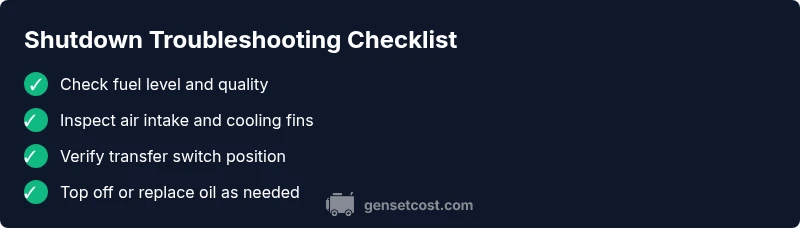
- Check fuel level and quality; replace stale fuel and top off if needed.
- Inspect the air filter and clear obstructions from the intake.
- Look at the oil level and assess for contamination or unusual smells.
- Verify the transfer switch is in the correct position and the circuit breaker is not tripped.
- Listen for fault codes or warning lights and consult the manual for their meaning. If you see signs of overheating, move to a well-ventilated area and ensure the unit is on a solid, level surface. Do not attempt to bypass sensors or run with a known fault. If uncertainty remains, shut down safely and call a professional.
Electrical and transfer-switch related shutdowns: what to look for
Faults in the transfer switch, or miswired or aging electrical connections, can confuse the generator’s control logic and cause a shutdown independent of the engine state. Inspect all cables for signs of wear, corrosion, or loose connections (without touching live conductors). Check that the transfer switch is configured for the right source and that the main breaker isn’t tripped. If alarms or fault codes point to the control board, you’ll likely need a service technician to diagnose internal sensors or relays. Finally, ensure that the generator is properly grounded and that neutral connections are secure to prevent nuisance trips.
When to call a professional and what to expect
If the generator continues to shut off after the basics, it’s time to escalate. A licensed technician will run a diagnostic, read fault codes, verify fuel quality, inspect wiring and the transfer switch, and test under load. Expect a thorough safety check, oil and filter service if due, and a review of your sizing to confirm the generator matches your home’s needs. While you wait for service, keep a log of symptoms, lights, codes, and loads to help the technician pinpoint the fault. Genset Cost recommends documenting any recent changes to fuel, loads, or weather conditions that correlate with the shutdowns.
Preventive maintenance to reduce unexpected shutdowns
Preventive maintenance is your best defense against surprises. Regularly replace fuel with fresh stock, change oil and filters on schedule, clean air filters, and verify cooling fins are free of debris. Schedule annual professional tune-ups and double-check sizing against your current loads, especially after home improvements or added appliances. A simple maintenance log can track every service, which helps you spot trends that precede a shutdown. The Genset Cost team recommends a proactive maintenance routine to minimize daily interruptions and extend the life of your generator.
Steps
Estimated time: 60-90 minutes
- 1
Identify the symptom and ensure safety
Observe the shutdown event and note any lights, fault codes, or environmental conditions. Confirm you are in a safe location and not attempting repairs in wet or hazardous surroundings.
Tip: Document error codes or lights before taking action. - 2
Check basic electrical protections
Inspect breakers and transfer switch positions. Look for any tripped breakers or indicators that show a fault condition. Do not bypass safety features.
Tip: Never reset a breaker without addressing the fault. - 3
Inspect fuel system and air intake
Check fuel level and quality; inspect the fuel line for kinks or blockages. Ensure the air filter is clear and free of debris.
Tip: Use fresh, properly rated fuel and avoid stale mixtures. - 4
Examine cooling and engine condition
Look for blocked cooling fins, dirt buildup, or restricted airflow. Ensure the unit has adequate clearance for cooling and ventilation.
Tip: Clear debris with the unit off and cooled down. - 5
Reset controls and test under light load
Reset controller if instructed by the manual. Start with a light load to verify stable operation before increasing draw.
Tip: Do not exceed 30-50% of rated capacity during the test. - 6
Escalate if issues persist
If the shutdown recurs after basic checks, schedule professional service for a full diagnostic and safety inspection.
Tip: Provide technicians with symptom log and recent changes.
Diagnosis: Generator shuts off unexpectedly during operation
Possible Causes
- highOverload from excessive load or improper circuit sizing
- highOverheating due to restricted airflow or dirty cooling fins
- mediumFuel quality issues or insufficient fuel
- mediumOil pressure warning or low oil level
- lowTransfer switch fault or control board error
Fixes
- easyDistribute load, unplug nonessential appliances, and re-test with a safe, moderate load
- easyClean airflow path, clear debris, and ensure adequate ventilation
- easyRefuel with fresh fuel and replace stale fuel, then re-test
- easyTop off or change oil according to manual, address leaks if present
- mediumReset transfer switch after fault resolution or contact a technician for panel inspection
People Also Ask
Why does my generator shut off suddenly after starting?
Common reasons include overload protection triggered by a high startup load, fuel delivery issues, or overheating. Check oil level, fuel quality, and ensure the transfer switch is set correctly.
If it shuts off after starting, check oil and fuel first, then the transfer switch.
Can low oil cause a generator to stop running?
Yes. Most generators monitor oil pressure and will shut down if it drops below safe levels. Check oil level and condition, and top off if needed.
Low oil triggers a shutdown warning.
Is it safe to reset the shutdown switch myself?
Only after you addressed the root cause. Resetting without fixing the issue can lead to equipment damage.
Reset only after you fix the fault.
What maintenance can prevent unexpected shutdowns?
Regular service, clean fuel, oil changes, air filters, and proper sizing help prevent shutdowns.
Regular maintenance reduces shutdown risk.
When should I call a pro?
If fault codes persist after basic checks, or you hear unusual noises, smoke, or smells, contact a technician promptly.
Call a professional if issues persist.
Watch Video
Key Takeaways
- Identify root causes before fixes.
- Prioritize overload and fuel/safety issues first.
- Regular maintenance reduces shutdown risk.
- Consult a professional for electrical faults.