How to tell if a generator is overloaded: practical guide
Learn to identify overload conditions in home generators with clear signs, safe testing steps, and proven mitigation strategies for homeowners and property managers.


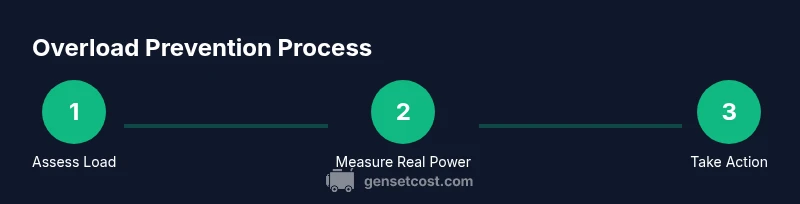
To tell if a generator is overloaded, measure the real-time load and compare it to the unit’s rated continuous output. Look for overheating, frequent breaker trips, voltage sag, or unusual sounds. If appliances regularly approach the limit, reduce load or upgrade. Use a load meter or smart transfer switch for safe testing, never exceed the rated continuous output.
Understanding overload and why it matters
How to tell if generator is overloaded starts with understanding what overload means in practical terms. An overloaded generator is simply one that is routinely asked to supply more power than its continuous rating allows, especially during peak appliance starting. According to Genset Cost analysis, overload often happens when homeowners underestimate startup surges or misread the difference between peak demand and continuous running load. A reliable generator should handle your average running load with plenty of headroom for brief surges; when it doesn’t, you risk overheating, premature wear, or nuisance shutdowns. This section defines continuous output versus surge capacity, and distinguishes legitimate overload from temporary spikes. Readers will learn the key terms and why accurate sizing protects equipment and comfort during outages.
Practical signs that a generator may be overloaded
Identifying overload begins with watching for concrete symptoms in daily operation. Common signs include: frequent breaker trips or automatic shutdowns, noticeable voltage sag on appliances (lights dimming or electronic devices rebooting), abnormal engine speed fluctuations, excessive heat or burnt smells around the exhaust area, and reduced response to added loads. If your generator frequently runs near its stated limit, or you notice reduced electrical performance during peak loads, you’re likely pushing past safe limits. Documenting the exact loads during these events helps you compare against the manufacturer’s rating and avoid confusing a temporary surge with a sustained overload. This section also clarifies how to separate overload from nuisance shutdowns caused by faulty wiring or a misbehaving transfer switch.
How to measure load safely: best practices and tools
Measuring load accurately is essential to tell if overload is present. Use a clamp-on ammeter to capture real-time current on the generator output, and pair it with a power meter to read real power (kW), apparent power (kVA), and power factor. Calibrate measurements by confirming voltage stays within ±5% of your rated output. When possible, perform readings with a known, controlled load rather than random household devices. Always isolate the generator from the building electrical system before poking at connections, and wear basic safety gear such as gloves and eye protection. The goal is to determine whether the sustained load exceeds what the generator is designed to deliver continuously, not just during brief startup events.
Clearing up myths and common misconceptions
There is a lot of misinformation about generator overload. A frequent misconception is that higher total wattage automatically means overload—what matters is sustained load relative to continuous rating and proper handling of starting current. Another myth is that a larger generator will always fix the problem; if you don’t manage loads, you’ll still experience cycling and overheating during heavy use. A third pitfall is misinterpreting a brief spike as an overload; true overload involves persistent, repeated strain beyond the unit’s continuous rating. This section debunks these myths with practical explanations grounded in generator performance fundamentals and load management.
Step-by-step approach to verifying overload in the field
To verify overload in real scenarios, start with a basic baseline of running loads. Then incrementally add devices while monitoring current, voltage, and temperature indicators. Compare actual sustained load to the generator’s continuous rating; if you approach or exceed 80% of rating for more than a few minutes, you’re entering a risk zone. Note that certain devices (like air conditioners or pumps) have higher starting currents and can cause short-term transients that do not reflect steady-state load. Record the events that trigger any alarms and correlate them with the equipment in use. This approach provides a repeatable method to confirm overload and informs the next steps.
Practical mitigation: sizing, distribution, and upgrades
If overload is confirmed, you have several options. First, improve load distribution with a transfer switch or automatic load shedding so critical devices stay powered without overloading the unit. Second, consider upgrading to a generator with a higher continuous rating or adding a secondary generator for heavy loads. Third, implement staged startup for high-demand appliances to avoid simultaneous surges. Finally, perform regular maintenance to keep the unit running at peak efficiency. The aim is a reliable outage experience without overheating or unexpected shutdowns.
Monitoring and maintenance to prevent future overloads
A proactive monitoring plan helps prevent overload before it happens. Install a smart monitoring system that tracks real-time load, runtime, and fuel usage; pair it with alerts that notify you when load approaches 80% of capacity. Schedule annual inspections and a pre-season test to verify that the generator operates within temperature and voltage tolerances. Routine checks for air filters, spark plugs, and coolant levels ensure the generator can meet demand when the power goes out. This section provides a forward-looking approach to keeping your backup power resilient over time.
Tools & Materials
- Clamp meter (AC)(Measures real-time current on the generator output cable.)
- Digital multimeter(For voltage and basic continuity checks.)
- Power meter / wattmeter(Measures real power (kW), apparent power (kVA), and power factor.)
- Safety gloves(Avoid burns during testing; choose Class 5 or higher.)
- Safety goggles(Eye protection during testing under load.)
- Non-contact infrared thermometer(Checks surface temperature of exhaust or cabinet for overheating.)
- Transfer switch diagram/manual(Know safe transfer paths and isolation protocol.)
- Load bank (optional)(If available, allows controlled loading without household devices.)
- Owner's manual or spec sheet(Know rated continuous output (kW/kVA) and starting currents.)
Steps
Estimated time: 60-120 minutes
- 1
Verify ratings and safety setup
Begin by locating the generator’s continuous rating and surge capacity in the manual. Confirm the transfer switch is in the correct position and that the area is clear of obstructions. This ensures you’re testing within safe, defined limits so readings are meaningful.
Tip: Always confirm main power to the building is isolated before touching wiring. - 2
Establish a baseline with no load
Start the unit and record voltage and frequency with no significant load. This baseline helps you spot drift when you begin adding loads and ensures tools are measuring correctly.
Tip: Document the baseline numbers for later comparison. - 3
Add load incrementally
Attach a small, known load (e.g., a heater or space heater) and monitor current (A), voltage (V), and power (kW). Increase gradually while keeping the total below 80% of continuous rating.
Tip: Avoid all-at-once startup to prevent large transient surges. - 4
Monitor for signs of stress
Watch for overheating, unusual noises, voltage dips beyond acceptable variance, or tripping breakers. Note any alarms and the exact load level at which they occur.
Tip: If you see rapid temperature rise, stop increasing load immediately. - 5
Confirm sustained overload
If readings show sustained load near or above the rated limit for several minutes, you’ve confirmed overload risk. Compare with the unit’s spec sheet to be sure.
Tip: Differentiate transient surges from sustained demand. - 6
Plan mitigation
Decide whether to shed load, upgrade equipment, or adjust distribution. Implement staged starting and consider a second generator for heavy loads.
Tip: Prioritize essential circuits first to maintain critical power during outages.
People Also Ask
What counts as overload for a generator?
Overload occurs when sustained load exceeds the generator’s continuous rating, especially during starting surges. It can cause overheating, reduced efficiency, and shutdowns. Always compare real-time load to the rated continuous output.
Overload means your generator is running at or above its continuous limit for an extended period, risking damage.
Can a load surge be mistaken for overload?
Yes. A brief surge from a starting motor may spike current temporarily without indicating overload. Distinguish by watching whether the high load persists for several minutes.
A quick spike isn’t overload, but a sustained high load is.
How do I measure load safely?
Use a clamp meter on the generator output, and a wattmeter to read real power. Verify voltage within rated range and perform measurements with the transfer switch in the proper position.
Measure current and power with two meters while keeping safety in mind.
What should I do if I’m overloaded?
Reduce nonessential loads, stagger appliance starts, or upgrade to a generator with a higher continuous rating. Consider adding a second generator or a transfer switch with load shedding.
Dial back the load or upgrade your system to prevent damage.
Is overload monitoring required for all homeowners?
While not legally required, proactive monitoring prevents damaging overload, extends generator life, and ensures power during outages. Regular checks and proper sizing are highly recommended.
Monitoring helps you avoid costly failures during outages.
Can overload cause safety hazards?
Yes. Overheating and electrical faults can pose fire risks and shock hazards. Always follow safety guidelines and use PPE when testing.
Overloading is not just a performance issue—it's a safety risk.
Watch Video
Key Takeaways
- Know your continuous rating and surge capacity
- Use real-time meters to compare load against capacity
- Incrementally load and monitor to avoid false positives
- Upgrade or redistribute loads to prevent recurring overload
- Maintain a proactive monitoring plan to prevent future overloads