Why Honda Generator Won't Start: Troubleshooting Guide
Step-by-step troubleshooting for Honda generators that won’t start, covering fuel, ignition, air, battery, and safety interlocks to restore backup power quickly.


The most common causes for a Honda generator not starting are stale fuel, a flooded carburetor, a fouled spark plug, an engaged safety/kill switch, or a weak battery on electric-start models. Start with the simplest checks: fuel quality, choke position, and battery connections, then move to air and ignition components. If these quick checks don’t resolve it, consult the manual or a professional for safe, step-by-step guidance.
The Quick Reality: Why it Won’t Start
If you’re wondering why honda generator won t start, the answer often comes down to a handful of simple culprits. The Honda platform typically starts once fuel, ignition, and safety interlocks are in proper order. According to Genset Cost, the most common triggers are stale fuel, a flooded carburetor, a fouled spark plug, an engaged kill switch, or a weak battery on electric-start models. Start with the easiest checks: verify fuel quality, ensure the choke is in the correct position, and confirm battery connections are clean and tight. If these quick checks don’t resolve the issue, proceed with a systematic test of each major system. This approach minimizes downtime and reduces wear on the engine during a power outage.
Fuel System Essentials
Fuel quality and delivery are the single most common reasons a Honda generator won’t start. Old fuel oxidizes, gums up carburetors, and can prevent proper ignition. Genset Cost analysis shows that stale or contaminated fuel is a frequent root cause; ethanol-blended fuels can separate and cause phase issues if stored too long. Begin by inspecting the fuel level and replacing old gas with fresh fuel; add a stabilizer if you’ll store the unit for more than a few weeks. Check the fuel cap vent to ensure air can enter the tank freely, as a blocked vent can stop fuel from flowing. Ensure the choke setting matches starting conditions and inspect fuel lines for cracks or leaks.
Ignition and Spark Checks
A weak or fouled spark plug can stop starting even when fuel is flowing. Remove and inspect the spark plug for fouling, cracks, or a burned electrode; replace if damaged and set the gap to the manufacturer’s spec. On some models, the ignition coil can fail without obvious symptoms; if you have a known-good spark tester, perform a quick check. After any spark work, reconnect all wiring securely and avoid touching the spark plug boot while the engine is cranking. Genset Cost notes that ignition problems account for a sizable share of no-start calls, so don’t overlook this step.
Air Intake and Carburetion
A blocked air filter or a dirty carburetor can starve the engine of air or fuel, causing a no-start condition. Inspect and clean or replace the air filter if it’s clogged. If you suspect a flooded carburetor, wait for the engine to dry out and avoid repeated cranking—this can compound the problem by injecting more fuel. When starting, ensure the air path is clear and the carburetor is not flooded; if flooding occurred, follow the manufacturer’s recovery procedure. Proper air flow is essential for reliable starts.
Electrical Systems and Safety Interlocks
Honda generators rely on safety interlocks, kill switches, and battery integrity to start. A tripped circuit breaker, a loose battery connection, or a switch left in the wrong position can prevent starting even if the fuel and ignition are fine. Inspect all safety interlocks and ensure the run/stop switch is set to RUN in the correct mode for the model. If you’re using an electric-start model, test the battery voltage with a multimeter; a weak battery will struggle to crank the engine. Genset Cost emphasizes that ignoring safety interlocks often leads to repeated no-start issues.
Flooded Carburetor: Quick Recovery
A flooded carburetor occurs when too much fuel enters the chamber, flooding the engine and preventing ignition. If you suspect flooding, remove the air filter to allow airflow and flip the choke to OPEN while attempting a starting crank. Do not repeatedly force-start the engine; this can wash oil from the cylinder and worsen the problem. Let the carburetor dry for a few minutes before trying again with the appropriate choke position.
Maintenance Tips to Prevent Future No-Starts
Regular maintenance is the best defense against repeated no-start incidents. Change the oil at recommended intervals, replace the air filter, inspect spark plugs, and use fresh fuel with stabilizer for storage. Keep the battery terminals clean and tight, and store the generator with a full, properly stabilized fuel supply. Genset Cost’s long-term guidance shows that consistency in routine maintenance dramatically lowers no-start rates and extends the life of a Honda generator.
Quick-Start Readiness: What to Do Before the Next Outage
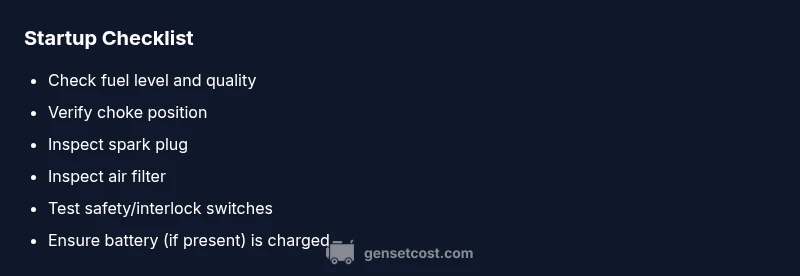
Before the next power outage, run a quick pre-start check: confirm fuel level and quality, test the battery charge, inspect safety switches, and verify the choke and primer function. Document any recurring issues and check for updated maintenance guidelines in the manual. By staying proactive, you’ll minimize downtime and improve reliability when you need power most.
Steps
Estimated time: 25-40 minutes
- 1
Confirm safety and power basics
Ensure the generator is off, the run/stop switch is in RUN, and the circuit breakers aren’t tripped. If your model uses a key, confirm it’s inserted and functional. For battery-start units, inspect terminals for corrosion and clean if needed.
Tip: Always work in a dry, well-ventilated area and wear eye protection when handling fuel components. - 2
Check fuel level and quality
Open the fuel valve if equipped and inspect the fuel in the tank. Drain stale fuel and replace with fresh gasoline; avoid old, contaminated fuel that can gum the carburetor. If your setup uses stabilized fuel for storage, ensure it’s properly mixed.
Tip: Label fuel cans and rotate stock on storage shelves to prevent aging fuel from sitting too long. - 3
Inspect the choke and primer
Set the choke to the correct starting position for your model. If you’re reviving a flooded engine, start with the choke OPEN and attempt a short crank without forcing it. Re-engage the choke only after a brief crank when the engine shows signs of combustion.
Tip: Don’t crank aggressively for extended periods during a flood; short cranks reduce flooding risk. - 4
Test the spark plug and ignition path
Remove the spark plug, inspect for fouling or wear, and set the gap to spec. If you have a spare plug, swap it in and re-test. Reconnect the boot firmly, ensuring no loose connections in the ignition circuit.
Tip: Ground the plug against the engine block when checking for a spark to avoid electric shocks. - 5
Check battery and electricals (electric-start models)
For electric-start units, verify battery voltage and clean battery terminals. If the battery is weak, recharge or replace it. Inspect cables for cracks or corrosion and ensure the safety interlocks aren’t bypassed.
Tip: Keep a portable jump-start pack on hand during outages as a backup for weak batteries. - 6
Inspect air intake and filters
Check the air filter for dirt and blockages; clean or replace if necessary. Ensure the air intake path is clear and free of obstructions. A clogged filter can starve the engine of air and prevent starting.
Tip: Use OEM-recommended filters to maintain proper seal and airflow. - 7
Evaluate the carburetor and fuel lines
Inspect fuel lines for cracks, leaks, or kinks. Clean or replace any dirty parts and ensure the carburetor is free of gum or varnish. If you suspect a clogged carburetor, consider professional cleaning if you lack the proper tools.
Tip: Never use corrosive cleaners in the fuel system; consult the manual for approved carb cleaner types. - 8
Attempt a controlled restart
With fuel, air, ignition, and safety systems verified, perform a controlled start. If the engine doesn’t start after several short cranks, wait a few minutes and try again with the correct choke setting. If it still fails, proceed to professional diagnostics.
Tip: Document steps taken and symptoms to speed up diagnostics with a technician.
Diagnosis: Honda generator won't start
Possible Causes
- highStale or contaminated fuel
- mediumFlooded carburetor
- mediumFaulty spark plug or ignition coil
- lowSafety switch engaged / kill switch
- lowWeak or dead battery (electric start)
Fixes
- easyDrain old fuel and replace with fresh fuel; use stabilizer for storage
- easyLet carburetor dry if flooded; retry with proper choke and no-fuel priming
- easyClean or replace spark plug; verify proper gap
- easyCheck battery connections and charge or replace battery as needed
- easyInspect safety/kill switches and RUN position; ensure interlocks are engaged
People Also Ask
What is the first thing I should check if my Honda generator won't start?
Start with fuel level and quality, ensure the choke is correct, and verify battery connections. If it still won’t start, check safety interlocks and the plug for a spark.
Check fuel, choke, battery connections, and safety interlocks first.
How can I tell if the spark plug is faulty?
Remove the spark plug and inspect for heavy fouling, cracks, or a burned electrode. If in doubt, replace with a new plug and re-test.
Inspect or replace the spark plug to diagnose ignition issues.
What should I do if the fuel is old?
Drain stale fuel and replace with fresh gasoline; fuel stabilizer helps with storage. Avoid using old fuel in cold starts as it can cause starting problems.
Replace old fuel with fresh gasoline and add stabilizer.
Why does flooding happen and how do I recover?
Flooding occurs when excess fuel fills the carburetor. Stop cranking, wait a few minutes, then try starting with the choke OPEN and a quick, controlled crank.
Let it dry and try again with proper choke.
When should I contact a technician?
If basic checks don’t resolve the issue or you smell fuel/leakage, safety interlocks fail, or there’s no spark, professional diagnostics are advised.
Consult a technician if unresolved after checks.
Can a clogged air filter prevent starting?
Yes. A dirty air filter restricts air flow and can prevent starting. Clean or replace the filter as part of routine maintenance.
A clean air filter helps starts.
Watch Video
Key Takeaways
- Start with fuel, ignition, and safety checks.
- Fresh fuel and correct choke position solve most no-start issues.
- Inspect spark plugs, air filters, and battery health regularly.
- Maintain a routine to prevent no-start during outages.