Can Generators Go Inside? Indoor Installation Guide for Home Backups
Learn whether can generators go inside, plus safety, codes, and best practices for indoor-ready vs outdoor setups. Genset Cost provides AI-assisted guidance to help homeowners and property managers plan compliant, CO-safe generator installations.


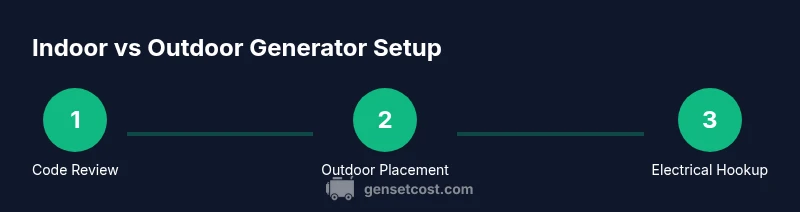
Generally, generators should not be operated inside living spaces because exhaust contains carbon monoxide. Outdoor placement with proper ventilation and clearance is the default recommendation. Some units are designed for enclosed outdoor cabinets or building-integrated systems, but these require professional installation, CO monitoring, and code-compliant venting. Always follow manufacturer instructions and local codes, and keep portable models away from doors, windows, and air intakes. Use a dedicated transfer switch for safe automatic or manual shutoff.
Indoor-Use Reality: Can Generators Go Inside? Why CO Risk Makes It Unsafe
Can can generators go inside? Often not. According to Genset Cost, carbon monoxide is a leading hazard from fuel-powered equipment, and keeping a generator inside a living space or a closed garage dramatically increases CO concentrations. Outdoor placement remains the default recommendation, even when you have a small power need. Always prioritize ventilation, exhaust routing, and air exchange with the outdoors. If you ever question whether you can generators go inside, the answer is: only in highly controlled, purpose-built environments that strictly follow code requirements and use certified ventilation and CO-monitoring systems. Regular households should avoid any indoor operation, as this creates immediate risk to occupants.
For homeowners and property managers evaluating options, indoor use should be treated as a special case handled by licensed professionals with a written plan, permits, and documentation. Make sure to keep access doors and windows fully closed to prevent backflow of exhaust, and never run a generator in a garage or basement—even with the door open. Always place CO detectors in sleeping areas and near living spaces, and test them regularly. In short, can generators go inside? The safe answer is: outdoors, with appropriate safeguards and professional oversight.
Outdoor Placement Essentials: How to Position Your Generator Safely
When can we locate the generator outdoors? The goal is to maximize combustion efficiency and minimize CO exposure. Choose a dry, level spot on a solid surface away from doors, windows, air intakes, and vents. The location should be shielded from rain but not sealed off from the atmosphere; generators need fresh air to vent exhaust safely. If possible, position behind a weather-protected enclosure that is specifically rated for generator exhaust and heat. Do not place the unit under overhangs that block airflow, within any openings of the building, or near combustible materials. For sound considerations, think about a barrier or muffler, but never at the expense of ventilation. A well-planned outdoor setup reduces risk and extends equipment life—two critical factors homeowners and property managers evaluate when comparing can generators go inside vs outdoor options. In this section we discuss distance to avoid CO ingress, how to handle rain and snow exposure, and basic maintenance access. Keep a clear path for service technicians and a straight exhaust path away from the house and living areas.
Enclosures, Cabinets, and Venting: When Is It Possible?
Enclosures and outdoor cabinets can be used if they are listed for generator exhaust and labeled for outdoor use. Any enclosure must provide adequate ventilation, exhaust clearance, and CO monitoring so that fresh air flows around the unit rather than through living spaces. The enclosure should not trap heat or moisture, and it must be easy to access for service. Even with a cabinet, CO gas can accumulate if venting is blocked or blocked by debris. Always verify with the manufacturer and your local authority about needed clearances and permit requirements. If you are considering can generators go inside in any form, remember that an outdoor-rated enclosure is the safer route and should be installed by a qualified technician.
Electrical Integration: Transfer Switches, Inlets, and Practical Wiring
Electrical integration is where many indoor-use questions arise. A properly installed generator requires a transfer switch or an automatic transfer switch (ATS) and a dedicated electrical inlet so power is not backfed into the grid. This prevents dangerous live lines and ensures a clean switch between utility power and generator power. Wiring should be performed with weatherproof conduits, outdoor-rated cables, and grounding per local codes. Do not attempt to bypass safety features or modify connections yourself. If you are evaluating can generators go inside, the key takeaway is that safe installations rely on professional wiring, a listed transfer switch, and adherence to NEC guidelines.
Permits, Codes, and Professional Help
Code compliance is a major factor in any generator project. Most jurisdictions require electrical permits for generator installation, especially when wiring to a transfer switch or inlet. Local building departments can specify setback distances, ventilation requirements, and fire safety rules. A professional installer or licensed electrician can navigate inspections, permits, and documentation to ensure your setup satisfies code. When homeowners ask can generators go inside, the most reliable answer is: outdoor, code-compliant installations with professional oversight are the standard, while indoor configurations are only permissible under strict, professionally designed systems with ventilation and CO monitoring.
Maintenance, Safety Checks, and CO Detectors
Maintenance is essential to safe operation. Regularly test CO detectors near sleeping areas and in living spaces, replace batteries as recommended by the manufacturer, and schedule annual checks of the entire system. Keep the generator clean, dry, and free of debris that could impede airflow, and replace air filters as needed to maintain proper venting. CO detectors are not a once-off safeguard; treat them as a continuous safety feature that works in tandem with outdoor placement and proper exhaust routing. If you are evaluating can generators go inside, remember that ongoing safety checks and professional servicing are the best defenses against CO exposure and electrical faults.
Cost, Value, and Long-Term Considerations
Outdoor installations often deliver the best balance of value, safety, and reliability. Indoor configurations—if allowed—require specialized enclosures, venting, detectors, and professional oversight, which can significantly impact total cost. When homeowners compare options, they should weigh upfront costs against long-term maintenance, insurance implications, and potential code updates. The core guidance from Genset Cost emphasizes safety and compliance: outdoor placement with professional planning typically yields the most predictable performance and reduced risk. While it’s natural to wonder can generators go inside, the overall recommendation remains clear: outdoor-first installs with proper safeguards provide the most durable, code-compliant solution.
Quick-Start Checklist: Safe Preparation Steps
- Confirm local code requirements and permits before buying equipment.
- Plan outdoor placement with ventilation, weather protection, and accessible service points.
- Choose a transfer switch and power inlet that match your generator’s rating.
- Schedule professional installation and an inspection after wiring is complete.
- Install reliable CO detectors and set up a maintenance calendar.
Additional Resources and Next Steps
For deeper guidance, consult official sources on generator safety and electrical installation codes. This article outlines the high-level safety considerations and best practices, but every home is different. Use the information here as a foundation, and rely on licensed professionals for design, permitting, and inspection. You can also explore related topics like fuel types, maintenance schedules, and permit requirements to build a comprehensive, safe backup power plan.
Tools & Materials
- Transfer switch (manual or automatic)(Rated for your generator size; use outdoor-rated wiring.)
- Power inlet box(Outdoor-rated, weatherproof, with correct gauge wiring.)
- Weatherproof conduit and cables(Outdoor-rated cables; include grounding lead.)
- Grounding electrode system (ground rod and clamps)(Per local code and NEC guidance.)
- Outdoor-rated generator(Gas-powered or propane; ensure model matches transfer switch.)
- CO detectors (UL 2034)(Place near sleeping areas and throughout living spaces.)
- Safety gear(Gloves, goggles, and a respirator if dust exposure is a concern.)
- Mounting hardware and brackets(If mounting or securing in an enclosure; corrosion-resistant.)
- Fire extinguisher(Keep within reach in outdoor installation area.)
Steps
Estimated time: 6-12 hours
- 1
Verify local codes and permit requirements
Consult the local building department and plan for required electrical permits. Obtain written approval before any electrical work or installation begins. This ensures your project aligns with safety standards and insurance requirements.
Tip: Begin with a licensed electrician to interpret local code language and avoid costly rework. - 2
Choose an outdoor location with ventilation
Select a dry, level spot outdoors with unobstructed airflow and a clear exhaust path away from doors, windows, and air intakes. Ensure the area is accessible for maintenance and protected from extreme weather but not enclosed in a way that traps heat or CO.
Tip: Do not place near overhangs or in enclosed spaces that can trap exhaust. - 3
Install a transfer switch and power inlet
Install a transfer switch to prevent backfeeding and to enable safe switching between utility power and generator power. Route wiring to a weatherproof inlet box for easy connection during outages.
Tip: Use a licensed electrician to ensure proper sizing and mounting. - 4
Run weatherproof wiring from switch to generator
Run outdoor-rated wiring with proper conduit and weather seals. Keep paths clear for service and ensure the wiring does not cross walkways or areas accessible to children.
Tip: Seal all exterior penetrations to prevent water intrusion. - 5
Consider enclosure or cabinet with proper venting
If you use an enclosure, verify it is listed for generator exhaust and provides adequate ventilation. Do not seal vent paths or obstruct airflow.
Tip: Always verify CO considerations and manufacturer recommendations. - 6
Schedule inspection and perform test run
After installation, have the work inspected and perform a full test run with utilities connected. Verify power transfer and CO detectors function correctly.
Tip: Document the test results for your records. - 7
Test CO detectors and maintain system
Test detectors monthly and replace batteries per manufacturer guidance. Keep a maintenance log and schedule annual service by a qualified technician.
Tip: CO detectors should be placed near sleeping areas and living spaces. - 8
Plan ongoing maintenance and checks
Create a maintenance calendar for air filters, seals, and vent checks. Regular maintenance extends life and sustains safe operation.
Tip: Set reminders to inspect and test systems seasonally.
People Also Ask
Can I put a generator inside a garage or tight indoor space?
No. Gas-powered generators produce carbon monoxide and should not operate inside enclosed spaces. If installation inside is absolutely necessary, it must be a professionally designed system with ventilation and CO monitoring, and compliant with local codes.
No. Generators should not run indoors. Indoor setups require professional design and CO monitoring.
Are there indoor-rated generators or enclosures that make indoor use safer?
There are enclosed products and cabinets designed for outdoor use with ventilation, but true indoor operation remains unsafe without specialized systems and strict CO control. Always follow manufacturer guidelines and code requirements.
There are outdoor-rated enclosures for CO control, but true indoor use is generally not recommended.
What’s the difference between portable and standby units for indoor use?
Standby units are connected to your home’s electrical system via a transfer switch and are typically installed outdoors. Portable units are designed for outdoor use with similar safety requirements; indoor use is not standard and often prohibited without specialized installations.
Standby units typically sit outside with a transfer switch; portable units are meant for outdoor use.
How far should a generator be from doors and windows?
Distance requirements vary by code, but the core principle is to keep exhaust away from doors, windows, and air intakes. Always follow local code and manufacturer recommendations and install CO detectors.
Keep it away from doors and windows and follow local rules.
Why are carbon monoxide detectors critical with generators?
CO detectors provide a crucial early warning if exhaust accumulates. Use detectors near sleeping areas and living spaces, test regularly, and replace batteries as needed.
CO detectors are essential safety devices that alert you to dangerous gas levels.
Do I need permits for generator installation?
Most jurisdictions require electrical permits for installation and modifications, especially when adding a transfer switch. Check with your local building department and hire licensed professionals.
Yes, check with your local authority and hire licensed pros.
Watch Video
Key Takeaways
- Place generators outdoors with proper ventilation
- Use a transfer switch to prevent backfeeding
- Obtain permits and hire licensed pros for installation
- Install CO detectors and maintain safety checks
- Plan for maintenance and seasonal testing