Can You Connect Two Different Generators Together? A Safe, Practical Guide
Learn whether you can safely connect two generators, how to size and interconnect, and when to consult a licensed electrician. Genset Cost explains best practices for safe generator interconnection.


Directly tying two different generators is unsafe and generally not recommended. Instead, use a properly rated transfer switch or interlock kit to isolate each generator, ensure compatible fuel types and voltage, and connect to the house via a single subpanel. Always consult a licensed electrician.
Can you connect two different generators together safely?
Can you connect two different generators together? This is a common question during outages when homeowners consider adding redundancy. According to Genset Cost, interconnecting generators is not recommended unless you use equipment specifically designed for safe parallel operation, such as a transfer switch or a manufacturer-approved paralleling kit. Directly tying two live generators can cause backfeed, electrical shock, and damage to the generators or the home’s electrical system. In practice, the safest approach is to feed your home from a single main panel through an engineered transfer mechanism that prevents both sources from energizing the same circuit at the same time. The goal is a reliable, safe setup that meets local code requirements. The Genset Cost team emphasizes planning, professional installation, and ongoing maintenance to avoid dangerous surprises.
Safety risks of interconnecting different generators
Cross-brand interconnection raises several safety concerns. Backfeed into a live grid, accidental parallel operation, and improper voltage or frequency can damage appliances, void warranties, and create serious shock hazards. Grounding and bonding must be correct, and switching between sources must happen only when panels are de-energized. Always assume any unprotected connection is live and treat it accordingly. This is why a licensed electrician should review any interconnection plan before you attempt it. Voltage mismatch can burn out motors, while frequency differences can stress electronics and shorten equipment life.
Interconnection options: transfer switches, interlock kits, and parallel setups
There are three main avenues for safely managing two generators. 1) Transfer switch: A dedicated device that isolates your home from the grid and from any generator outlet when switching sources. 2) Interlock kit: A mechanical solution that temporarily prevents two sources from energizing the same bus; requires a main panel designed to accept an interlock. 3) Parallel operation with a paralleling kit: Some models support running in parallel, but only with manufacturer-approved equipment and specific compatibility. Importantly, cross-brand paralleling is rarely supported. If you choose parallel operation, both units must be rated for the same voltage, frequency, and phase, and proper synchronization is essential.
Planning considerations: loads, voltages, and codes
Before deciding, perform a load assessment to determine whether your goal is redundancy, higher peak power, or greater runtime. For interconnection, you must match voltage and frequency (typically 120/240 V for residential systems in North America) and ensure grounding is correct. Local electrical codes may require permits, inspections, and a licensed electrician to perform the work. Check with the generator manufacturers about compatibility; many brands do not support cross-brand operation. It's also important to understand starting currents and how your loads ramp up to avoid tripping breakers or stressing the generators.
Practical paths and what to expect for cost and complexity
In practice, the simplest, safest path is to feed the home from a single generator through a reliable transfer switch. If you decide to pursue parallel operation, prepare for higher upfront costs (equipment, labor, and potential permits) and more complex maintenance. In all cases, obtain a formal plan from a licensed electrician and ensure you have proper labeling and documentation. Costs vary widely based on configuration, permitting, and required equipment.
Safety checklist before you start
- De-energize the main service panel and lockout/tagout all power sources. - Verify that all equipment used is rated for the intended generators and loads. - Read and follow each manufacturer’s manual, including torque specs and installation clearances. - Ensure adequate clearance for cooling, ventilation, and exhaust, and keep work area dry. - Have a licensed electrician perform the final connections and inspections to ensure compliance with local codes.
Tools & Materials
- Properly rated transfer switch(Must be compatible with your generator models and home panel)
- Interlock kit or paralleling kit (manufacturer-approved)(Only if you plan parallel operation and your panel supports it)
- Circuit tester or multimeter(Check voltage, frequency, and grounding before and after setup)
- Insulated hand tools and PPE(Non-conductive tools; include gloves and eye protection)
- Manufacturer installation manual(Follow precise steps, torque specs, and safety warnings)
- Documentation of permits/inspections(Local codes may require permits and a final inspection)
Steps
Estimated time: 6-12 hours
- 1
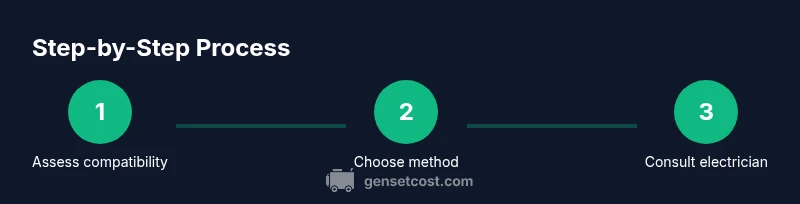
Assess needs and codes
Identify why you want interconnection (redundancy, higher peak power, or longer runtime) and check local electrical codes. Confirm whether permits are required and what documentation your electrician must provide.
Tip: Create a load profile of critical circuits to determine required capacity. - 2
Choose an interconnection method
Decide between a transfer switch, an interlock kit, or manufacturer-approved parallel operation. Remember that cross-brand parallel operation is rarely supported.
Tip: Refer to each generator’s manual to confirm compatibility. - 3
Consult a licensed electrician
Have a professional review your plan, confirm code compliance, and design the interconnection path with correct grounding and bonding.
Tip: Get a written plan and a signed permit if required. - 4
Install the chosen interconnection system
Follow the manufacturer’s instructions precisely. De-energize all sources, install the transfer device or paralleling kit, and verify clearances and labeling.
Tip: Work only with de-energized panels; use lockout/tagout. - 5
Test under no-load, then load conditions
Gradually energize and test with no load, then simulate a typical load to ensure voltages and frequencies are stable and within specs.
Tip: Monitor for unusual currents or heat during the test. - 6
Document, label, and maintain
Label all circuits, keep the interconnection plan accessible, and schedule periodic inspections per local codes.
Tip: Store manuals and permit records with the system documentation.
People Also Ask
Can I connect two different generators to power my home?
Generally not recommended; use a transfer switch or paralleling kit designed for safe operation.
Generally not recommended; use a transfer switch or approved paralleling kit.
Is cross-brand paralleling ever safe?
Paralleling across brands is rarely supported and should only be done with manufacturer-approved equipment and guidance.
Paralleling across brands is rarely supported and should only be done with approved equipment.
What are the main risks of improper interconnection?
Backfeed to the grid, shock hazards, equipment damage, and potential fire due to voltage or frequency mismatches.
Backfeed, shocks, damage, and fire risks from mismatched power.
Do I need permits to interconnect generators?
Permits and inspections are often required; check local codes and coordinate with a licensed electrician.
Permits are often required; check local codes with a licensed electrician.
How long does installation typically take?
Time varies, but a complete plan, installation, and inspection can take several hours to a full day.
Installation can take several hours to a full day depending on the setup.
Can I run two generators without a transfer switch?
Not recommended; running multiple sources without a transfer mechanism risks backfeed and equipment damage.
Not recommended; use a transfer switch to prevent backfeed.
Watch Video
Key Takeaways
- Use approved transfer equipment to interconnect
- Do not directly tie live generators
- Obtain professional design and inspection
- Match voltage, frequency, and grounding
- Document interconnection for maintenance