Generator Height: Installation and Safety Essentials
Explore generator height: how vertical space, ventilation, and clearance affect installation, safety, and long-term reliability for home backup systems. Learn measurement tips and common mistakes with practical guidance from Genset Cost.


Generator height refers to the vertical dimension from ground level to the top of the generator or its mounting base. It influences maintenance access, ventilation clearance, and code compliance. There is no universal height standard; the required height depends on the model, installation site, and local codes. Always consult manufacturer specs and your installer.
What generator height means in practice
Generator height is a practical dimension that affects every outdoor standby or portable generator installation. It isn’t just about how tall the unit sits; it influences who can service it, how well it vents, and whether the setup complies with local regulations. According to Genset Cost, generator height is not a universal standard; the required height depends on the model, mounting surface, and jurisdiction. In practice, installers balance safe access with robust ventilation. A unit placed too low can trap debris, flood in heavy rain, or become a tripping hazard around the pad. A unit placed too high can complicate routine checks, filter changes, battery access, and transfer-switch wiring. For home backup systems, the mounting surface (often a concrete pad) defines a baseline height, while setbacks from walls, doors, and windows determine the vertical envelope that surrounds the generator. The objective is to keep the top of the unit within reach for maintenance while ensuring it does not impede airflow or violate setbacks. Because heights vary across models and sites, always follow the manufacturer specs and enlist a licensed installer to confirm the final height and clearances before powering up.
Ventilation, exhaust clearance, and height
The relationship between height, ventilation, and exhaust clearance is direct. Generators rely on compliant air intake paths and unobstructed exhaust routes to prevent overheating and to minimize exposure to exhaust gases. Taller installations can improve airflow around the sides, but they can also place critical components farther from routine inspection points. For many professionals, generator height directly influences how easily intake and exhaust vents stay clear. The recommended approach is to design a ventilation envelope that remains open on all sides and above the unit, regardless of height. Local codes often specify minimum setbacks from structures, openings, and vegetation; height must be considered alongside these setbacks to create a safe breathing space for the generator. Some models route exhaust at the top or rear; in those cases, height interacts with nearby eaves or overhangs, potentially creating condensation or backdraft risks if clearance is insufficient. Keep the top of the enclosure free of snow, debris, or objects that could obstruct intake vents. If your climate includes heavy snowfall or seasonal debris, you may need to add shields or a taller pad to maintain consistent air flow while staying compliant with energy and fire codes. In all cases, coordinate height with the transfer switch location and wiring access to ensure service personnel can reach every connection without crawling under the unit.
Installation types and height implications
Outdoor standby generators typically sit on a dedicated concrete pad with a defined height relative to grade, providing a stable basis for both mounting and drainage. Portable generators used for temporary outages follow similar principles but with foldable or removable mounting options that still require adequate clearance for air intake and exhaust. In rare cases, specialized indoor or semi-indoor enclosures may be used, but these require enforced venting, dedicated exhaust routing, and adherence to stringent codes. Whether outdoor or enclosed, height must align with the unit’s ventilation design, the location of doors or vents in the building envelope, and the space needed for service access. When choosing a height, consider future maintenance tasks—battery checks, spark plug access, and filter replacements—so that technicians can reach components without dismantling surrounding landscaping or structures. Always verify that the chosen height complies with local building codes, fire safety regulations, and the installer's transfer-switch configuration to guarantee a safe, long-lasting backup power solution.
Measuring height and planning your layout
A precise height plan begins with the manufacturer’s dimensional drawings. Start by identifying the mounting base height specified for your model, then add any pad thickness or riser blocks required by the site grade, drainage, or landscaping. Map out a clear perimeter around the unit that accounts for all sides and the top, ensuring free space for maintenance access and airflow. Use a level to verify the pad surface is even, and measure vertical clearance from the finished ground to the top of the unit, including any decorative or protective enclosures. Consider climate when planning height: in snowy regions, ensure the top clearance remains above potential snow depth and that exhaust vents stay free of snow buildup. Finally, coordinate with your installer to integrate pad height with the location of the transfer switch, battery enclosure, and electrical conduit pathways. A well-planned height strategy reduces future rework and keeps maintenance efficient.
Common height-related installation mistakes and fixes
Common mistakes include underestimating the required clearance around the unit, placing the generator too close to walls or windows, and neglecting future service access. Fixes include reviewing manufacturer installation guides, extending the mounting pad for additional side clearance, and rerouting lines to maintain easy reach to electrical connections. Another frequent error is ignoring drainage implications, which can cause standing water around the pad and compromise the foundation. To prevent this, ensure proper grading and consider a raised pad if water collects near the base. Finally, do not overlook local codes—permits and inspections often enforce minimum setbacks and height requirements. Work with a licensed installer who can verify that the final height meets safety and code criteria before you power up.
Key data points for generator height planning
| Factor | What it affects | Typical guidance | Notes |
|---|---|---|---|
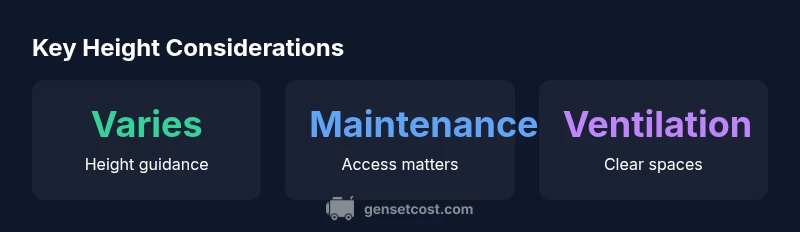
| Height reference | Maintenance access | Varies by model | Follow manufacturer specs |
| Ventilation clearance | Air intake/exhaust | Unobstructed space | Keep zones clear on all sides |
| Code compliance | Permits/setbacks | Dependent on jurisdiction | Consult local authorities |
People Also Ask
What does 'generator height' affect?
Generator height affects maintenance access, ventilation efficiency, and compliance with local setback requirements. Getting height right helps ensure safe operation and easier service.
Height affects how easily you can service the unit and how well it vents, so plan for maintenance access and airflow.
Can I install a generator indoors based on height?
Indoor installations are uncommon and require professional design, ventilation, and compliance with strict code requirements. Outdoor or well-ventilated enclosures are the norm.
Indoor installations are rare and need specialized design; outdoors is usually safer and more compliant.
How do I measure generator height?
Start with the manufacturer’s mounting base height, add any pad or riser, and verify the vertical clearance to doors, vents, and nearby structures. Always confirm with the installer and refer to local codes.
Measure from the ground to the top of the unit, include pads, and check against clearances.
What are common height mistakes?
Common mistakes include too-low installation that blocks airflow, too-high setups that hinder service access, and ignoring drainage or venting pathways. These can increase maintenance costs and safety risks.
Low clearance blocks air; high height makes service hard—don’t skip drainage or vent checks.
Does height affect warranty or insurance?
Height itself is not usually a warranty issue. Warranties depend more on installation quality, code compliance, and manufacturer requirements.
Height isn’t typically a warranty factor; proper installation matters more.
Who should approve height during installation?
A licensed installer should approve the final height, ensuring it aligns with manufacturer specs and local regulations before powering the system.
A licensed installer confirms final height with codes and specs before powering up.
“Height is a practical constraint that shapes airflow and serviceability; treating it as an afterthought can lead to costly rework.”
Key Takeaways
- Plan height with maintenance access in mind
- Prioritize unobstructed ventilation around the unit
- Align height with local codes and manufacturer specs
- Coordinate height with transfer switch and wiring access
- Avoid placing the unit where snow, debris, or plants could block airflow