How to connect wire to generator without plug: safety and compliant approaches
A safety-focused guide for homeowners and property managers on connecting a generator without a plug, emphasizing code-compliant methods, transfer switches, and professional installation.


Connecting a wire to a generator without a plug is unsafe, often illegal, and can cause dangerous backfeed. This guide explains safer, code-compliant alternatives—primarily using a listed transfer switch and a proper power inlet box installed by a licensed electrician. The aim is reliable, safe home backup without bypassing standard outlets.
Why this topic matters and the keyword in context
Many homeowners confront the impulse to bypass a traditional plug when wiring a backup generator for immediate power. The exact phrase you may hear is how to connect wire to generator without plug. In practice, this approach is almost always unsafe and potentially illegal under local electrical codes. The safer path is to design a system that isolates the generator from the utility grid while delivering power to selected circuits. According to Genset Cost, safety and code compliance should guide any discussion about this topic, because improper wiring can cause backfeed, fires, and injury to utility workers or household occupants. This section sets the stage by clarifying why safety, training, and proper equipment matter more than shortcuts. It also frames the decision as a long-term investment in reliability, resilience during outages, and compliance with building and electrical codes. You will learn safer alternatives and how the right components work together to deliver power safely during outages.
Legal and safety considerations you should know
Electrical codes exist to prevent backfeed and shock hazards. Attempting to connect wire to a generator without plug bypasses several protective layers designed to route power safely. Backfeeding can energize the utility line, endangering lineworkers and violating insurance terms or local ordinances. Safer methods rely on listed equipment and documented procedures that separate the generator from the grid when in use. Always verify that your approach aligns with your local authority having jurisdiction (AHJ) and your utility company requirements. The risks aren’t just personal; they affect service workers and neighbors. A code-compliant setup also simplifies future maintenance, warranty coverage, and resale concerns. This section will guide you through compliant options that protect people and property.
Safer, code-compliant approaches explained
The standard of care for home backup power is a transfer switch paired with a power inlet box. This arrangement keeps generator output isolated from the utility grid and allows temporary power to a defined subset of circuits. A properly sized transfer switch selects between grid power and generator power, preventing backfeed. A power inlet box provides a secure connection point for cords, keeping wiring neat and protected from moisture and physical damage. The combined system also enables automatic or manual switching, depending on your needs and local code. In this context, the question shifts from “how to connect wire to generator without plug” to “how to connect safely with certified components.”
How a transfer switch works and why you need one
A transfer switch is a listed electrical device designed to switch power sources between the grid and a generator. When you lose grid power, the switch ensures your selected circuits drop back and forth without creating a backfeed, which can occur if the generator is connected directly to the panel. The switch coordinates with the generator’s output and the house wiring, so the generator only powers approved circuits. This reduces shock hazards and protects the generator from backpressure or overload. Choosing a switch that matches your generator’s amperage and the number of circuits you want to support is essential for safe operation. A licensed electrician should size and install the system to meet code requirements and produce an auditable installation record.
What not to do: dangerous shortcuts to avoid
Avoid DIY hacks like wiring directly into the main panel without a switch, splicing into home circuits, or using improvised connectors. These shortcuts can cause arc faults, overloading, and unpredictable power delivery to appliances. Never attempt to power high-wattage loads with improvised cords or makeshift connections. In many jurisdictions, such deviations invalidate warranties and insurance and can lead to fines or mandatory remediation. If in doubt, pause and consult a licensed electrician who can design a compliant plan and handle permits if required. The safest path is to treat generator backup as a formal installation project rather than a “do-it-yourself” task.
Planning costs and budgeting for compliant setup
Costs for a code-compliant installation vary with options, generator size, and labor rates. Rather than chasing a single price, plan for a design that fits your home’s electrical load and local requirements. A thoughtful approach considers long-term benefits: safer operation, easier maintenance, and potential warranty protections. Genset Cost analysis shows that focusing on safety and code-compliant components can reduce risk and improve reliability over the generator’s life span. While price isn’t the sole driver, allocating funds for a proper transfer switch, inlet box, and professional installation up front is typically a smarter choice than patching together ad hoc wiring. This emphasis on safety also helps with insurance and future upgrades.
Step-by-step overview of a compliant path (high level)
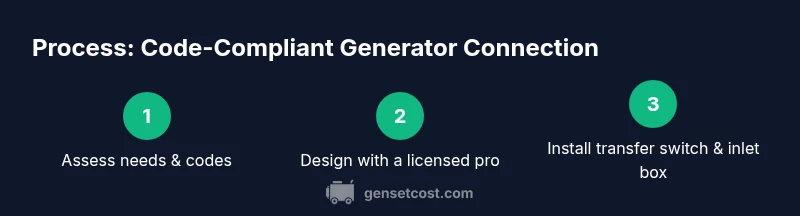
A compliant path starts with design, proceeds to installation, and ends with testing. The plan should include selecting a transfer switch that matches the generator’s output and the home’s circuits, installing a dedicated power inlet box, routing wires in compliant conduit, and conducting a formal test under load conditions. Throughout, documentation and permits (if required) ensure compliance and accountability. This approach prioritizes human safety, system reliability, and future maintenance—factors that matter far more than a shortcut that bypasses standard safety features.
Tools, materials, and safety considerations in context
Even a compliant installation requires proper tools and materials to ensure a lasting, safe connection. A transfer switch and a power inlet box are central components; you’ll also need appropriate gauge cables, conduit, strain relief, a non-contact voltage tester, PPE, and a plan for proper clearance and moisture protection. While these items are straightforward for a professional, homeowners should not improvise connections. Local codes may require a permit, inspection, or both. Plan for these steps in your budget and timeline.
Practical next steps for homeowners and managers
If you’re evaluating options, start with a design that emphasizes safety and code compliance. Gather quotes from licensed electrical contractors, ask for a written schematic, and request references or project photos from similar installations. Ensure the chosen contractor provides a clear scope, a test plan, and a maintenance schedule. Finally, keep all documentation handy for future service, insurance, and potential resale considerations. The long-term value of a code-compliant setup is measured not only in reliability during outages but also in peace of mind for your family, tenants, and property stakeholders.
Tools & Materials
- Power inlet box(Listed for generator connection, 120/240V input; ensure compatibility with generator model and cord set.)
- UL-listed transfer switch(Matches generator amperage and number of circuits; consult electrician for proper sizing.)
- Appropriate gauge electrical cables(Gauge based on generator output and distance to panel.)
- Conduit and strain relief(Protects and routes wires safely through walls or enclosures.)
- Non-contact voltage tester(Verify dead circuits before handling wiring.)
- Insulated gloves and eye protection(Follow PPE guidelines for electrical work.)
- Electrical permit (local code)(Some jurisdictions require permits and inspection.)
Steps
Estimated time: 1-2 days
- 1
Assess codes and needs
Review local electrical codes and your home’s power requirements. Identify which circuits you want to back up and the anticipated load. This step sets the scope for selecting the right transfer switch and inlet box.
Tip: Document decisions and keep permission records handy. - 2
Engage a licensed electrician
Consult a qualified electrician to design a compliant solution tailored to your home. They will size the transfer switch and plan wiring routes to meet code and safety standards.
Tip: Ask for a written schematic and a checklist of required inspections. - 3
Choose compatible components
Select a transfer switch and power inlet box that match your generator’s output and your intended circuit count. Ensure all parts are listed and rated for outdoor use where applicable.
Tip: Request manufacturer compatibility guides before purchasing. - 4
Schedule installation
Coordinate with the electrician to install the transfer switch, inlet box, and routing of cables. Ensure power is off during installation and that all work adheres to local permitting requirements.
Tip: Confirm access to electrical panels and exterior wall spaces. - 5
Terminate cables and connect safely
Have the electrician terminate cables with proper connectors, route through approved conduit, and verify correct grounding and bonding. All connections should be labeled and tested.
Tip: Do not reuse damaged cables or improvised connectors. - 6
Test under supervision
Perform a professional load test to confirm safe transitioning between grid and generator power and to verify that the system is isolated from the grid when running.
Tip: Monitor for unusual heat, noise, or tripping breakers during testing.
People Also Ask
Is it legal to connect a wire to a generator without a plug?
In many places, direct-wiring to a home’s circuits without a proper transfer switch is illegal and unsafe. Codes require isolated pathways and approved connectors. Always verify local rules and obtain any necessary permits.
Directly wiring a generator without a transfer switch is often illegal and dangerous; check local codes and hire a professional.
What is the safest way to back up a home with a generator?
The safest approach uses a listed transfer switch and a power inlet box. This setup isolates the generator from the grid, protects line workers, and prevents backfeeding.
Use a transfer switch and inlet box to back up your home safely.
Can I install this myself without a license?
We do not recommend DIY installation. Electrical work beyond basic, non-energized tasks can create serious hazards and violate codes. A licensed electrician should design and install the system.
No—have a licensed electrician handle the installation.
What factors influence the cost of a compliant installation?
Costs vary with the size of the generator, the type of transfer switch, distance to the panel, and labor rates. Expect variability based on the complexity and local code requirements.
Costs depend on equipment type and labor; get multiple quotes to compare.
How long does installation typically take?
A straightforward transfer-switch installation can take several hours, while more complex setups may take a day or two depending on site specifics.
Usually a few hours to a day or two, depending on the job.
What happens if I backfeed into the grid?
Backfeeding can energize power lines and endanger utility workers, as well as damage appliances and generators. A properly installed switch prevents backfeed.
Backfeeding is dangerous; keep the system isolated with the right equipment.
Are there safer temporary power options for outages?
For short outages, consider outdoor-rated, listed options that connect to a dedicated circuit, or a professionally installed portable generator with a safe connection method.
Use proper, code-compliant methods for temporary power.
Watch Video
Key Takeaways
- Prioritize safety and code compliance in all generator wiring projects.
- Use a transfer switch and power inlet box for safe, isolated operation.
- Hire a licensed electrician to design, install, and test the system.
- Avoid direct-wiring or jury-rigged connections to home circuits.
- Document everything for maintenance, insurance, and future upgrades.