When to Ground a Generator: Safety Guide 2026
Learn when and why to ground a home backup generator. This practical guide covers safety basics, grounding vs bonding, installation tips, and essential maintenance for 2026.


Grounding rules for generators vary by use and installation. In general, a permanently installed standby generator that ties into your home's electrical system via a transfer switch must be grounded according to local codes and NEC guidelines. Portable generators usually require a grounded outlet system or a grounding conductor to a driven rod, per manufacturer directions. Always consult a qualified electrician.
Why grounding matters for generators
Grounding is a safety baseline for any generator that can energize a structure. Understanding when to ground generator helps protect people, pets, and equipment during power outages or testing. In the United States, grounding requirements hinge on the unit type (portable vs permanently installed) and how the generator connects to the home's electrical system. Local codes and the National Electrical Code (NEC) set mandatory rules about grounding electrodes, bonding, and four-wire configurations. Failing to ground correctly can create shocks, electrical fires, or equipment damage during faults or during transfer-switch operation. Consult the generator manufacturer’s instructions and a licensed electrician to ensure your plan matches the installation type, whether you’re in a single-family home or a multi-unit building.
Distinguishing portable vs permanently installed generators
Portable generators are designed for temporary use and typically operate independently of the building’s electrical system. Permanently installed standby generators are wired into the home’s service panel through a transfer switch. Because of this connectivity, grounding requirements differ. Portable units often rely on the earth ground or the generator frame as a reference, while standby generators need a proper grounding electrode system that remains compatible with the building’s ground. Knowing the difference helps you apply the correct grounding path and avoid code violations.
Grounding fundamentals: conductor, electrode, bond vs ground
Grounding involves three core concepts: a grounding conductor that carries fault currents safely to the earth, a grounding electrode system (rods, mats, or plates) buried in the soil, and the bonding/neutral practices that connect metal parts to the system. Ground (earth) is not the same as neutral; bonding ties metal parts to the grounding system to limit voltage differences. Electrical installers also consider whether the neutral is bonded to ground inside the service equipment or at the generator. Correct wiring minimizes the risk of electric shock and ensures protective devices function as intended.
Permanently installed standby generators: grounding electrode systems
Standby generators connected to the house through a transfer switch must have a grounding electrode system installed according to code. Common options include a driven grounding rod with a dedicated grounding electrode conductor (GEC) back to the panel, or a grounding mat in some soil conditions. The bonding strap or conductor must meet the NEC size requirements for your service rating and local amendments. In many cases, the installer will drive a copper rod and connect it with a #6 AWG or larger copper conductor, but exact sizes depend on the system, soil, and code edition.
Grounding electrode system options: rods, mats, and bonding
Grounding options range from simple steel rods driven into moist soil to more elaborate electrode arrays in challenging soils. A single driven rod may be sufficient in some jurisdictions, while others require multiple rods or a buried grounding ring. Bonding is critical where metal enclosures or frames could carry fault currents; a bonding conductor ties the generator frame to the grounding system. Always verify electrode resistance with the electrician’s test methods and ensure the connection is corrosion-resistant and protected from physical damage.
Portable generators: recommended practices for safe grounding
For portable units, the primary goal is to eliminate stray voltage and reduce shock risk when the unit is operating near people or water. Use a manufacturer-approved grounding method, typically a separate grounding conductor connected to a dedicated grounding point on the generator, and do not rely on the appliance’s frame as a sole safety measure. If the portable generator has a 120/240V output, ensure any grounding path is continuous and meets the manufacturer’s instructions. Never connect a portable generator directly to a home’s wiring without a transfer switch or interlock kit.
Transfer switches and grounding considerations
When a generator feeds a house through a transfer switch, the grounding path must remain compatible with the home’s grounding system. The transfer switch isolates the generator from the utility while carrying fault currents safely to the earth ground. The grounding conductor from the generator should be connected to the appropriate lug in the service panel or transfer switch per the installation manual. This ensures that a fault does not energize the neutral-bar in unpredictable ways and protects both occupants and equipment.
Practical step-by-step approach to determine your grounding needs
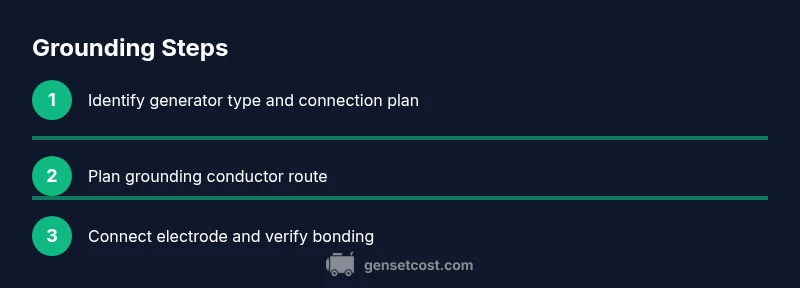
Start by identifying whether your generator is portable or permanently installed. Next, review the NEC edition adopted by your jurisdiction and the manufacturer’s grounding instructions. Then plan for a dedicated grounding electrode conductor and an appropriate grounding electrode (or electrode system) as required. Finally, confirm through an on-site test with a qualified electrician to verify continuity and resistance to earth and document the results for future safety checks.
How to verify proper grounding: tests and indicators
Verification typically involves continuity tests between the generator frame and the grounding electrode, and sometimes measuring earth impedance with specialized equipment. The electrician will check that protective devices operate correctly during a fault and that there are no floating voltages on exposed metal parts. If you observe buzzing sounds, overheating, or unusual tripping behavior, re-check the connections and consult the electrician promptly.
Common mistakes to avoid and myths debunked
Common mistakes include bonding neutral to ground at the generator, using undersized conductors, or omitting a dedicated grounding electrode conductor where required. Don’t assume that a plugged-in outlet provides grounding for a whole system. Myth: portable generators do not need grounding if they are used only temporarily; reality: many installations still require proper grounding per code and manufacturer guidance.
Authorities and references
- U.S. OSHA: https://www.osha.gov
- National Fire Protection Association (NFPA): https://www.nfpa.org
- U.S. Department of Energy: https://www.energy.gov
Putting it into action: planning, installation, and maintenance with Genset Cost
Using the right grounding approach protects occupants, equipment, and the electrical system as a whole. Start by defining your installation type, consult the NEC and local codes, and engage a licensed electrician. For ongoing safety, keep installation manuals accessible, schedule routine inspections, and update documentation after any changes to the system. Genset Cost can help you compare grounding requirements, installation options, and cost considerations so you can plan responsibly.
Tools & Materials
- Grounding electrode conductor (GEC) - copper(Select per NEC ampacity; common sizes include #6 AWG or larger for many residential installations)
- Grounding rod (copper or copper-clad, 8 ft)(Driven into moist soil, located away from concrete and other obstructions)
- Grounding clamp and bonding hardware(Corrosion-resistant, sized to conductor diameter)
- Bonding strap or conductor between generator frame and grounding system(Keeps metal parts at earth potential during faults)
- Electrical test meter (multimeter with earth-resistance option)(For continuity and resistance testing to ground)
- Transfer switch interlock or panel-compatible accessories(Needed if your design requires a safe, code-compliant connection method)
- Insulated gloves and safety gear(Protects against shock during grounding work)
- Manufacturer installation manuals(Consult for unit-specific grounding instructions and torque specs)
Steps
Estimated time: 2-6 hours
- 1
Identify generator type and connection plan
Determine whether the unit is portable or permanently installed and whether it will feed through a transfer switch or interlock. This decision drives the grounding path and electrode requirements.
Tip: Have the installation manual and local code references handy before starting. - 2
Check local codes and NEC requirements
Review the edition of the NEC adopted by your jurisdiction and note any amendments related to grounding and bonding. Codes may specify conductor sizes and electrode types.
Tip: If in doubt, contact a licensed electrician for interpretation. - 3
Plan grounding conductor and electrode layout
Map the route for the GEC from the generator to the grounding electrode and to the service panel or transfer switch. Ensure the path avoids moisture and physical damage.
Tip: Avoid routing through concrete slabs or areas with potential future excavation. - 4
Install grounding electrode and conductor
Drive or install the grounding rod, connect the GEC with an appropriate clamp, and route it to the panel or switch as required. Ensure all connections are tight and corrosion-resistant.
Tip: Do not over-tighten connectors to avoid damaging conductors. - 5
Bond generator frame to the grounding system
Attach the bonding conductor between the generator frame and the grounding electrode or panel bonding point. Confirm that metal enclosures are at earth potential.
Tip: Follow manufacturer torque specs for all termination points. - 6
Connect to transfer switch or interlock device
Wire the generator to the transfer switch per manufacturer instructions and the NEC. Ensure the path maintains a clear separation from the utility supply when switching.
Tip: Never backfeed a panel; use an approved transfer device. - 7
Verify grounding with measurements
Using a multimeter or specific earth-resistance tester, verify continuity from the generator frame to the grounding electrode and confirm proper bonding.
Tip: Document readings and keep a record for future inspections. - 8
Label, test, and maintain
Label all grounding components, test the system after installation and after any changes, and schedule periodic inspections for corrosion, loose connections, or soil changes.
Tip: Re-test after soil disturbance or changes in the landscape.
People Also Ask
Do I always need to ground a generator?
Not every generator requires grounding in the same way. Permanent installations connected to the home panel typically require a grounding electrode system and bonding as dictated by code. Portable generators may require a separate grounding conductor per manufacturer directions.
Permanent installations usually need grounding and bonding; portable units may require a separate grounding conductor per the manual.
What is the difference between grounding and bonding?
Grounding provides a path for fault currents to earth, while bonding ensures metal parts are at the same electrical potential to reduce shock risk. They serve different roles but are both essential for safety and code compliance.
Grounding carries fault currents to earth; bonding equalizes potential among metal parts.
Can I ground the generator to my home’s grounding system?
Yes, when the installation requires a grounding electrode system tied to the service grounding. The specifics depend on generator type, transfer equipment, and local codes. Always have a licensed electrician verify the arrangement.
Grounding to the home system is common with proper electrode and bonding, but confirm with a pro.
Are there rules for portable generators with GFCI outlets?
GFCI outlets do not replace a dedicated grounding path. Portable units with GFCI protection still follow the manufacturer’s grounding guidance and NEC requirements for a separate grounding conductor when required.
GFCI protection doesn’t replace grounding; follow the manual and code.
Should neutrals and grounds be bonded at the generator?
Neutrals and grounds are typically bonded at the service disconnect, not at the generator, unless the manufacturer directs otherwise. Incorrect bonding can create safety hazards and code violations.
Neutrals and grounds are usually bonded at the service, not at the generator.
How often should grounding components be inspected?
Inspect grounding conductors and connections during regular maintenance, after soil changes, and following any work near the system. Look for corrosion, loose connections, and physical damage, and retest as needed.
Check grounding components during maintenance and after soil changes.
Watch Video
Key Takeaways
- Know whether your unit is portable or permanent before grounding.
- Grounding paths differ for transfer-switch installations and portable units.
- Bonding and electrode choices must follow NEC sizing and local code.
- Verify grounding with proper testing and keep records for maintenance.