Can You Fill a Generator While Running? Safe Refueling Guidelines
Learn whether you can refuel a running generator and follow a safe protocol for home backup power. This guide from Genset Cost covers risks, fuel handling, containers, and practical tips to protect your property during outages.


Short answer: No. Do not refuel a generator while it’s running or hot. Always switch off, allow the engine to cool, and refuel in a well-ventilated area using an approved container. Keep sparks, flames, and fuel vapors away from ignition sources.
Why fueling a running generator is risky
Fueling a generator while the engine is running introduces multiple hazards. Heat, moving parts, and fuel vapors create a combustible environment. Even a small splash or vapor can ignite from a spark, a hot exhaust, or a static discharge. Most manufacturers explicitly warn against refueling during operation and instead mandate stopping the engine and allowing it to cool before any fuel is added. In a power outage scenario, the urge to refuel quickly is common, but improvising a quick top-up can lead to serious injuries or full unit failure. By understanding the risks and following a calm, deliberate process, homeowners can protect themselves, their families, and their property. According to Genset Cost, consistent refueling safety reduces the probability of fuel spills and accidental fires, especially when generators operate in high-traffic outdoor areas where children and pets are present. This section covers the core hazards so you can plan a safe fueling routine rather than improvising under pressure.
Key safety rules before you refuel
Before touching the fuel, ensure the generator is completely powered down in the off position and that all loads are disconnected. Refueling should occur outdoors in a well-ventilated area, away from doors, windows, and vehicles. Do not refuel indoors or in an attached garage where fumes can accumulate. Store fuel in an approved container and keep it away from heat sources, sparks, and open flames. If the unit was recently running, wait for the exhaust to cool before approaching; fuel and hot metal can ignite on contact. During outages, anxiety can push you to hurry, but haste increases the risk of spills, burns, and ignition. In short, can you fill generator while running? The answer remains no—refuel only after cooling. The Genset Cost team emphasizes that a deliberate approach to fueling reduces risk, especially when family members and pets are nearby.
Safe refueling protocol: a practical outline
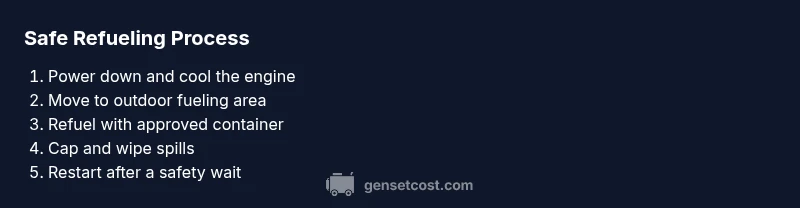
Begin by turning off the generator and switching the fuel valve to the off position if applicable. Move the unit to a safe, open-air area and allow it to cool completely. Place a level surface beneath the generator and have your approved fuel container ready. Use a funnel to minimize spills, and fill slowly to avoid splashes. Replace the cap securely and wipe away any drips immediately. Stand back from the exhaust and never refill while the engine is warm or hot. After refueling, wait a moment for any vapors to settle before restarting and testing the load. If you notice fuel odors or leaks, stop and address the issue before reusing the unit. Remember, the question of can you fill generator while running should be answered with a firm no, and this protocol provides a safe alternative path.
Handling fuel spills and fumes
Fuel spills can ignite, especially near hot exhaust components. If you spill fuel, stop what you’re doing, move away from the area, and use absorbent material or rags to contain the spill. Do not start the engine until the spill is completely cleaned and the area is ventilated. Dispose of contaminated rags safely according to local regulations. Fuel vapors are heavier than air and can travel; ensure there is no source of ignition nearby and increase ventilation. If you detect strong fumes, evacuate and contact professionals for assistance. Regularly inspect hoses and containers for leaks to prevent future spills.
Fuel types and container safety
Use only the fuel type recommended by the manufacturer (gasoline, diesel, propane, etc.). Store fuel in UL-listed containers designed for outdoor use. Keep containers sealed when not in use and never transfer fuel indoors. For gasoline, avoid using old or contaminated fuel; for diesel, avoid water-contaminated fuel. Always label containers and separate different fuels to prevent cross-contamination. When refueling, remove the cap slowly and keep your face away from the opening to avoid inhaling fumes. The goal is to keep fueling safe and predictable, not rushed.
Weather and location considerations
Refueling in rainy or windy conditions increases the risk of slips and fuel spreading. Choose a dry, flat surface away from building entrances and paths. Provide a clear area around the generator so that you and any helpers have unobstructed access in case of an emergency. In humid or wet environments, static electricity can also pose a minor risk during handling; touch a metal object before grabbing fuel equipment to discharge static. Never refuel near a water source, and ensure that nearby electrical outlets or cords aren’t damaged or exposed to fuel.
Maintenance habits that reduce fueling hazards
Regular maintenance reduces the risk of leaks and malfunctions during refueling. Check for fuel line wear, gasket integrity, and secure connections. Replace worn components promptly and follow the manufacturer’s service schedule. Clean or replace air filters to prevent engine strain, which can cause exhaust temperatures to rise and increase the chance of ignition of vapors during fueling. Keeping the area around the generator clean and free of fuel spills also minimizes hazards. Genset Cost recommends documenting maintenance and refueling events to create a predictable safety routine.
Checklist before a power outage
Build a pre-outage fueling checklist: confirm you have a full tank, a ready-approved container, clean tools, and a clear fueling station outside. Ensure the generator is serviced and leaks are addressed. Have a spill kit on hand and check that fire extinguishers are accessible. Practice the fueling steps ahead of time so you’re not improvising under pressure during a blackout. By validating these steps in advance, you reduce the risk of mistakes when power is scarce and urgency is high.
Alternatives to immediate refueling during outages
If you anticipate a long outage, consider staggering refueling or running multiple units with scheduled shutdowns to manage heat and fuel pressures safely. Some users opt for larger, centralized storage or transfer arrangements to minimize frequent top-ups. In all cases, avoid topping up while engines are running and prefer fueling during a scheduled, cool-down period. This approach reduces the risk of spills, fires, and engine damage and aligns with recommended practices from the Genset Cost team.
Tools & Materials
- UL-listed fuel container(Approved for portable fueling; use for gasoline or diesel as recommended by your generator manual)
- Funnel(Wide-mouth funnel reduces spills during pouring)
- Gloves (chemical resistant)(Protect hands from fuel and fumes)
- Absorbent rags or spill kit(Contain and clean spills quickly)
- Fire extinguisher (Class B)(Keep within reach in fueling area)
- Rags or paper towels(Dry spills immediately; do not leave fuel on surfaces)
- Flashlight(Improve visibility during dusk or low light fueling)
Steps
Estimated time: 10-15 minutes
- 1
Power down the generator
Turn the engine switch to OFF and disconnect any connected loads. If your model has a fuel valve, close it to stop fuel flow. Allow the engine to cool before handling fuel components.
Tip: Do not touch hot exhaust components; heat can ignite vapors. - 2
Move to a safe outdoor fueling area
Relocate the unit to a flat, well-ventilated outdoor space away from doors, windows, and ignition sources. Ensure children and pets cannot access the fueling zone.
Tip: Position yourself with a clear path for quick withdrawal if needed. - 3
Prepare your fuel and container
Place the approved container in reach and inspect for leaks or damage. Open the container only when you’re ready to pour and keep the cap nearby but closed until needed.
Tip: Always cap the container when not actively pouring to prevent spills. - 4
Refuel cautiously
Pour fuel slowly using a funnel until near the recommended level. Avoid overfilling to prevent spills during expansion of the container.
Tip: Pause if you hear gurgling sounds; resume slowly to maintain control. - 5
Cap, wipe spills, and recheck
Secure the fuel cap tightly, wipe any drips from the filler neck, and store the funnel away to prevent tripping hazards. Stand back for a moment to let vapors disperse.
Tip: Cigarettes or flames should be kept at a safe distance. - 6
Restart and monitor
After waiting a brief moment, start the generator and recheck for leaks or fumes. Observe the unit under a light load to verify stable operation.
Tip: If you detect fuel odors, shut down and inspect before continuing.
People Also Ask
Is it ever safe to refuel while the engine is running?
No. Refueling a running generator poses serious fire and burn hazards. Always stop, cool, and refuel only when the unit is off and outside.
No, refueling a running generator is not safe. Always turn it off and let it cool before refueling.
What should I do if I spill fuel during refueling?
Contain the spill immediately with absorbents, clean the area, and ventilate. Do not start the engine until vapors are gone and the area is dry.
If you spill fuel, contain and clean it up right away and ventilate the area before restarting.
What type of fuel container should I use?
Use a UL-listed, manufacturer-approved container for your fuel type. Label it and keep it sealed when not pouring.
Use only an approved fuel container and keep it sealed when not in use.
Can I refuel in a garage or enclosed space?
No. Refuel outdoors in a well-ventilated area. Enclosed spaces trap vapors and increase ignition risk.
Refuel outdoors in a well-ventilated area, not in a garage or enclosed space.
How long should I wait after shutdown before refueling?
Wait until the engine and exhaust surfaces are cool to touch and the unit is not emitting heat or fumes.
Wait until everything is cooled before refueling.
Are there tools or devices to help with fueling safety?
Use a funnel, absorbent materials, and a fire extinguisher. Follow the manufacturer’s guidelines for safe fueling practices.
Use a funnel and spill kit, and follow the manual for safe fueling.
Watch Video
Key Takeaways
- Always shut off and cool the engine before refueling
- Use approved containers and avoid overfilling
- Wipe spills immediately and ventilate the area
- Refuel outdoors away from ignition sources
- Restart only after a safe wait and visual check