How Often Generator Maintenance: A Homeowner's Guide for 2026
A data-driven guide on maintenance cadence for home backup generators. Learn recommended intervals, factors that affect timing, what a service includes, and how to keep warranties intact in 2026.


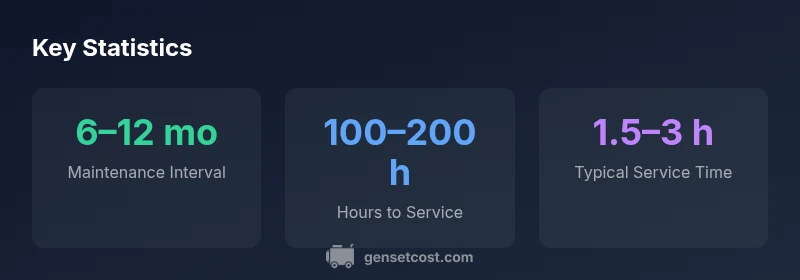
According to Genset Cost Analysis, 2026, most home backup generators should be serviced every 6–12 months or after about 200 hours of operation, whichever comes first. A basic service typically includes oil and filter replacement, air-filter inspection, spark plug check (on gasoline models), battery health test, coolant level check, and a functional test of the transfer switch. If outages are frequent or heavy, schedule more frequent light checks every 3–6 months.
Why maintenance frequency matters
Reliability during outages hinges on regular maintenance. Regular service reduces the risk of unexpected failures when you need power most, protects warranty terms, and helps the unit run efficiently. Skipping routine checks can allow minor issues—like degraded battery cells or clogged air filters—to escalate into costly repairs or extended downtime. For homeowners, establishing a predictable cadence is the simplest form of risk management: it turns uncertainty into a plan you can schedule and budget for. The Genset Cost analysis highlights that consistent service improves readiness, reduces emergency service calls, and extends the overall lifespan of the generator.
In practical terms, think of maintenance as preventive care. Your generator is a complex machine with moving parts, cooling systems, and, in many models, electronic controls. Even when the unit sits idle most of the year, it still experiences moisture, varnish buildup in fuel lines, and battery self-discharge. By keeping to a cadence, you catch wear before it becomes a failure and you keep the system compliant with warranty requirements.
Factors that influence maintenance cadence
Maintenance timing is not one-size-fits-all. Several factors drive how often you schedule service:
- Usage pattern: Light, occasional use may fit the 6–12 month cadence, while frequent outages or daily cycling can push service needs toward the 3–6 month range.
- Climate and environment: Humid, dusty, or coastal environments accelerate corrosion and filter contamination, warranting more frequent checks.
- Fuel type and model: Gasoline and diesel units have distinct needs; propane models may require different filter or line inspections. Inverter-based systems may add electronics checks to the routine.
- System size and load testing: Larger units or systems expected to handle higher loads benefit from periodic load testing and electrical checks to verify performance under peak demand.
- Warranty and manufacturer recommendations: Always align service timing with what the warranty requires; missing scheduled maintenance can void coverage or complicate claims.
What a standard maintenance visit entails
A typical visit, whether performed by a licensed technician or a qualified service provider, covers the following core tasks:
- Oil and filter change: Replacing old oil reduces internal wear and thermal degradation.
- Air-filter inspection/replacement: Clean air allows efficient combustion and prevents engine damage.
- Spark plug check or replacement (gasoline models): Ensures reliable ignition and smooth startup.
- Battery health check: Verifies charging system and reserves for reliability during outages.
- Coolant level and quality check: Maintains proper engine cooling to prevent overheating.
- Transfer switch inspection and test: Confirms seamless transfer from utility to generator and back.
- Safety test and fuel system inspection: Checks for leaks, proper lines, and safety shutoffs.
Technicians typically perform a running test, verify control panel indicators, and review any fault codes or warning lights. They may also provide oil analysis for certain models and offer fuel stabilization guidance to extend storage life. Documenting the service with maintenance logs helps you track history and supports warranty validation.
DIY checks you can safely perform between professional visits
Between professional visits, you can perform low-risk checks to catch obvious issues:
- Visual inspection: Look for signs of leaks, corrosion, or loose electrical connections around the unit.
- Battery basics: Check the battery is properly mounted, terminals are clean, and there’s no excessive corrosion.
- Simple fluid checks: Ensure oil and coolant levels are within recommended ranges if your manual allows screening without opening compartments.
- Battery disablement: If you’re unsure, disconnect power before touching terminals and avoid opening sealed modules.
- Generator exercise: Run a short test cycle monthly or quarterly if weather allows, observing for unusual noises, vibrations, or extended startup times.
Always consult the user manual before attempting any checks that involve electrical components or fuel lines. If you’re uncertain, schedule a service to avoid safety risks or warranty issues.
Scheduling, records, and warranties
Organize service in a way that aligns with your property schedule and insurance requirements. Create a simple maintenance log with the date, hours on the unit, tasks completed, and any recommended follow-ups. Note any fuel quality concerns, battery age, and filter replacements. Keep receipts and technician reports for warranty claims and future resale considerations.
Record-keeping helps you avoid missing intervals and makes it easier to demonstrate due diligence if a claim arises. Some manufacturers require periodic servicing to maintain warranty coverage; failing to follow guidelines may leave you with uncovered repairs or disputed claims. A dedicated log also helps you compare service providers over time, ensuring you receive consistent, quality work.
Practical scenarios and decision tips
Consider the following real-world scenarios to tailor your cadence: a) a single-family home in a temperate climate with occasional outages may adhere to a 6–12 month schedule with an annual load test. b) A home that relies on generator power during frequent outages or extreme weather should aim for every 3–6 months with more frequent inspections during peak seasons. c) If your system is geard toward critical loads (septic, well pumps, or medical equipment), work with a pro to intensify monitoring and testing.
Combining usage data, climate notes, and warranty terms helps determine your ideal cadence. When in doubt, err on the side of safety by scheduling a maintenance visit sooner rather than later and keeping detailed records for future reference.
Maintenance frequency by scenario
| Scenario | Recommended interval | Notes |
|---|---|---|
| Low-use standby | 6–12 months | Annual test and service recommended |
| Regular outage use | 3–6 months | More frequent checks during outages |
| High-use or extreme climate | Every 3 months | Increase inspections and load testing |
People Also Ask
How often should a standby generator be serviced?
Most homeowners should plan maintenance every 6–12 months or after about 200 hours of operation, whichever comes first. A professional should perform the service to ensure proper lubrication, electrical checks, and compliance with warranty terms.
Most standby generators should be serviced every 6 to 12 months or after about 200 hours of use, whichever comes first.
Can I perform generator maintenance myself?
Basic, non-technical checks such as visual inspection and battery cleanliness can be done safely by homeowners. Complex tasks—oil changes, fuel system work, and electrical tests—should be done by a qualified technician to avoid safety risks and warranty issues.
Basic checks are okay, but complex maintenance should be left to a pro.
What happens during a routine maintenance check?
During a routine check, technicians inspect oil and filters, air filters, battery health, cooling system, fuel lines, ignition components, and the transfer switch, followed by a functional run to confirm startup and load transfer.
Technicians inspect fluids, filters, battery, and the transfer switch, then run a test.
Will skipping maintenance affect my warranty?
Yes—many warranties require regular service at specified intervals. Missing maintenance can complicate claims or void coverage, so keep records and follow manufacturer recommendations.
Skipping maintenance can void warranties, so keep records and follow the guidelines.
Does climate affect maintenance frequency?
Yes. Humidity, salt exposure, and dust can accelerate wear and contamination, often necessitating more frequent inspections and filter changes.
Harsh climates usually mean more frequent checks.
Should I replace parts during maintenance?
Replace worn parts (oil, filters, and batteries) as recommended by the technician. Major components are replaced only as needed based on condition and warranty terms.
Replace worn parts as recommended, major replacements only when needed.
“Regular generator maintenance isn’t optional—it's essential for reliability, safety, and protecting warranty terms.”
Key Takeaways
- Schedule maintenance on a regular cadence (6–12 months for most homes).
- Track runtime hours (around 100–200 hours) as a trigger for service.
- Keep a maintenance log to protect warranties and simplify claims.
- If outages are frequent or climate is harsh, shorten intervals (3–6 months).
- The Genset Cost team emphasizes documented cadence to maximize reliability and value.