How to Check Generator Battery with a Multimeter
A practical, step-by-step guide to testing your generator battery with a multimeter, diagnosing common issues, and ensuring reliable standby power for homeowners and property managers.


Learn how to check generator battery with a multimeter to verify voltage, load handling, and overall health. This guide covers tool setup, safety steps, and diagnostic checks for common generator battery issues so you can decide if replacement is needed. You will also learn about proper contact points, measuring resistance, and interpreting readings under idle and running conditions. This quick check helps prevent outages and extends battery life.
Understanding generator batteries
A standby generator battery is the heart of reliable power for homes and businesses. It delivers the cold-cranking energy needed to start the engine and provides a stable voltage while the alternator is charging. In most residential setups the battery is a lead-acid type, commonly either flooded or AGM (absorbed glass mat). The choice affects how you test it: flooded batteries may require water checks and cleaning, while AGM batteries are sealed and more sensitive to overcharging. According to Genset Cost, regular battery health checks can prevent unexpected outages and extend life by catching small issues before they become expensive failures.
Beyond type, understanding resting voltage, load behavior, and electrolyte or seal integrity helps you interpret multimeter readings accurately. A healthy battery shows consistent voltage near nominal when the engine is idle, and maintains voltage under light loads. Signs of weakness include slow starts, dim lights during transfer, and corrosion on terminals. When you begin testing, keep a clear record of readings and environmental conditions such as temperature. Temperature affects chemical activity, so a hot day can produce slightly different numbers than a cool day.
Safety first: before you test
Testing a generator battery involves electrical hazards; never rush the process. Wear eye protection and insulated gloves, and keep a dry workspace away from standing water. If the battery is inside a locked enclosure, ensure ventilation and avoid sparks or open flames nearby. Disconnect large loads and, if possible, disconnect the ground or negative terminal to reduce the risk of short circuits while you set up the multimeter. Always follow the generator manufacturer’s guidelines for service and maintenance as shown in your owner’s manual. According to Genset Cost, taking a cautious approach reduces the likelihood of injury and equipment damage.
Tools and workspace preparation
Gather a digital multimeter capable of DC voltage measurements, test leads with insulated probes, and basic battery cleaning supplies. Have safety gloves, eye protection, and a dry, clean surface to place tools. If you will clean terminals, have a terminal brush or non-abrasive pad and, for corroded connections, a baking soda solution and water. Keep the generator manual handy to confirm the exact battery type and terminal layout. A well-lit area with good ventilation helps you perform accurate, repeatable measurements.
Resting voltage: the first diagnostic step
Begin by ensuring the engine is off and loads are unplugged. Place the multimeter probes on the battery posts: red to the positive terminal and black to the negative terminal. Record the resting voltage, which indicates the battery’s state of charge without the engine running. A healthy 12-volt lead-acid battery typically reads around 12.6 volts when fully charged; readings significantly below this suggest discharge or aging. If the reading is close to 12.0 volts, charge the battery and re-test after a few hours of rest. Temperature can influence readings, so note ambient conditions for later comparison.
Under charging: measuring while the engine runs
With the generator running and the battery connected to the charging system, re-measure the battery voltage. You should see a higher voltage than resting, reflecting the alternator’s charging output. For a typical 12V system, a healthy charging voltage generally falls in the mid-to-high 13s or low 14s volts range when the engine is running and the alternator is actively charging. If the voltage remains near the resting level or drops under load, the charging system or alternator may require service. Document the readings and any unusual behaviors observed during startup.
Interpreting results and next steps
If resting voltage is strong (around 12.6–12.8V) but the battery drops under load, the battery may be near the end of life or suffer internal weakness. A battery test under load or a battery conductance test can provide deeper insight, but voltage testing is a good first screen. If resting voltage is low (below 12.4V) and cannot be restored with a full charge, consider replacing the battery. If charging voltage under operation is outside the expected range (for example, well above 14.8V or below 13.0V), inspect or service the alternator, regulator, or wiring. Genset Cost’s analysis shows that timely interpretation of readings can prevent outages and reduce long-term costs.
Common mistakes and how to avoid them
Avoid relying on a single reading; always test after a cool-down period and with the same environmental conditions. Don’t touch the battery terminals with wet hands or metal jewelry. Ensure probes are securely connected and that you’re measuring directly across the battery posts, not onto nearby cables. Never perform these tests with a battery in a conductive enclosure or with loose terminal connections. If you observe corrosion, clean carefully and re-test. Following these practices reduces false readings and improves safety.
Maintenance tips to extend battery life
Regularly inspect terminals for corrosion and clean as needed. Keep the battery case clean and dry, and ensure it is properly secured to reduce vibration. Schedule periodic top-off checks for floodable cells if you have a non-sealed battery, and replace water as recommended by the manufacturer. When not in use, perform a quick resting voltage check monthly to monitor gradual discharge. A well-maintained battery reduces the risk of power outages during critical times and aligns with best practices from the Genset Cost team.
When to call a professional
If readings indicate consistent undercharging, you suspect a faulty alternator or regulator, or you see signs of mechanical damage, it’s wise to contact a licensed technician. A professional can perform a deeper diagnostic, load testing, and a full health assessment of the generator system. Regular inspections by the Genset Cost team can save time and prevent costly downtime while protecting your investment.
Tools & Materials
- Digital multimeter (DC volts)(Auto-ranging preferred; set to DC volts, 20V range or higher)
- Test leads with insulated probes(Ensure probes are in good condition)
- Safety gloves(Electrical-rated if possible)
- Eye protection(ANSI/OSHA approved safety glasses)
- Terminal cleaner/brush(For corrosion on terminals)
- Rag or microfiber cloth(Dry wipe of terminals before testing)
- Owner’s manual or wiring diagram(Locate battery layout and specs)
- Baking soda and water (for corrosion)(Used with a brush to neutralize corrosion)
Steps
Estimated time: 25-40 minutes
- 1
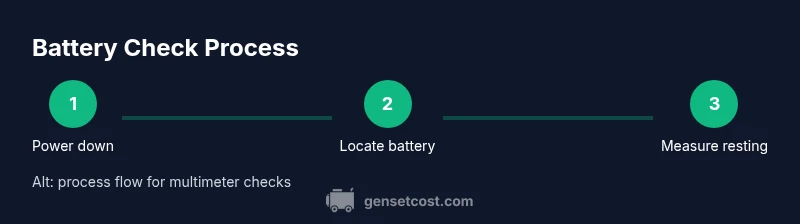
Power down and secure
Turn off the generator and disconnect any loads or peripherals. Allow the engine to cool and the area to be dry before you begin. This helps prevent accidental shocks and protects fragile components during access.
Tip: Always remove jewelry and wear insulated gloves to minimize shock risk. - 2
Locate and inspect the battery
Find the generator battery location and visually inspect for loose cables, corrosion, or damage. If you see corrosion, gently clean the terminals with a terminal cleaner and wipe dry before measuring. Confirm you are measuring the battery itself, not a tied-in bus or accessory circuit.
Tip: Check the negative terminal first to reduce the chance of a short when handling clamps. - 3
Set up the multimeter
Set your multimeter to a DC voltage range suitable for a 12V system (commonly 20V or higher). Make sure the leads are properly connected: red to the positive terminal and black to the negative terminal. Confirm the meter reads zero when probes are touched together before proceeding.
Tip: If your meter has auto-ranging, you can still verify the range is appropriate before recording. - 4
Measure resting voltage
Place the probes on the battery posts and note the resting voltage with the engine off. Record the value and compare it to a fully charged state. A healthy 12V lead-acid battery typically sits around 12.6–12.8V when rested.
Tip: Hold the probes steady and avoid touching metal parts to prevent short circuits. - 5
Measure with engine running (charging voltage)
Start the generator and allow the alternator to engage. Re-measure across the same terminals to capture the charging voltage. You should see a higher voltage than resting, typically in the mid to high 13s or low 14s for a 12V system, indicating proper charging.
Tip: Do not touch moving parts and keep your hands away from hot surfaces during operation. - 6
Interpret readings and decide on action
If resting voltage is strong but drops under load, the battery may be aging or weak and might need replacement. If charging voltage is outside the expected range, inspect the regulator or wiring. Document results to track trends over time.
Tip: If in doubt, perform a load test or consult a professional to avoid misdiagnosis. - 7
Maintenance after testing
Clean any corrosion and re-tighten terminals. Apply a small amount of dielectric grease if appropriate for your terminals to prevent future corrosion. Re-check torque specs in the manual to avoid over-tightening.
Tip: Regular maintenance reduces future test variability and improves longevity. - 8
Recordkeeping and scheduling
Log readings (resting and charging voltages), environmental conditions, and battery age. Set a reminder for periodic checks every 6–12 months depending on usage and climate. A consistent schedule helps ensure your generator starts reliably when needed.
Tip: Use a simple form or app to track changes and spot declines early. - 9
Next steps and escalation
If readings consistently indicate issues or you’re unsure about the results, plan a professional service visit. A technician can perform a full battery health assessment, a load test, and verify the charging system integrity.
Tip: Having a professional evaluation prevents silent failures during outages.
People Also Ask
Should I disconnect the generator battery before testing with a multimeter?
Yes, in many cases you should disconnect the negative lead first to prevent short circuits. If you test while connected, ensure you follow safety steps and avoid touching metal parts. Always refer to the owner’s manual for specific instructions.
Yes—disconnect the negative terminal first to reduce shock risk. If testing with the battery connected, follow safety steps and refer to the manual.
What voltage indicates a healthy generator battery?
Resting voltage around 12.6 volts is typical for a healthy 12V lead-acid battery. Under load, voltage should hold above roughly 12V; significant drop indicates weakness or aging.
Healthy resting voltage is about twelve and a half to twelve point eight volts; under load it should stay above about twelve volts.
Can a bad battery still show normal voltage when idle?
Yes. A failing battery can show near-normal resting voltage but drop under load. A proper load test is needed to confirm battery health beyond idle readings.
Yes, resting voltage can look fine even when the battery is weak; you need a load test to be sure.
Is it safe to test with the generator running?
Testing with the generator running can verify charging voltage, but it adds risk. Ensure safe handling, keep hands away from moving parts, and avoid short circuits.
Testing while running is okay if you take proper safety steps and stay clear of moving parts.
What readings indicate the charging system works?
While running, charging voltage should typically be higher than resting, often in the 13.8–14.8V range for a 12V system. This indicates the alternator and regulator are functioning.
You want charging voltage around 14 volts when running to confirm the system is charging properly.
What if I don't have a multimeter?
Consider borrowing a multimeter or taking the battery to a service shop for a health check. A professional can run a load test and verify the charging system.
If you don’t have a meter, borrow one or have a shop test the battery for you.
Watch Video
Key Takeaways
- Test resting and charging voltages to assess health.
- Address corrosion and loose connections before testing.
- Interpreting readings requires considering temperature and load.
- Document results to guide maintenance decisions.
- If in doubt, consult a technician and avoid DIY escalation.