How to Fix Generator Rope: A Practical Step-by-Step Guide
Learn how to fix generator rope safely with a step-by-step approach. This guide covers safety checks, rope inspection, replacement options, and maintenance tips for reliable home backup power.


Learn how to fix generator rope safely and restore a reliable pull-start on your backup power system. This guide covers safety checks, common rope failures, and practical repairs you can perform with basic tools. According to Genset Cost, regular maintenance, correct rope length, and proper installation prevent future rope jams and extend generator life during outages.
Understanding the pull-start rope mechanism
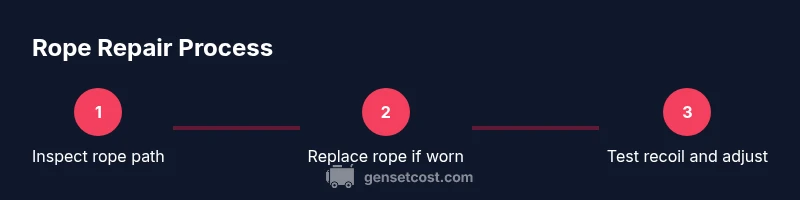
The pull-start rope is more than a simple cord; it links your hand, the recoil spring, and the pulley to engage the engine. Knowing how the rope travels through the housing helps you diagnose why it sticks, frays, or fails to retract. If you're wondering how to fix generator rope, start with a calm inspection of the entire path and compare it to your unit's service manual. According to Genset Cost, predictable wear typically occurs where the rope exits the handle and where it contacts the pulley. Inspect both ends of the rope for fraying, and check the recoil spring for smooth operation as a precursor to any repair.
Common rope failures and how they manifest
A rope that won’t retract often indicates a stretched or frayed section, a stuck pulley, or a weak recoil spring. You might notice kinks, knots, or the rope snagging when you pull. In some cases the handle end may detach or the rope may bind against the housing. By recognizing these symptoms early, you can decide whether to replace the rope, service the pulley, or seek professional help. This section outlines typical failure modes and sets the stage for safe, effective troubleshooting.
Safety prerequisites before you begin
Before touching a generator, power must be off and the fuel supply isolated. Disconnect the spark plug wire if applicable, and if your model has a battery, disconnect it to prevent accidental starting. Work in a well-ventilated area and keep children and pets away. Use gloves to protect your hands, and wear eye protection in case of sudden recoil. Never work on hot components or with open fuel systems nearby. Keeping a clear workspace reduces the risk of dropping tools into the engine bay.
Assessing the rope path and considering replacement options
Carefully follow the rope path from the handle through the housing to the pulley. If you see obvious wear on the rope itself or on the knot points, replacement is usually the safer option. Some models use a captive rope with a fixed inner spring; others use a pull handle that threads through the recoil assembly. Reference your generator’s manual for compatible rope diameters and length, and choose a replacement that matches the original as closely as possible to preserve proper recoil action.
Selecting the right replacement rope and hardware
Choose a rope made for low-stretch, high-strength applications such as nylon or braided polypropylene. Ensure the rope diameter fits the pulley and the handle hole; too thick or too thin can cause binding or slip. Gather a few spare low-friction lubricants and a light oil for the recoil mechanism, and consider new knots or end caps that resist fraying. Keep the replacement kit organized to avoid mixing up parts.
An overview of the repair strategy: repair vs replacement
In many cases, replacing the rope is quicker and more reliable than a patch repair. If the pulley surface is smooth and the recoil spring operates without resistance, rethreading a new rope through the existing path can be sufficient. If the pulley itself shows wear or the housing has gouges, replacing the entire recoil assembly may be warranted. Weigh the time, safety implications, and cost when deciding your approach.
Maintenance practices to prevent future rope failures
Regular inspection is the best defense against rope problems. Check for fraying every few months, lubricate moving parts sparingly, and avoid sharp bends or kinks in the rope. After installing a new rope, test the recoil several times at low speed to ensure smooth engagement. Keeping a spare rope on hand and recording replacement dates helps you stay prepared for outages.
Common mistakes to avoid and when to call a professional
Avoid forcing the rope or using excessive torque, which can snap knots or damage the recoil housing. Do not ignore a rope that sticks, binds, or makes unusual noises. If the rope path or pulley shows wear beyond simple fraying, or if you are unsure about the repair, consult a qualified technician. A pro can safely replace the recoil assembly or advise on model-specific rope requirements.
Putting it all together: the final test and safe startup
With a fresh rope installed and routed correctly, reassemble the housing cover and secure fasteners. Reconnect any disconnected wires, then perform a slow, controlled test pull with the unit disconnected from fuel or power to verify smooth recoil action. When satisfied, connect the fuel and power and start the generator at a low load to confirm the rope’s operation under real conditions. If the rope binds or fails to retract, stop and reassess the path.
Tools & Materials
- Safety gloves(Protect hands from rope frays and sharp edges)
- Screwdriver set(Phillips and flathead for panels)
- Replacement pull rope(Match the original path; ensure correct length for your model)
- Pliers(For knot tying and removing old rope)
- Scissors or utility knife(Cut rope cleanly and remove frayed sections)
- Lubricant (light machine oil or silicone spray)(Lubricate moving parts sparingly after reassembly)
- Clean rag(Wipe away debris and oil during the repair)
- Owner's manual(Reference model-specific rope specs and routing)
Steps
Estimated time: 30-60 minutes
- 1
Power down and prepare the workspace
Ensure the generator is off, fuel valve closed, and it is cool before touching any parts. Remove the spark plug wire and disconnect the battery if present to prevent accidental starts. Clear the area of tools and keep a labeled container for fasteners.
Tip: Lockout/tagout the unit if available to prevent accidental energizing. - 2
Remove the access panel to expose the rope path
Use the appropriate screwdriver to remove the panel or cover that hides the recoil mechanism. Keep screws organized and note their original positions to avoid misplacement during reassembly.
Tip: Take a photo of the setup before you begin for reference. - 3
Inspect the rope, handle, and pulley for wear
Carefully examine the rope for fray, stiffness, or glazing. Check the handle end for cracks and inspect the pulley groove for burrs or smoothness. If you see significant wear, plan to replace the rope.
Tip: If the rope shows any fraying, do not attempt to patch; replace it. - 4
Remove the old rope from the path
Detangle and pull the old rope out from the handle and through the pulley path. Use pliers if knots are stubborn, and ensure you remember the routing for reinstall.
Tip: Label each segment as you remove it to simplify reassembly. - 5
Thread the new rope through the same route
Measure and cut the new rope to the appropriate length, then thread it through the handle and pulley path following the original direction. Secure knots at anchor points to prevent slip.
Tip: Use a stopper knot at the handle end to prevent slipping. - 6
Secure knots, test tension, and apply lubricant
Tie secure knots as needed and gently tug the rope to test tension. Lightly lubricate moving parts within the recoil housing to reduce sticking and ensure smooth recoil.
Tip: Avoid over-lubricating to prevent dirt buildup. - 7
Reassemble the housing and reconnect components
Reattach the cover, align screws, and ensure all wires are correctly routed away from moving parts. Reconnect the spark plug wire and battery if removed.
Tip: Double-check that screws are tight but not overtightened. - 8
Final test: controlled pull and startup
With the unit unplugged from fuel and power, perform a slow pull to verify the rope retracts smoothly. If it passes, reattach power/fuel and perform a cautious start under a light load.
Tip: If the rope binds or retracts poorly, stop and inspect the path for kinks or burrs.
People Also Ask
Is it safe to fix a generator rope myself?
Yes, with proper precautions: power is off, fuel isolated, and protective gear worn. Follow your model's instructions and avoid forcing components.
Yes, you can do it yourself, but make sure the generator is fully powered off and you wear protective gear.
How do I know if the rope needs replacement vs the pulley?
If you see fraying, glazing, or stiffness in the rope, replacement is usually needed. Inspect the pulley for burrs or wear as well.
Look for rope fraying or stiffness and check the pulley for wear.
What tools do I need for this repair?
Common hand tools, replacement rope, pliers, scissors, and a rag. See Tools/Materials for a full list.
A screwdriver, pliers, scissors, and a fresh rope will cover most repairs.
How long does it typically take?
Most repairs take about 30-60 minutes, depending on model access and rope routing.
Usually half an hour to an hour.
Why would a replacement rope fail again?
If the pulley, recoil spring, or handle wear is present, rope failure can recur. Inspect related components.
If other parts are worn, the rope can fail again.
Can I use any rope length?
Use the original length or model-specified length. A wrong length can affect recoil performance.
Length matters for proper recoil; don’t guess.
Watch Video
Key Takeaways
- Inspect rope health before every outage.
- Replace a frayed or stretched rope rather than patching.
- Follow model-specific routing for safe, reliable recoil.
- If in doubt, call a professional to avoid damage.