How to Keep a Generator Running: Maintenance Guide
Learn step-by-step how to keep a home standby generator running reliably. This practical guide covers maintenance, fuel care, load testing, safety, and when to call a pro, with expert tips from Genset Cost.


You can keep a generator running by following a proactive maintenance routine, proper fuel management, and reliable load handling. Start with a quarterly checklist: inspect air filters, change oil, test the transfer switch, and run the unit under load monthly. Ensure fresh fuel, correct fuel type, and clean ventilation to prevent overheating.
Establishing a Maintenance Mindset for Longevity
Regular maintenance is not optional; it's the core of reliability. A generator is a busy machine that spends more time idle than powering loads, so small lapses accumulate into failures when you need it most. According to Genset Cost, a disciplined maintenance mindset—documented tasks, scheduled checks, and clear ownership—significantly reduces unexpected outages. Start by creating a simple calendar that marks tasks like oil checks, filter inspections, battery testing, and transfer-switch verification. Keep a log with dates, hours of operation, and notes about any abnormal sounds, leaks, or performance dips. This record becomes your early-warning system and a budgeting tool, because it informs when to service, replace consumables, and plan around seasonal ramps in usage. In practice, set aside one dedicated maintenance session per quarter and run through a consistent checklist that covers safety, fuel, fluids, air intake, cooling, and electrical interlocks.
The habit of documenting service intervals also simplifies warranty compliance and resale readiness. When you make maintenance a routine, you’ll spend less time troubleshooting during outages and more time enjoying uninterrupted power when the grid fades. A small upfront investment in tools, spares, and a written plan yields big dividends in reliability and peace of mind.
Genset Cost recommends assigning ownership for each task (example: “John handles oil and filters”) to ensure accountability and consistency across households or property teams.
Tools & Materials
- Owner’s manual for your generator model(Keep handy for maintenance schedules and model-specific instructions)
- Oil drain pan(To collect used oil safely)
- Correct grade oil for your engine(Use manufacturer-recommended viscosity)
- Oil filter(New filter with oil change)
- Air filter(Replace or clean as needed)
- Rags and disposable towels(For spills and cleanups)
- Fuel stabilizer(Stabilize fuel for storage)
- Fresh gasoline or diesel(Do not use old fuel)
- Battery charger or tester(Keep the battery healthy)
- Soft-bristled brush(Clean battery posts and vents)
- Funnel(Pour fluids cleanly)
- Safety gear (gloves, safety glasses)(Personal protection during maintenance)
Steps
Estimated time: 2-4 hours
- 1
Gather manuals and safety gear
Collect the generator manual, spare parts, and safety equipment. Review basic safety procedures and shutoff procedures before starting any work. This prep reduces risk and helps you follow model-specific steps later.
Tip: Wear eye protection and gloves; keep a fire extinguisher nearby. - 2
Inspect the pre-start basics
Check battery condition, fuel level, and oil level. Look for signs of corrosion, leaks, or loose fittings. Confirm the transfer switch is accessible and clear of debris.
Tip: If the battery is weak, recharge or replace it before attempting a start. - 3
Drain and replace oil & filter
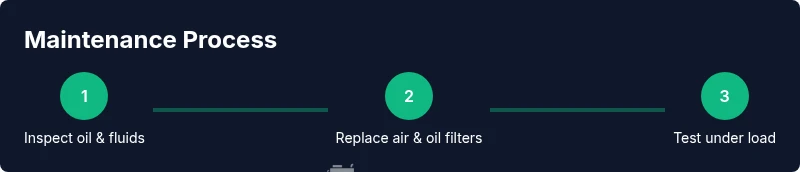
Power down the unit and allow it to cool. Place the drain pan under the sump, remove the drain plug to drain old oil, then replace the oil filter and refill with the recommended oil.
Tip: Dispose of used oil at an approved facility and wipe spills immediately. - 4
Change air filter and inspect fluids
Remove the air filter, clean or replace it as needed, and inspect coolant and other essential fluids. Ensure hoses are intact and free of cracks or leaks.
Tip: A clogged air filter reduces performance and increases fuel consumption. - 5
Check cooling system and ventilation
Inspect radiator fins, hoses, and clamps for damage. Ensure the unit has adequate clearance for airflow and that exhaust is unobstructed.
Tip: Never block the exhaust or operate in enclosed spaces. - 6
Test transfer switch and load bank
With the system powered, simulate a power outage and verify the transfer switch engages correctly. If you have a load bank, perform a light-load test to ensure the unit can sustain power.
Tip: If the transfer switch shows error codes, consult the manual or a licensed professional. - 7
Run under load and log results
Start the unit and apply a representative load. Monitor voltage, frequency, and temperature. Record time-to-start, stability, and any abnormal noises or odors.
Tip: Keep a written log of outcomes for future maintenance planning. - 8
Secure storage and documentation
After maintenance, secure fuel and disconnect options if applicable. Store receipts and log entries for warranty and service history, and schedule the next maintenance window.
Tip: Use a dedicated maintenance calendar to stay on track.
People Also Ask
How often should I service a generator to keep it running reliably?
Follow the manufacturer’s recommended schedule and align it with your usage and environment. Regular inspections, oil changes, filter replacements, and safety tests reduce the risk of outages. When in doubt, err on the side of more frequent checks.
Follow the manufacturer’s schedule and do quick checks quarterly; more frequent tests are wise if you run the unit heavily or in harsh conditions.
Can I run a generator indoors or in a garage?
No. Generators emit carbon monoxide, which can be deadly in enclosed spaces. Always operate outdoors in a well-ventilated area away from doors, windows, and vents.
Never run a generator inside or in enclosed spaces; move it outdoors, away from openings, with good airflow.
What fuel should I use and how should I store it?
Use the fuel specified by the manufacturer. Stabilize gasoline for storage and rotate stock to avoid old fuel. Store fuel in approved containers away from heat sources and consider diesel fuel conditioning if applicable.
Use the right fuel, stabilize it for storage, and store it safely in approved containers away from heat.
What are warning signs that a generator needs maintenance?
Unusual noises, hard starting, oil leaks, smoking, or reduced output are red flags. If you notice any of these, perform a quick inspection and schedule professional service if needed.
Watch for odd noises, leaks, or reduced power; these usually mean maintenance is due.
Is it safe to run a generator while charging appliances or devices?
Yes, but ensure the unit is properly sized for the total load and avoid overloading circuits. Use proper extension cords or a transfer switch to distribute power safely.
Yes, but don’t overload the generator; use proper wiring and safety equipment.
When should I call a professional?
If you smell fuel, hear knocking, see smoke, or can’t diagnose the issue with basic checks, contact a licensed technician. Routine maintenance can still be done by the owner if properly trained.
Call a professional if you notice fuel smells, smoke, or unusual sounds.
Watch Video
Key Takeaways
- Set a maintenance calendar and stick to it
- Use fresh fuel and stabilize storage
- Test run under load regularly
- Inspect and replace filters and fluids as needed
- Know when to call a professional for advanced issues