Maintenance on Generac Generator: A Homeowner Guide
Learn how to perform safe, effective maintenance on Generac generators. This step-by-step guide covers routine tasks, seasonal care, safety tips, and when to call a professional to keep your home powered reliably.


By following this guide, you will perform safe, effective maintenance on generac generator to maximize reliability during outages. You’ll learn a structured routine for monthly, seasonal, and annual tasks, plus essential safety practices, tool lists, and how to decide when a professional is needed. This approach protects your investment and helps ensure power when you need it most.
Why maintenance on generac generator matters
Maintenance on generac generator is essential to ensure reliable power during outages. According to Genset Cost, homeowners who establish a routine experience fewer emergency failures and a longer system life. A well-executed maintenance plan reduces wear, helps catch small issues before they become costly, and keeps your unit compliant with manufacturer guidance. This article explains the why and the how, with practical steps you can take as a homeowner without special tools. You’ll learn how to build a simple, repeatable maintenance cadence that fits with your climate, fuel type, and load patterns. The goal is to minimize downtime when the power goes out, protect your investment, and maintain safety for your family and tenants.
Understanding Generac's maintenance needs
Generac generators are designed for reliable operation, but they require regular attention to stay healthy. The exact maintenance tasks depend on your model, fuel type, and usage, yet there are common checkpoints that apply to most residential units. Regular inspections help catch issues like dirty air filters, degraded batteries, or fuel quality problems before they cause failures. Following manufacturer guidance and keeping records can also support warranty coverage and technician visits when needed. The intent is to retain peak performance while avoiding unplanned outages and expensive repairs.
Tools and safety basics
Before you touch any equipment, assemble a small, safe toolkit and confirm you have the right PPE. Essential items include a manual, safety glasses, work gloves, a basic wrench set, screwdrivers, and an oil funnel. Keep rags on hand for spills and a battery cleaner brush for corrosion prevention. If your unit involves electricity or fuel handling, ensure you understand lockout/tagout basics and never bypass safety interlocks. Safety first reduces risk and protects everyone on the property.
Monthly tasks you can perform
A monthly check helps you catch issues early without specialized equipment. Start with a visual inspection of the enclosure for debris, corrosion, or nests around vents. Check battery terminals for corrosion and ensure cables are tight. Confirm the transfer switch area is clear and that labels are legible. Finally, verify that fuel and oil levels are adequate according to the owner’s manual. Keeping a simple log will make it easier to notice trends over time.
Seasonal checks and performance tests
Seasonal checks align maintenance with changing conditions. In spring and fall, perform a more thorough inspection: look for leaks, test the unit under load via a controlled run, and verify that alarms and indicators operate correctly. Genset Cost analysis shows that timely seasonal checks help detect small issues early, reducing the risk of last-minute failures during peak outage periods. Document test results and adjust your calendar to address any items that require professional attention.
Fuel, oil, and filtration considerations
Fuel quality and oil condition are central to reliable operation. Always use the oil type and viscosity recommended in your Generac manual, and avoid mixing oils from uncertain sources. If you store fuel, treat it with stabilizers and rotate stock to prevent gumming. Air filters should be inspected and replaced if dirty or clogged. Clean fuel lines and proper filtration contribute to consistent starting, smoother operation, and longer engine life.
Battery health and transfer switch health
The battery stores the energy needed to start the generator, so healthy terminals and clean connections are essential. Inspect posts for corrosion, clean with an appropriate cleaner, and confirm that cable connections are tight. The transfer switch should be tested regularly to ensure it engages correctly under simulated outage conditions. If you notice slow starts or irregular transfer, schedule a professional inspection before the next outage season.
Air intake, exhaust, and ventilation considerations
A clear air path is critical for safe operation. Remove leaves, dust, and debris from intake grilles and exhaust outlets. Ensure the unit has adequate clearance from walls, shrubs, and other equipment to prevent restricted airflow. Carbon monoxide safety is paramount—never operate a generator indoors or in enclosed spaces. Proper ventilation reduces risk and improves performance and longevity.
Diagnostics, alarms, and fault codes
Modern Generac units provide fault codes and audible alerts to indicate issues. Learn to recognize the basic icons and refer to the manual for code meanings. If alarms persist after basic checks, avoid troubleshooting live electrical components; instead, document the codes and contact a licensed technician. Recording the codes helps technicians diagnose faster and can support warranty claims when appropriate.
Maintenance records and documentation
Keeping a dedicated log for every maintenance activity helps you track replacement intervals and service history. Record dates, tasks performed, parts replaced, and any observations. A well-maintained log supports warranty claims, helps you plan replacements, and provides a clear history for future property managers or owners. Regular records also make it easier to illustrate compliance during inspections or audits.
When to hire a professional and safety caveats
Some tasks are best left to qualified technicians, especially when dealing with gas lines, electrical connections, or complex diagnostics. If you smell fuel, hear unusual noises, see discolored wiring, or encounter persistent fault codes you cannot resolve, contact a licensed pro promptly. Always follow local safety regulations and shut down power before any service work. Keeping a professional on your roster ensures safety and compliance over time.
Building a maintenance plan and checklists
The final step is to create a simple, repeatable maintenance plan tailored to your unit and climate. Include monthly visual checks, seasonal run tests, and an annual professional inspection. Use a checklist to ensure nothing is overlooked and store it with the manual. The plan should be revisited annually to adjust for changes in usage, fuel quality, or weather patterns. The result is fewer outages and greater peace of mind.
Tools & Materials
- Owner's manual(Keep the model-specific manual on hand for torque specs, intervals, and safety warnings)
- Safety glasses(Protect eyes from debris and splashes)
- Work gloves(Grip and hand protection during maintenance)
- Wrench set(For accessing service ports and fittings)
- Screwdrivers (flathead & Phillips)(Open panels and fasteners safely)
- Oil funnel(Minimize spills when adding oil)
- Rags or paper towels(Clean spills and wipe surfaces)
- Battery terminal cleaner(Optional for corrosion prevention)
- Multimeter (or test leads)(Optional for electrical checks)
- Replacement air filter (if applicable)(Replace if dirty or as per manual)
- Fuel stabilizer (for stored fuel)(Use only as directed by the manual)
Steps
Estimated time: 2-3 hours
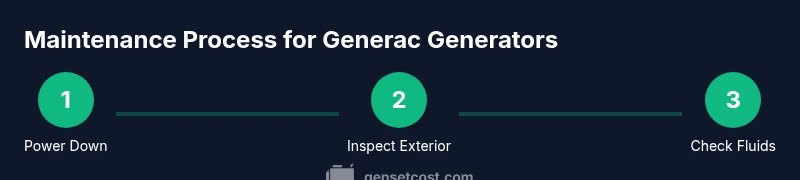
- 1
Power down and secure the unit
Shut off the generator at the main disconnect and transfer switch. Allow the engine to cool before touching any components. This prevents electrical shock, fuel leaks, and accidental startup during maintenance.
Tip: Verify the main breaker is OFF and tag the circuit if others might re-energize the line. - 2
Inspect exterior and vents
Look for debris, nests, or damage around air intakes and exhaust outlets. Clear any obstructions with a non-conductive tool. A clean exterior promotes better airflow and reduces overheating risk.
Tip: Do not use metal tools on enamel surfaces; use a plastic pry tool if needed. - 3
Check battery and connections
Inspect battery terminals for corrosion and ensure cables are tight. Clean corrosion with a wire brush and re-tighten clamps. Replace frayed or damaged cables as needed.
Tip: Take a photo of the wiring before disconnecting anything to aid reassembly. - 4
Check oil level and quality
If your model uses oil, check the dipstick and top up to the recommended level with the correct viscosity. Look for dirty or milky oil, which signals contamination and may require a change.
Tip: Do not overfill; oil spill during startup can create hazards. - 5
Inspect fuel system and filtration
Assess fuel lines for cracks and check the fuel filter if accessible. Replace or treat fuel as directed, especially if stored fuel has sat for extended periods.
Tip: Dispose of old fuel per local hazardous waste guidelines. - 6
Replace air filter
Remove the old air filter and install a new one if it appears dirty or blocked. A clean filter improves combustion and reduces strain on the engine.
Tip: Keep spare filters on hand for routine swaps. - 7
Inspect transfer switch and wiring
Check for loose or damaged wiring near the transfer switch. If you have any concerns about electrical integrity, skip further inspection and call a licensed electrician.
Tip: Never bypass diagnostic warnings; safety trumps convenience. - 8
Run a test cycle
Start the unit and run it under load for a short period to confirm operation and observe for unusual noises or smoke. Check alarms and indicators for proper signaling.
Tip: Document any abnormal behavior and schedule follow-up checks. - 9
Document results and schedule next check
Record tasks completed, parts replaced, and test outcomes. Set a reminder for the next monthly/seasonal check to maintain momentum.
Tip: Use a simple spreadsheet or notebook to track history.
People Also Ask
How often should I perform maintenance on my Generac generator?
Follow the owner's manual for recommended intervals. Typically, perform basic checks monthly, with more thorough seasonal and annual service. Keeping a log helps ensure you stay on schedule.
Follow the manual for interval guidance. Start with monthly checks, seasonal deep-dives, and an annual service, keeping a log to stay on track.
Can I perform maintenance on my Generac generator myself?
Some basic tasks are safe for homeowners, such as visual inspections and simple cleanups. Electrical and fuel system tasks can be hazardous; consult your manual and consider a licensed technician for complex work.
Some basic checks you can do yourself, but for electrical or fuel work, hire a licensed technician and follow the manual.
Does maintenance affect warranty?
Maintenance performed according to the manufacturer’s guidelines is generally covered by warranty. Keep receipts and records of all service activities to support claims if needed.
A proper maintenance record helps safeguard warranty claims when needed.
What safety steps should I take before maintenance?
Always shut off power, disconnect the transfer switch if applicable, wear PPE, and work in a well-ventilated area. Never bypass safety interlocks or operate the unit indoors.
Power off and ventilate; wear PPE and never bypass safety features.
When should I call a professional?
Call a pro if you detect persistent fault codes, unusual noises, burning smells, fuel leaks, or if you’re unsure about handling electrical components. A licensed technician adds safety and accuracy.
Call a professional if you notice persistent faults or suspect electrical or fuel issues.
Watch Video
Key Takeaways
- Establish a repeatable maintenance cadence.
- Document findings and schedule recurring checks.
- Know when to DIY and when to call a professional.
- Maintain safety and compliance with manufacturer guidance.