Repair Generac Generator: A Homeowner's Step-by-Step Guide
Learn safe, practical steps to diagnose and repair a Generac generator. This guide covers common issues, required tools, step-by-step actions, and when to call a pro for reliable standby power.


This guide helps you diagnose and repair a Generac generator safely and effectively. You’ll learn common fault conditions, essential tools, a clear step-by-step process, and when it’s wiser to contact a licensed technician. Emphasizing safety and proper troubleshooting, this approach helps you restore reliable standby power quickly.
Why Repairing a Generac Generator Matters
A Generac generator—whether a standby unit for a home or a portable model for a remote job site—acts as a critical lifeline during power outages. When the grid goes dark, a healthy generator keeps the refrigerator running, protects medical equipment, and maintains climate control. Regular repair and maintenance are not just about fixing issues after they appear; they are about preserving reliability, safety, and long-term cost efficiency. According to Genset Cost, homeowners who invest in proper diagnostics and safe repair practices reduce downtime and extend the life of their units. Wear, environmental exposure, and aging components create fault conditions that worsen over time if left unchecked. A methodical repair approach—rooted in checking connections, testing the electrical system, and replacing worn parts—pays off with quicker starts, smoother operation, and fewer emergency service calls. For property managers, dependable standby power minimizes tenant disruption and protects asset value. The key is to approach repairs with a plan: verify safety, diagnose accurately, and document results for future service.
- Reliability hinges on battery health, fuel condition, and control modules.
- Quick fixes can hide deeper problems—think root-cause diagnosis.
- A maintenance cadence ( yearly checks, seasonal testing ) reduces risk and improves uptime.
Common failure modes in Generac generators
Generac units share several failure patterns across models and installation contexts. Battery degradation or corrosion is a frequent starter issue, especially after long periods of inactivity. Fuel systems suffer when fuel sits too long, leading to varnish buildup, clogged filters, or stuck injectors. Electrical components like spark plugs, ignition coils, and capacitor circuits can wear, causing misfires or no-start conditions. Transfer switches, which orchestrate power flow between the utility and generator, are a common source of nuisance faults if wiring or sensing elements are damaged. Oil pressure sensors and cooling fans can also fail, triggering automatic shutdowns. From a practical standpoint, visual signs—loose wires, corrosion on terminals, fuel leaks, or an overheating alarm—often point to the most cost-effective fixes. Genset Cost analysis shows that battery and fuel-system issues are among the most common fixable problems that DIY-friendly repairs can address when done safely. By charting symptoms against a fault tree, you can prioritize parts to inspect first, minimize downtime, and maintain compliance with local safety standards.
- Battery failure or poor connections
- Stale fuel, varnish, or clogged filters
- Ignition and spark components wear
- Transfer switch or sensor faults
- Oil pressure or cooling system alarms
- Corrosion, loose connections, or leaks
Safety first: precautions before you begin repairs
Safety is non-negotiable when working on any generator. Before you touch the unit, power it down completely and disconnect the battery to prevent accidental shorts. Allow the engine to cool; hot parts and moving components can cause burns. Work outdoors or in a well-ventilated area to avoid carbon monoxide buildup, and keep the CO detector in the home area active during any testing. Have a fire extinguisher rated for electrical fires nearby and wear ANSI-approved eye and hand protection. Confirm that all transfer switches are in the OFF position before performing any diagnostic work. If you smell fuel or see a leak, stop immediately and address the leak with proper containment and ventilation. Document your steps and stay close to the manual for model-specific instructions. By prioritizing safety, you reduce risk and prevent accidental damage to the unit or surrounding equipment.
- Turn off power, disconnect battery, and vent the work area.
- Use insulated tools and wear protective gear.
- Never run the engine indoors or in enclosed spaces with exposure to CO.
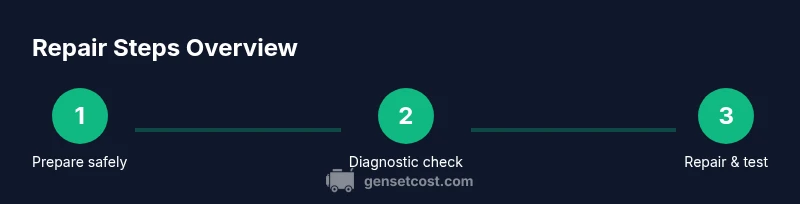
Diagnostic flow for repair generac generator
A structured diagnostic approach helps you identify the fault without unnecessary disassembly. Start by checking for display codes, status LEDs, or error messages in the controller panel. Use a digital multimeter to verify battery voltage and ground integrity, and inspect battery terminals for corrosion. If the unit starts but stalls or shuts down, test the fuel system by examining fuel quality, fuel lines, and the filtration. Inspect the air filter and the intake system for blockages. Look for loose or burnt wires at the electrical connections and check the transfer switch wiring for signs of wear. If error codes point to a specific subsystem (battery, fuel, ignition, or sensors), concentrate your investigation there. Keep a log of findings and test results to correlate symptoms with causes. When in doubt, consult the manual’s fault-code table and consider professional diagnosis for complex electrical faults.
- Read fault codes first; prioritize high-impact subsystems.
- Verify battery health and fuel quality with simple tests.
- Avoid making assumptions; confirm with measurements.
- Maintain a diagnostic log for future reference.
DIY repair tasks you can perform safely
Some repairs are well within a homeowner’s comfort zone, provided you follow safety steps and use the correct parts. Common DIY tasks include replacing a worn battery, cleaning or replacing air and fuel filters, and reseating loose terminals after cleaning corrosion. Inspect the spark plugs and ignition components for gap wear and signs of fouling, replacing them if the manual recommends. If you encounter minor fuel-line leaks or degraded hoses, replace with OEM parts and reinstall clamps firmly. Always document the parts you replaced and test the system after each step. For more involved tasks—such as replacing the transfer switch, major wiring, or performing a full fuel system overhaul—seek professional service. This approach minimizes risk and extends the life of the generator while preserving warranty coverage where applicable.
- Replace worn batteries and clean terminals.
- Change air and fuel filters as per the manual.
- Inspect ignition components and replace if degraded.
- Use OEM parts and follow torque specs for fittings.
- Test run the unit after each repair.
When to call a licensed technician and cost considerations
Not every fault is a DIY friendly fix. If you encounter persistent startup failures, repeated shutdowns, fuel leaks, electrical arcing, or unusual noises, it’s prudent to call a licensed technician. Complex tasks—such as replacing a transfer switch, diagnosing intermittent electrical faults, or performing a full fuel-system refurbishment—are best left to pros with the right tools and safety training. Costs vary with the fault’s complexity, parts required, and labor rates in your area. Rather than guessing, ask for a written estimate that includes diagnostic fees, part costs, and a projected timeline. If you notice consistent performance gaps over time, recurrent outages, or a unit that fails to comply with manufacturer guidelines, professional service is the safer and more economical option in the long run.
- Benefits of professional service include accurate fault isolation and warranty protection.
- Request a upfront written estimate and a defined scope of work.
- Regular preventive maintenance can reduce repair frequency and cost over time.
Preventive maintenance and long-term maintenance plan
The best defense against costly repairs is a regular preventive maintenance plan. Schedule routine checks of battery health, fuel quality, air filtration, oil levels, and cooling system integrity. Replace worn components before they fail and keep spare parts on hand for common failures (battery, filters, and spark plugs). Establish a maintenance calendar tied to seasonal testing and after-storm checks to address environmental exposure. Keep a service log that records fault codes, part replacements, and test results; use this history to forecast future needs and to communicate with technicians. A proactive approach helps ensure your Generac generator performs when power matters, reduces emergency repair costs, and extends the unit’s usable life.
Tools & Materials
- Digital multimeter(Test DC/AC voltage, resistance, continuity)
- Socket set(Metric and SAE sizes; include deep sockets)
- Screwdrivers (Phillips and flat-head)(Assorted sizes for panel screws)
- Wrench set (combination)(Used for fittings and mounting hardware)
- Owner's manual for your Generac model(Model-specific procedures and torque specs)
- Replacement parts (filters, battery, spark plugs)(Prefer OEM parts; check compatibility with model)
- Fuel stabilizer(For long storage periods to prevent varnish buildup)
Steps
Estimated time: 60-120 minutes
- 1
Power down and prepare
Shut off the unit, switch OFF all breakers, and disconnect the battery. Allow the engine to cool before touching any components. This prevents electrical shock, accidental starting, and burns.
Tip: Disconnect the negative battery terminal first, then the positive to prevent short circuits. - 2
Check for obvious issues
Inspect for loose wires, corrosion on terminals, fuel leaks, or obvious mechanical damage. Clean any corrosion on terminals and tighten connections as needed before proceeding.
Tip: Document any signs of wear with photos for reference during repair or when consulting a tech. - 3
Test electrical and fuel systems
Use a multimeter to verify battery voltage and continuity. Inspect fuel quality and inspect lines and filters for varnish or clogging. Do not pressurized test fuel lines if you see leaks.
Tip: Replace old fuel and filters according to the manual if varnish is present. - 4
Replace worn parts as needed
Install a new battery if the old one tests weak, replace worn spark plugs, and swap a clogged air or fuel filter. Re-tighten all connections and restore power.
Tip: Use OEM parts and follow torque specs to avoid overstressing mounts. - 5
Re-test and perform a run
Reconnect the battery, re-energize circuits, and perform a controlled start and run test. Let the unit run through a normal cycle to verify stable operation.
Tip: Observe for abnormal sounds, smells, or error codes during the test run. - 6
Document and plan next steps
Record fault codes, parts replaced, and test results. If faults persist, plan for professional inspection and further diagnostic steps.
Tip: Keep the service history accessible for future maintenance.
People Also Ask
Can I repair a Generac generator myself?
Yes for simple tasks like battery replacement or filter cleaning, but complex faults should be handled by a professional to protect warranty and ensure safety.
You can handle basic maintenance, but complex faults should be done by a pro.
What are the most common causes of generator failure?
Battery degradation and fuel-system issues are among the most common fixable problems. Other frequent causes include worn ignition parts and faulty transfer switches.
Battery and fuel problems are the usual culprits.
What safety steps should I take before attempting repairs?
Power down, disconnect the battery, and ventilate the area. Wait for the engine to cool and wear protective gear.
Always power down and ventilate before starting.
How long do repairs typically take?
Time varies with fault complexity and parts availability. Minor fixes may complete within an hour; major replacements take longer.
Timeline depends on fault and parts.
Are replacement parts expensive for Generac?
Costs vary by part and model; budget for batteries, filters, and potential switch issues. Compare OEM parts for reliability.
Parts costs vary a lot; expect differences.
When should I replace my generator instead of repairing?
If repair costs approach or exceed replacement value, or reliability is poor, replacement may be sensible.
If repairs add up, replacement makes sense.
Watch Video
Key Takeaways
- Prioritize safety before any repair.
- Diagnose methodically using fault codes.
- Use OEM parts for replacements.
- Know when to call a licensed technician.
- Maintain a regular preventive maintenance schedule.