Inverter Generator Difference: A Practical Comparison
Explore the inverter generator difference, including power quality, efficiency, noise, sizing, and cost. This objective guide helps homeowners choose the right inverter generator for backup power.


The inverter generator difference centers on power regulation, waveform stability, and fuel efficiency. Compared to traditional portables, inverter models throttle the engine to match load, delivering cleaner power, lower noise, and better fuel economy. For homeowners evaluating backup power, this means choosing an inverter generator that balances running watts, surge capacity, and long-term costs.
What is the Inverter Generator Difference and Why It Matters
The inverter generator difference is not just about a fancy label; it reflects how the unit converts and regulates power to deliver clean, stable electricity. Unlike conventional portable generators, inverter models first convert AC to DC, then invert it back to high-quality AC with precise microprocessor control. This design enables throttling to match load, which improves fuel efficiency and reduces noise. According to Genset Cost, the inverter generator difference is most noticeable in power quality, runtime, and overall reliability for home backup use. Homeowners and property managers should evaluate running watts, surge capacity, and waveform stability to avoid damage to sensitive electronics during outages.
Core Design Differences That Drive Performance
At the heart of the inverter generator difference are three core design choices: electronic speed control, advanced sensors, and the quality of the power electronics. Inverter generators use digital controllers to modulate engine speed, voltage, and frequency in real time, so efficiency improves as load changes. They also employ high-quality rectifiers and inverters to produce a near-perfect sine wave. The result is lower total harmonic distortion (THD) and safer operation for computers, TVs, and electronics. These design choices explain why inverter generators often outperform traditional portables in both efficiency and reliability over time.
Output Quality: Clean Power and Waveform Stability
A defining point in the inverter generator difference is the consistency of the electrical output. Pure sine wave power with THD typically under 3% is common in higher-quality models, which is crucial for sensitive electronics. In contrast, some affordable, non-inverter portable units can exhibit higher THD at higher loads, risking nuisance tripping or equipment wear. Buyers should review manufacturer datasheets for running watts, surge capacity, and THD ratings. The better the waveform, the less risk of damage to power supplies and home automation equipment during outages.
Noise, Size, and Portability: Real-World Comfort
Noise levels and portability are practical considerations when evaluating the inverter generator difference. Sound output varies with engine speed; throttling to match load often reduces noise and improves portability. Heavier, higher-wattage inverter models typically weigh more but still offer compact designs compared with traditional portable gensets. For situations like apartment living or quiet neighborhoods, a compact inverter with a low dB rating can be the deciding factor. Users should check at what distance noise measurements are taken and consider enclosure options if the unit will run near living spaces.
Load Handling: Peak vs Running Wattage
Understanding the inverter generator difference in load handling is essential. Run watts indicate continuous output, while surge watts reflect startup capability for motors and appliances. Inverter generators generally provide strong starting surge for small to medium loads, with some models offering generous headroom for power-hungry tools. When sizing, it’s prudent to sum essential loads and include about 20–30% headroom to cover surges and future needs. This approach helps ensure reliable operation during outages without overloading the system.
Fuel Efficiency and Runtime: Real-World Costs
Fuel efficiency is a major part of the inverter generator difference. Electronic throttle control keeps engine speed aligned with demand, reducing fuel consumption compared with fixed-speed portable gensets. Real-world runtimes depend on tank size, load, and the efficiency of the engine. While initial price may be higher, the long-term savings from improved efficiency and reduced wear can offset the upfront cost. Homeowners should compare running hours per gallon and consider fuel type compatibility when evaluating options.
Reliability, Warranty, and Brand Support
Reliability and warranty terms vary across brands, but the inverter generator difference often correlates with stronger electronic controls and better after-sales support. Look for models with solid warranty coverage (at least 2–3 years) and clear service networks. Reading consumer reviews and brand literature helps gauge long-term durability. As with any investment, consider the availability of replacement parts, service intervals, and the ease of obtaining certified technicians for maintenance.
Sizing, Cost, and Value: A Practical Framework
Sizing for home backup starts with identifying essential circuits and appliances. Many homeowners aim for 2–4 kW for small setups or 5–8 kW for whole-home partial coverage. Price ranges for inverter generators vary by wattage, features, and build quality, typically spanning from mid-range to premium tiers. When comparing, weigh upfront cost against long-term fuel savings, maintenance costs, and the value of quiet operation and clean power. The inverter generator difference often favors models that deliver reliable power with minimal noise and efficient consumption, yielding better overall value over time.
Installation and Integration Considerations
Integrating an inverter generator into a backup system involves safe connection practices and, in many cases, a transfer switch. A transfer switch ensures you don't backfeed power into the grid and makes it easier to manage demand during outages. Some homeowners opt for hard-wired setups with automatic transfer switches, while others use manual interlock kits. Ensure clearance for ventilation and check that the generator is placed outdoors in a stable, level spot. Consulting a licensed electrician is advisable to meet local codes and safety standards.
Maintenance and Longevity: Keeping It Ready
Regular maintenance is essential to preserve the inverter generator difference over time. Routine tasks include oil changes, air filter cleaning, spark plug inspection, and battery testing for electric start models. Storage away from moisture and extreme temperatures helps extend life. Keeping fuel fresh and using stabilizers can prevent gumming and varnishing in the carburetor. Manufacturers typically publish service intervals; following them can reduce downtime and preserve performance during emergency outages.
Quick-Start Decision Framework: Your 3 Steps to Choice
- Define your load profile: essential appliances, weekend tools, and potential surge events. 2) Compare running watts, surge capacity, and THD ratings across a short list of inverter models. 3) Evaluate total cost of ownership: upfront price, fuel efficiency, maintenance, and warranty. By focusing on the inverter generator difference in power quality, efficiency, and noise, you’ll select a unit that aligns with your backup power needs and budget.
Comparison
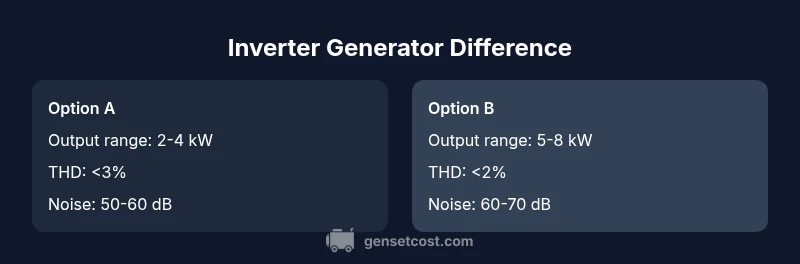
| Feature | Option A: Compact inverter (2-4 kW) | Option B: Mid-size inverter (5-8 kW) |
|---|---|---|
| Output range | 2-4 kW | 5-8 kW |
| Clean power (THD) | <3% | <2% |
| Noise (dB at 7m) | 50-60 dB | 60-70 dB |
| Fuel efficiency (hours per gallon) | 12-15 hrs | 15-20 hrs |
| Best for | Small home/ apartment use or RV | Whole-house backup with higher demand |
| Price range | $600-$1,200 | $1,000-$2,000 |
The Good
- Cleaner power with low THD protects electronics
- Quieter operation at light/medium loads
- Better fuel efficiency reduces running costs
- Smaller size and portability for tight spaces
- Improved surge handling for motors
The Bad
- Higher upfront cost than traditional portables
- Longer payback period for very small loads
- Some models require more maintenance features
- More complex warranty terms on advanced electronics
Inverter generators generally offer better power quality and efficiency for home backup, with trade-offs in upfront cost.
If you prioritize protecting electronics and quiet operation, choosing an inverter generator is wise. If upfront cost dominates, a traditional portable may suffice, though you’ll trade peak power stability and efficiency.
People Also Ask
What is the core inverter generator difference?
The core inverter generator difference is in how the unit regulates power. It converts AC to DC and back with a microprocessor-controlled inverter, delivering a stable sine wave and efficient throttle control. This means better protection for electronics and lower noise during operation.
The main difference is the precise electronic regulation that keeps power clean and stable while reducing noise.
Are inverter generators quieter than traditional ones?
Generally yes. Inverter models dynamically adjust engine speed to match the load, which keeps RPM and noise lower when demand is light. The result is a quieter operation compared with fixed-speed traditional portables.
Yes—most inverter generators run more quietly because they throttle to the load.
Do inverter generators cost more upfront?
Upfront costs tend to be higher for inverter generators due to advanced electronics and higher build quality. Over time, however, fuel efficiency and reduced wear can offset the difference.
They usually cost more at purchase, but you may save on fuel and maintenance later.
What size is right for a home outage?
Begin by listing essential appliances and calculating their running watts. Add 20–30% for surge, then pick a model with running watts above that total. Consult a sizing calculator or a professional for precise recommendations.
List your essentials, add some headroom, and choose a model with enough running watts.
Is it safe to run an inverter generator indoors?
No. Always operate outdoor with proper ventilation and consider a transfer switch for safe, code-compliant installation. Indoor use can lead to carbon monoxide risk and electrical hazards.
No—operate outdoors and install with proper venting and safety features.
What about starting methods?
Most inverter generators offer electric start or recoil. Many models provide remote start options. Check the availability of a battery, key fob, or app control when evaluating models.
Most have electric starts or remotes, which adds ease of use.
Key Takeaways
- Assess your essential loads before shopping
- Prioritize low THD for sensitive devices
- Plan for transfer switch compatibility
- Balance upfront price with long-term fuel savings
- Size with headroom for surges
- Check warranty and service availability