LP Generator vs Gas: Propane vs Natural Gas for Home Backup
A comprehensive, objective comparison of LP (propane) propane generators and natural gas units for home backup power. Learn fuel availability, costs, installation, and maintenance to choose the right option.


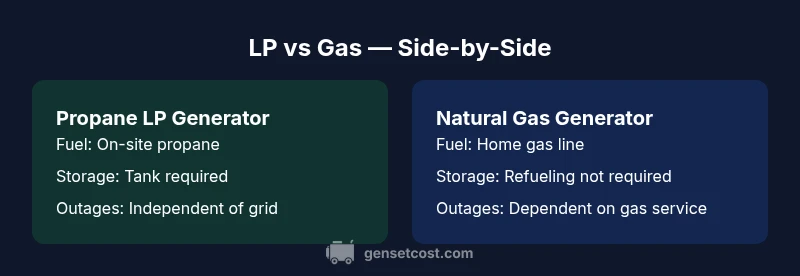
lp generator vs gas: Propane (LP) units store fuel on-site and can operate independently of gas lines, but propane supply and tank management influence cost and logistics. Natural gas generators draw fuel from a home gas line, often delivering lower running costs where service is reliable, but they depend on utility continuity. This comparison helps homeowners decide based on fuel access, cost, and outage resilience.
lp generator vs gas: Core differences
In the decision between lp generator vs gas, the core split revolves around fuel access, installation constraints, and ongoing costs. LP (liquid propane) units rely on on-site storage, giving you independence from the local gas grid and the ability to place equipment in locations with limited access to pipelines. Natural gas generators feed from the home’s gas line, which can simplify refueling and support longer-term operation with fewer interruptions. Your choice affects the size of the fuel supply you must manage, the footprint of storage and equipment, and how you plan for outages. When homeowners evaluate these two paths, it helps to separate fuel logistics from performance specs, so you can choose a solution that aligns with your property, climate, and power needs. For many households, lp generator vs gas is a practical trade-off between flexibility and infrastructure.
Fuel sources explained: propane (LP) and natural gas
"lp generator vs gas" is not just a label; it points to two distinct fuel ecosystems. Propane, stored in tanks or cylinders, is a compact energy carrier with a high energy density per volume, which means longer runtimes per gallon but requires periodic refilling and safe storage planning. Natural gas, delivered via a utility line, provides a continuous supply that minimizes refueling logistics, assuming your service remains online. The chemistry matters for combustion efficiency, emissions, and ignition performance. LP engines can tolerate seasonal storage cycles and outdoor placement, but supply chains and tank maintenance must be managed. Natural gas engines benefit from steady access but depend on pipeline pressure, meter integrity, and local utility reliability. Understanding these fuel realities helps homeowners gauge long-term resilience and cost implications beyond initial purchase price.
Efficiency and running costs: what to expect
When comparing efficiency and running costs, the fuel type directly influences operating economics. Propane typically carries a higher per-unit cost than natural gas in many markets, but LP offers a flexible, portable power source that is valuable during outages or in remote locations. From a thermodynamic perspective, propane and natural gas have different energy content per unit volume, which affects runtime and load management. Propane tends to deliver strong short-term power for critical circuits, but refueling frequency and tank size become variable cost considerations. Natural gas often yields lower ongoing fuel costs if service is stable and available, reducing the need for frequent refills. For homeowners, evaluating lp generator vs gas means weighing fuel price volatility, refill logistics, and the financial impact of potential downtime on essential loads.
Installation considerations: fuel supply lines, meters, and permits
A core practical difference in lp generator vs gas is how fuel is supplied to the unit. LP generators require on-site storage, which means you need an appropriate tank location, outdoor safety clearances, and enough space for refueling and gas line protection. Natural gas generators rely on the home’s gas line, which may entail meter upgrades, line sizing, and permit considerations, depending on the generator’s output. Installation cost and complexity can differ markedly, with LP setups often needing tank installation or relocation and natural gas installations needing utility coordination. For many properties, the decision hinges on the feasibility of installing or upgrading gas service and the cost of tank installation versus line work. A well-planned install minimizes risk and ensures compliance with local codes and warranty requirements.
Sizing and load management: how to pick the right generator
Sizing is a foundational step in lp generator vs gas decisions. Start by cataloging essential loads (heating, refrigeration, lighting, medical devices) and estimating their power needs during outages. Propane systems can provide flexible sizing because tanks can be scaled or relocated, but the runtime is tied to tank capacity and refill frequency. Natural gas systems often benefit from seamless integration with home energy infrastructure and may allow larger continuous runtimes with less manual refueling, provided the service line and pressure support it. Load management strategies—such as staged transfer, peak shaving, and multiple transfer switches—help both fuel types maintain reliability. The key is to select a generator that covers critical circuits with a comfortable safety margin while accounting for expected outage duration and seasonal fuel availability.
Emissions, noise, and safety considerations
Environmental and safety factors influence lp generator vs gas choices. Propane tends to burn cleaner than some other fuels, potentially offering lower particulate emissions and reduced odor concerns, depending on the model and exhaust treatment. Gas-powered units may produce different emissions profiles based on gas quality and gas line conditions. Noise levels vary by model and enclosure design; procurement should include appropriate sound attenuation in living areas or outdoor installations. Safety considerations cover proper venting, gas leak detection, and safe storage practices for LP tanks, along with secure gas line routing to avoid damage and minimize pressure loss. Always follow manufacturer guidance and local code requirements to ensure safe operation and compliance with warranty terms.
Refueling and storage: LP tanks vs gas pipelines
Refueling logistics are central to lp generator vs gas planning. LP storage requires outdoor tanks or cylinders, with periodic reloading and routine maintenance like valve checks and leak testing. In contrast, natural gas streams into the home through pipelines, eliminating periodic refueling but introducing dependency on utility reliability and gas service continuity. Storage safety, tank capacity planning, and potential relocation considerations for LP tanks can influence property layout and outdoor space usage. For long-term outages, LP systems may require a backup plan for fuel resupply, while natural gas systems depend on consistent pipeline operation. Understanding these dynamics helps homeowners predict downtime duration, readiness, and risk tolerance.
Availability and outage resilience
Resilience is shaped by fuel availability. LP fuel independence means you can maintain power even if the local gas grid experiences outages, provided you keep an adequate propane supply on-site. Natural gas networks typically offer high reliability in urban settings but can be vulnerable to service disruptions, pressure drops, or utility interruptions. For critical loads, homeowners often pair either fuel with automated transfer switches and energy storage, creating a staged approach to outages. In some markets, dual-fuel systems—capable of switching between LP and natural gas—are marketed as a hedge against supply gaps, though they add cost and complexity. Carefully assess your local infrastructure, weather patterns, and service reliability when weighing lp generator vs gas for outage resilience.
Maintenance and service expectations
Maintenance costs and intervals differ by fuel type and technology. Propane systems require standard engine maintenance, fuel system inspection, and periodic tank checks. Natural gas units share similar maintenance needs but may incur costs related to gas line components, pressure regulators, and line inspections. Across both options, expect comparable service intervals for routine parts (air filters, spark plugs, oil changes) and premium service for transfer switches and enclosure integrity. Warranty coverage often depends on correct fuel specification and installation accuracy, so ensure your selected model is rated for your fuel type and that you use an authorized installer. Regular inspections help catch leaks, corrosion, and pressure issues early, preserving reliability and safety.
Real-world scenarios and decision frameworks
In practical terms, lp generator vs gas decisions hinge on your property’s realities. If you live in a remote area, with limited gas infrastructure and a climate that produces longer outages, propane storage may be the superior choice for reliability. If you’re in a well-served urban area with stable natural gas service and you want the lowest ongoing fuel expense, a natural gas generator could win on running costs. For mixed scenarios, a hybrid approach using a dual-fuel generator, or a system that can be offline and reconnected quickly, may offer the best balance of independence and convenience. Use a decision framework that weighs fuel access, initial install complexity, ongoing costs, and the strategic value of continuous power during outages to guide your choice.
Cost comparisons: total cost of ownership (TCO) ranges
Total cost of ownership for lp generator vs gas includes upfront equipment and installation, fuel costs over time, maintenance, and replacement intervals. Propane systems may show higher upfront tank costs but can be cheaper to install where no gas main exists. Natural gas systems often have lower operating costs due to cheaper fuel per unit but can incur utility-related fees or upgrades to support higher output. The payback period depends on local fuel prices, usage patterns, and how long outages last each year. When estimating TCO, factor in the cost of transfer switches, potential gas line or tank upgrades, and the expected service life of the GenSet. Real-world budgeting should also consider possible subsidies or rebates that apply to home backup equipment in your region.
Alternatives and hybrid setups
Hybrid and dual-fuel configurations offer a middle ground for lp generator vs gas. Some gensets are designed to run on either LP or natural gas, with a simple fuel-source switch. Dual-fuel options provide flexibility in fuel availability during outages or fuel price spikes, but they come with higher upfront costs, greater installation complexity, and potentially higher maintenance requirements. For homeowners who want a robust solution that can adapt to fuel supply changes, a carefully chosen dual-fuel system paired with an energy management strategy can reduce downtime and ensure power for essential circuits. When evaluating alternatives, also consider off-grid energy strategies, such as battery storage paired with generator back-up, to reduce reliance on any single fuel type.
Comparison
| Feature | Propane LP Generator | Natural Gas Generator |
|---|---|---|
| Fuel source | Propane stored on-site (LP) | Natural gas fed from utility line |
| Refueling/continuity | Refueling required; tank size dictates runtime | No refueling required if gas service is stable |
| Installation complexity | Tank location, venting, code compliance | Gas line upgrades and utility coordination |
| Running costs influence | Propane price volatility and storage costs | Typically lower ongoing fuel costs with steady gas supply |
| Outage resilience | High independence from grid outages | Reliant on utility for fuel; good if gas service is robust |
| Best use case | Remote sites, where grid gas is unavailable | Urban/suburban homes with reliable gas service |
The Good
- Pros of propane LP generators: fuel storage independence and portability for remote sites
- Pros of natural gas generators: lower ongoing fuel costs and seamless refueling when service is stable
- Both options enable automatic transfer switches for power continuity
- Dual-fuel capability exists for flexibility in fuel access
The Bad
- Cons of propane LP generators: tank management and potential storage space needs
- Cons of natural gas generators: dependence on gas service reliability and potential line restrictions
- Higher upfront complexity for larger whole-house setups with natural gas lines
- Fuel price volatility can affect LP costs more than natural gas
Natural gas generally offers lower ongoing fuel costs and greater outage resilience where service is reliable; propane is preferable when gas lines are unavailable or you need portable, off-grid capability.
Choose natural gas if your service is stable and you want to minimize refueling. Opt for propane when gas access is limited or you need flexible installation options. The right choice hinges on fuel availability, installation feasibility, and how you expect to use the generator during outages.
People Also Ask
What is an LP generator vs a natural gas generator in simple terms?
An LP generator runs on propane stored on-site, while a natural gas generator draws fuel directly from the home's gas line. LP offers independence from utility supply; natural gas provides steady fuel if the service is reliable. Both types power appliances during outages, but installation and fuel logistics differ significantly.
An LP generator uses propane you store on-site; a natural gas generator uses the gas line at your home. Both power your home during outages, but the setup and fuel flow are different.
Is propane cheaper to operate than natural gas?
Costs depend on local fuel prices and usage patterns. Propane can be pricier per BTU and requires storage, whereas natural gas often offers lower running costs when the gas service is stable. The total cost also depends on tank size, consumption, and maintenance.
Propane can cost more per unit than natural gas, but your actual cost depends on how you use the generator and how you store propane.
Can I convert a propane generator to natural gas later?
Yes, many generators offer conversion kits or dual-fuel configurations, but conversion adds cost and may affect warranty. Professional installation is essential to ensure safe operation and proper fuel delivery pressure.
Converting is possible with a professional kit, but it adds cost and can affect warranties.
Which is more reliable during power outages, LP or natural gas?
Reliability depends on fuel supply stability. Natural gas is reliable where gas service is uninterrupted; propane remains reliable where storage and refill logistics are maintained. Both require a properly sized generator and an automatic transfer switch to ensure power when outages occur.
Reliability comes from fuel supply stability and proper sizing; both can be reliable with the right setup.
What are typical installation costs I should expect?
Costs vary by fuel type, distance to fuel sources, and required permits. LP installations involve tank setup and clearance requirements; natural gas installations require gas line work and potentially utility coordination. Obtain multiple quotes and verify warranty coverage for the chosen fuel type.
Costs differ a lot by fuel and location; get several quotes to compare.
Are there any good hybrid or dual-fuel options?
Yes, dual-fuel generators can switch between propane and natural gas. This flexibility adds resilience during price spikes or supply disruptions but increases upfront cost and maintenance needs. Ensure local codes support dual-fuel installation and that a qualified installer performs the work.
Dual-fuel units give you flexibility if one fuel is scarce, but they cost more upfront.
Key Takeaways
- Assess local fuel infrastructure before choosing a fuel type
- Propane offers independence from gas lines but adds tank management
- Natural gas can reduce refueling needs with reliable service
- Consider dual-fuel options if flexibility is a priority
- Account for total cost of ownership, not just upfront price