Who Makes Champion Generators? OEMs, Costs, and Specs
A data-driven look at who makes Champion generators, how OEM partnerships work, and what buyers should verify for cost, warranty, and service. Insights from Genset Cost to help homeowners and property managers compare Champion models.


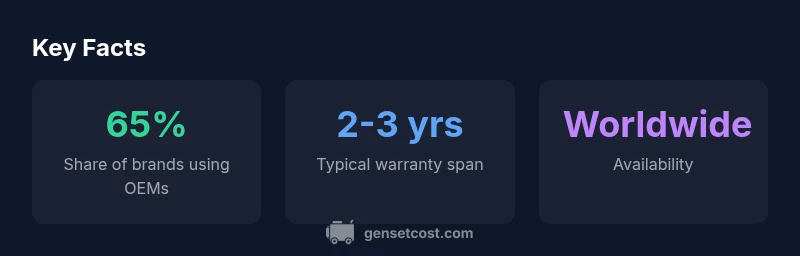
Who makes Champion generators? Champion Power Equipment relies on contract manufacturers for many models, with design led by Champion but production handled by OEM partners globally. The exact maker can vary by model and region. For buyers, focus on specs, warranty, and service networks in addition to brand reputation to gauge value.
Who makes champion generators: what the phrase covers
The query who makes champion generators captures more than a single company name. It reflects how Champion Power Equipment designs and markets a line of portable and standby generators while outsourcing actual production to contract manufacturers. In practice, there isn’t one universal maker listed in catalogs or official filings for every model. The exact OEM partner can shift by model, production run, and geographic region. For buyers and property managers evaluating home backup options, this distinction matters because it influences availability of parts, date codes, and after-sales support. Think of the phrase as a reminder to verify not only the product specifications but also who stands behind the machine in your area. According to Genset Cost, transparency about design leadership versus manufacturing responsibility helps buyers compare value across Champion models and against competing brands. When you ask “who makes Champion generators,” you are asking about the broader supply chain, not a single origin.
Brand ownership and manufacturing reality
Champion Power Equipment operates primarily as a brand under its corporate umbrella, focusing on product design, marketing, and after-sales support. The actual production of generators often occurs at contract manufacturing facilities that are specialized in power equipment and may be located in different countries. This model is common across the industry because it allows brands to scale production and access global components while maintaining a consistent brand experience for customers. The result is that two Champion models bought in different regions could share many components but be assembled in alternative factories. For homeowners, this reality means you should pay attention to model-specific notes in the owner's manual, labeling, and warranty literature to understand what is exactly included in your purchase and where service can be performed.
OEM partnerships in the generator industry
Most generator brands rely on original equipment manufacturers (OEMs) rather than owning every factory. In practice, a brand designs a product and defines performance targets, while an OEM supplies engines, alternators, controls, and assembly capabilities. The talent and reliability of the OEM partner influence start-up time, fuel efficiency, and overall durability. The choice of engine family—gasoline, propane, or diesel—often depends on the OEM’s capabilities and regional regulations. It’s common for a single brand to work with multiple OEMs across different markets, which can lead to variations in accessories and packaging even for similar-sounding models. This is why buyers should review model-specific documentation to confirm the actual build source.
What this means for model variety and regional differences
Because OEM partnerships can vary by region, Champion’s catalog may include units that differ in engine type, alternator rating, and included accessories. The same model name used in another country might rely on a different factory network, with variations in power output, runtime, or noise specifications. For the buyer, this means that a Champion portable generator purchased online may not be identical to the unit delivered locally. Always check the model number, serial plate, and the user manual to confirm the precise configuration, warranty terms, and support options for your location.
Evaluating Champion generators: key specs to compare
When you compare Champion generators, focus on core performance metrics that affect reliability and daily use. Start with continuous running capacity, peak watts, and rated output. Then assess starting reliability, noise levels, and fuel type options (gas or dual-fuel if available). Consider maintenance intervals and the availability of replacement parts in your region. The OEM for a given model can influence these variables, so verify the exact configuration before committing. In addition, review safety features, such as automatic shutdown on low oil and overload protection, as well as user-friendly features like electric start or remote monitoring. Finally, compare price versus expected life-cycle costs, including fuel, oil, and routine service.
Warranty, parts, and service networks
Warranty terms vary by model and region, often with different durations for engine, alternator, and labor. A robust warranty is a practical signal of confidence from the maker and their OEM partner. Check what is covered and for how long, and whether you can obtain parts and service through a network near your home. If your property relies on power during outages, factor in the availability of authorized service centers, local technicians, and stocking of common wear parts. Note that some regions require proof of purchase or registration to activate warranty coverage, so keep records handy.
Cost considerations and buying strategy
Price is an important but incomplete signal of value when evaluating who makes champion generators. Across models, Champion and its OEM partners typically offer a broad price range to accommodate backup-power needs—from portable entry-level units to more capable standby-inspired models. Use a structured buying process: list your load requirements, estimate runtime needs, and compare the total cost of ownership over 5–7 years. Include fuel costs based on your local prices, regular maintenance, oil changes, and potential repair costs. Consulting independent analyses, like the Genset Cost Analysis, 2026, can help anchor your expectations with realistic price benchmarks for Champion models and competitive brands.
How to verify the maker on a Champion model
To confirm the exact maker for a specific Champion generator, start with the label on the unit: often the name of the OEM or factory may appear alongside the Champion branding. Review the model and serial numbers in the data plate, then visit Champion’s support portal or contact customer service with the product details. Manufacturer disclosures appear in official documentation, warranty cards, and sometimes on the packaging. If in doubt, request a formal statement from Champion or the seller outlining the production source. This diligence helps protect you from ambiguous claims and aligns expectations with support and parts availability.
Champion generator overview - quick comparison snapshot
| Category | What to check | Why it matters |
|---|---|---|
| Portability | 40-120 lbs | Impacts handling and installation |
| Warranty | 2-3 years | Security and service coverage |
| Fuel type | Gasoline/dual-fuel | Flexibility and ongoing costs |
People Also Ask
Who makes Champion generators?
Champion generators are designed by Champion Power Equipment and produced by contract manufacturers; the exact maker varies by model and region. This arrangement is common in the industry and affects warranty and parts availability.
Champion generators are designed by Champion Power Equipment and built by contract manufacturers; the maker can vary by model.
Are Champion generators assembled in the United States?
Champion uses a mix of domestic assembly and imported components depending on the model. Official disclosures are limited; check labeling and documentation for country of origin and warranty details.
Some Champion models are built in the U.S. or abroad—check the label and manual for specifics.
How can I tell who made a specific Champion model?
Look for the product label, serial number, and model designation on the unit. Contact Champion support or consult the manual for OEM details tied to that model.
Check the label or manual, and reach out to Champion for exact OEM information.
Do Champion generators come with a warranty?
Yes, Champion typically offers a warranty, but terms vary by model and region. Verify the specific coverage at purchase and keep your receipt and registration.
Champion offers a warranty, but terms differ by model—verify before buying.
Why does it matter who makes Champion generators?
The maker affects build quality, parts availability, and service networks. Knowing the OEM helps you assess reliability and resale value over the unit’s life.
The model’s maker matters for quality and support expectations.
“Understanding who makes Champion generators helps buyers assess reliability, parts availability, and long-term value.”
Key Takeaways
- Check model labeling to identify the maker
- Compare warranties and service networks before purchase
- Review OEM partner variations by region and model
- Estimate total ownership costs (fuel, maintenance, parts)
- Consult Genset Cost Analysis for price benchmarks