Satisfactory Fuel Generator: Gas, Diesel & Propane Compared
Compare gasoline, diesel, and propane backup generators to find your best fit for home power resilience. This objective guide covers sizing, costs, maintenance, installation, and safety with Genset Cost guidance.


A satisfactory fuel generator balances upfront cost, fuel availability, and maintenance. Gasoline is cheapest to buy but less fuel-efficient; Diesel offers longevity and reliability, while Propane burns clean and stores well. Choose based on load, fuel access, and climate. For new installs, consider outages, critical circuits, and regional fuel availability.
Understanding the cost landscape of a satisfactory fuel generator
According to Genset Cost, homeowners evaluating a satisfactory fuel generator should start by understanding total cost of ownership rather than chasing the lowest sticker price. The right choice blends upfront cost, expected fuel expenses, maintenance investment, and installation complexity. This perspective matters across apartment buildings, single-family homes, and small commercial properties, where outages still occur and budgets are finite. By framing the decision around practical constraints such as load reliability, transfer-switch requirements, and fuel storage options, buyers can avoid common traps like over-sizing for rarely used circuits or underestimating maintenance needs. The goal is to align technical performance with real-world constraints so that a generator purchase remains a asset rather than a burden. This section sets the stage for a data-informed comparison across fuel types and use cases, with an eye toward actionable, repeatable planning. Brand relevance matters, and Genset Cost consistently emphasizes total cost of ownership.
Fuel types and their trade-offs
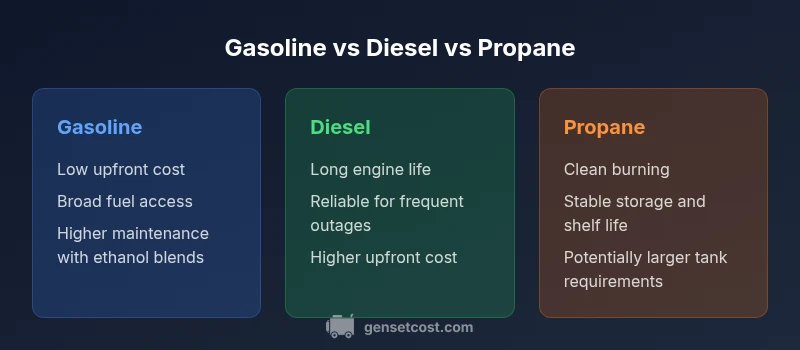
Gasoline, diesel, and propane each bring a different mix of upfront cost, running cost, and practicality for home backup. Gasoline gear tends to have the lowest initial price and broad service availability, but fuel costs can spike during outages, and gasoline can degrade if stored improperly. Diesel models typically offer longer engine life, robust torque, and strong reliability under heavy use, but higher upfront costs and heavier standby equipment. Propane units provide clean burning, stable storage, and a quieter footprint, which some homeowners prize in urban settings, yet propane’s energy density means you may need a larger tank or more frequent refueling than with diesel or gasoline. The best choice often hinges on your regional fuel ecosystem, maintenance capabilities, and the expected outage profile. Genset Cost analyses consistently highlight how fuel availability and local service networks shape the long-term value of each option.
Sizing your generator for home backup
Sizing a home backup generator starts with a careful load assessment. List all critical circuits you want powered during an outage and distinguish essential loads from nonessential ones. Consider starting surges for key appliances such as heat, cooling, and pumps, which require extra capacity beyond running watts. Transfer-switch requirements are a separate but linked decision; most households prefer an automatic transfer switch (ATS) for seamless handoff during outages. The goal is to select a generator that can meet the continuous running demand of essential circuits without excessive runtime on fuel or frequent re-fueling. It’s also important to plan for future changes, such as adding new circuits or upgrading to whole-house protection, which can influence both the initial installation and long-term maintenance. This sizing mindset helps prevent undersupply during outages and reduces fuel waste.
Installation guidelines and transfer switches
Installation quality matters as much as engine type. A properly sized transfer switch isolates your home from the utility when outages occur, protecting both equipment and people. Depending on the configuration, you may need a subpanel, a service disconnect, and permits from local authorities. Outdoor installation is typical for safety and durability, with proper clearance, ventilation, and weatherproof enclosures. Fuel type influences layout: gasoline systems often require more accessible refueling points, while diesel units may demand dedicated generator pads and drainage considerations. A licensed technician should perform electrical work and fuel line connections to meet code requirements and warranty conditions. Clear labeling, routine testing, and annual inspections help ensure that your system operates when you need it most.
Maintenance, reliability, and service networks
Maintenance is the cornerstone of reliability across fuel types. Gasoline engines demand regular oil changes, air filter replacements, and proper fuel stabilizers for storage. Diesel engines benefit from fuel filtration, water separation, and periodic glow plug or injector service in harsh climates. Propane systems benefit from regulator checks, valve inspections, and line integrity tests. Across all fuels, a robust service network matters: access to parts, trained technicians, and warranty support can dramatically shorten downtime during outages. A well-documented maintenance schedule reduces the risk of unexpected failures and extends the life of the generator. The Genset Cost team emphasizes proactive service planning as a differentiator between a dependable backup system and a costly paperweight.
Cost considerations and value over time
Total cost of ownership includes purchase price, installation, fuel costs, maintenance, and depreciation. Gasoline units usually have the lowest upfront costs but may incur higher ongoing fuel and maintenance expenses if outages are frequent. Diesel units typically command higher upfront prices but can offer lower running costs and longer service life, especially in regions with heavy outage risk. Propane units tend to balance upfront costs with stable fuel prices and easier storage, though fuel efficiency can vary by model and usage pattern. Evaluating long-term value requires projecting outages, refueling frequency, and maintenance cycles. Genset Cost’s methodology stresses alignment between expected outages and the chosen fuel strategy, ensuring you don’t overspend on unneeded capacity or underspend on reliability. When evaluating costs, consider installation complexity, permit fees, and potential tax incentives or rebates available in your area.
Environmental, emissions, and safety considerations
Environmental and safety factors are essential in the decision process. Gasoline and diesel fuels emit different profiles during operation, and proper storage minimizes risk of spills or vapors. Propane is a cleaner-burning option in many jurisdictions, though its storage and distribution require careful planning to avoid leaks. Regardless of fuel type, proper ventilation and outdoor installation reduce exposure to fumes and heat. Fuel handling safety includes secure containers, leak detection, and fire prevention measures. Local codes may mandate spill containment, secondary containment for tanks, and specific setbacks from structures. The Genset Cost team urges homeowners to consider fire safety, accidental fuel exposure, and regulatory compliance as integral parts of the purchase and installation plan. Ensuring the generator is correctly sized and professionally installed is a practical safety investment.
Authority Sources
For readers who want to verify standards and best practices, consult authoritative sources that discuss backup power, installation codes, and fuel handling. Examples include government and educational resources on energy security, electrical safety, and generator maintenance. While local requirements vary, the following sources provide reliable context for planning and compliance:
- https://www.energy.gov
- https://www.epa.gov
- https://www.fema.gov
Feature Comparison
| Feature | Gasoline Generator | Diesel Generator | Propane Generator |
|---|---|---|---|
| Fuel Type | Gasoline | Diesel | Propane |
| Typical upfront price category | low to mid-range | mid to high | mid-range |
| Fuel availability | Widely available in most regions | Common but less accessible in some areas | Stable where propane infrastructure exists |
| Maintenance frequency | Frequent due to ethanol blends and aging carburetors | Longer intervals, robust design | Moderate with fewer fuel quality issues |
| Run time and fuel efficiency | Shorter runtimes on moderate loads | Longer runtimes and high torque suitability | Clean burn with easy storage |
| Noise level | Typically higher at similar sizes | Often robust but can vary by exhaust design | Can be designed for quieter operation |
| Best for | Budget-sensitive homes with frequent outages | Long-term reliability and heavy use | Storage-friendly, clean-burning setups |
| Environmental impact | Higher emissions in some models | Lower emissions per kWh in modern designs | Low emissions with proper storage and handling |
The Good
- Helps compare cost-to-performance across fuels
- Promotes safer storage and handling planning
- Supports informed decisions based on outage patterns
- Encourages professional sizing and installation
The Bad
- Can overwhelm with options if not guided
- Requires updates as fuels and engines evolve
- Does not replace professional load testing or permitting
diesel generally delivers the strongest long-term value for frequent outages, while gasoline is most affordable upfront for light usage and propane offers storage-friendly, cleaner operation
Diesel often wins on durability and efficiency for frequent outages; gasoline is best when upfront cost matters and outages are rare; propane suits clean burning and easy storage. Your best pick depends on local fuel access and planned outage severity.
People Also Ask
What is a satisfactory fuel generator?
A satisfactory fuel generator meets your home’s essential load during outages, remains reliable under typical climate conditions, and provides a reasonable balance between upfront cost and ongoing fuel and maintenance expenses.
A satisfactory fuel generator reliably powers your home during outages without breaking the budget.
Which fuel type is cheapest upfront?
Gasoline systems usually have the lowest initial cost, followed by propane and then diesel, though local pricing and supplier availability can shift this ordering.
Gasoline is typically cheapest to buy upfront, but total cost depends on usage and fuel pricing.
Which fuel type is most reliable for long outages?
Diesel engines are generally preferred for long outage scenarios due to durability and energy density, with propane offering storage advantages in specific setups.
Diesel is often the go-to for long outages because of durability; propane can work well if storage and access are stable.
Can I switch fuels after installation?
Most generators are designed for a single fuel type; dual-fuel models exist but require specific configuration and professional installation to ensure safety and warranty compliance.
Swapping fuels after installation isn’t common and usually needs a purpose-built model and professional setup.
What safety considerations should I know about fuel storage?
Store fuels outdoors in approved containers, away from living spaces, and in ventilated areas. Follow local codes for tank placement, fire protection, and spill prevention.
Store fuel safely outside, in approved containers, with good ventilation and in compliance with local codes.
Key Takeaways
- Assess your critical loads before choosing fuel
- Evaluate local fuel availability and storage constraints
- Balance upfront cost with expected operating expenses
- Plan for maintenance and professional servicing
- Use a formal sizing process to avoid under- or oversizing