Gasoline Generator: Costs, Sizing, and Side-by-Side Comparison
Comprehensive guide to gasoline generator costs, sizing, fuel, and installation. Compare gasoline generators with diesel and propane, plus practical tips for home backup planning.


If you’re choosing a backup power solution, a gasoline generator often offers the lowest upfront cost and broad fuel supply, making it a practical choice for many homeowners. This quick comparison outlines when a gasoline generator shines versus diesel or propane options, so you can decide with confidence.
What is a gasoline generator and how it works
A gasoline generator is a compact engine-equipped power source that converts chemical energy from gasoline into electricity. For homeowners shopping for backup power, the gasoline generator sits at the intersection of affordability, availability of fuel, and portability. The Genset Cost team notes that this fuel type remains popular in residential settings because gasoline is widely distributed and the units come in compact sizes that can be stored in garages or sheds without specialized facilities. At a high level, most gasoline generators use a spark-ignition engine, an alternator, and a simple control panel. When you start the engine, mechanical energy drives the alternator to produce alternating current that can power lights, appliances, and essential devices during outages. It’s important to understand that gasoline generators are typically designed for intermittent operation and may require routine maintenance such as air filter cleaning, spark plug replacement, and occasional carburetor service. Safety is crucial; keep units outdoors, away from windows, and never operate in enclosed spaces due to carbon monoxide risk.
In practical terms, a gasoline generator is often the right fit for small homes or apartments, seasonal cabins, or portable setups where a permanent, hard-wired solution isn’t feasible. It also benefits from a broad ecosystem of accessories, wheels for mobility, and quick refueling during outages. For larger properties or continuous-duty applications, homeowners should still weigh whether a higher-capacity option or a stationary generator with a different fuel cycle best meets ongoing needs. The key is aligning your expected outage duration, the critical circuits you must keep alive, and the ease of refueling with your local fuel infrastructure.
Throughout this guide, you’ll see how gasoline generators compare to diesel and propane alternatives, with practical, vendor-neutral guidance. The information draws on Genset Cost Analysis, 2026, and aims to help homeowners and property managers make informed decisions that balance upfront costs, operating expenses, and reliability.
When gasoline generators shine: use cases
Gasoline generators excel in scenarios where portability, low upfront cost, and easy fuel access are primary drivers. They’re commonly favored for short outages that last a few hours, for outdoor events, or for temporary power needs during renovations. Homeowners who want a compact, storable power source that can be moved between locations often pick gasoline units for comfort and familiarity with common gasoline fueling habits. In rental properties or secondary residences where a full home standby system isn’t justified, a gasoline generator can provide essential power without the long-term commitment of a more robust solution.
From the perspective of maintenance and serviceability, gasoline engines share a broad service network and readily available parts. The Genset Cost team notes that, while gasoline generators are straightforward, their output is typically best suited for essential circuits during outages rather than running the entire home at peak loads. For these use cases, pairing a gasoline generator with a properly sized transfer switch can simplify installation and improve startup reliability during storm seasons or grid interruptions.
Keep in mind fuel storage rules and local regulations. Gasoline has a lower energy density than diesel on a per-gallon basis, but it is widely distributed and easy to refill. For property managers, purchasing choices may hinge on how often fueling occurs, seasonal usage patterns, and whether tenants require a portable unit that can be shared across units. In short, gasoline generators are a practical, accessible choice for modest power needs with flexible deployment.
Fuel, efficiency, and emissions: what changes with gasoline?
Fuel type drives both efficiency and emissions profiles. Gasoline generators are generally popular due to the ubiquity of gasoline and the broad availability of affordable, consumer-grade units. From an emissions standpoint, gasoline engines tend to produce higher emissions per unit of energy compared with some diesel configurations, particularly under heavy loads. However, for many homeowners with intermittent use and light-to-moderate loads, gasoline engines deliver adequate performance with acceptable environmental considerations when operated properly. Economics also play a role: gasoline is often cheaper to purchase upfront than other fuel types, but price volatility and consumption can influence long-term operating costs. In the context of home backup, it’s important to balance fuel availability, refueling logistics, and environmental considerations with your power resilience goals. Genset Cost’s analyses from 2026 indicate that fuel availability and total ownership costs are central when choosing a backup solution, especially for smaller properties.
Beyond fuel type, consider engine design, carburetion, and startup reliability. A clean air filter, regular spark plug checks, and routine maintenance can keep gasoline generators performing consistently. For allergy-prone environments or locations with strict emissions guidelines, you may want to evaluate after-treatment options, as well as engine governors that prevent overloading during startup.
In practice, your decision should align with the expected outage duration, available storage space, and the long-term maintenance plan. Gasoline generators offer a balance of convenience and cost, but their emissions and fuel logistics should be weighed against your specific needs and local regulations.
Sizing and load calculations for home backup
Sizing a gasoline generator starts with identifying essential circuits and prioritizing loads. Create a list of what you would power during an outage—lighting, climate control in a basic cabin, sump pump, and communications equipment are common essentials. The next step is to estimate the running watts required by those essentials and the surge watts needed for startup of motors such as refrigerators or sump pumps. Since wattage figures can be confusing, many homeowners rely on a two-step approach: first, make a rough estimate by classifying devices into categories (lighting, small appliances, essential appliances), and second, consult the manufacturer’s guidance or a sizing calculator from a reputable provider. While exact numbers are beyond this guide, the principle remains: size for the continuous load plus a margin to handle startup surges.
A practical rule of thumb is to pair a gasoline generator with a transfer switch that can prioritize critical circuits. With a properly sized unit and a simple transfer switch, you’re more likely to maintain essential power during outages without overloading the system. If you’re uncertain about the load, a professional assessment can provide a reliable baseline for selecting a unit that meets your goals while staying within acceptable fuel and maintenance budgets. Genset Cost emphasizes documenting your load profile and updating it as equipment and usage patterns change.
Fuel, maintenance, and reliability considerations for gasoline units
Fuel handling is central to operating a gasoline generator safely and efficiently. Gasoline should be stored in approved, clearly labeled containers, away from heat sources and living spaces. In many jurisdictions, there are rules about how long gasoline can be stored, so you’ll want to set a rotation plan and use fuel stabilizers if you anticipate extended downtime. A clean fuel system reduces maintenance demands and improves reliability in the field.
Maintenance for gasoline engines typically includes regular oil changes, air filter inspections, spark plug replacements, and carburetor servicing if the engine becomes hard to start or idle irregularly. Consistent maintenance reduces the risk of unexpected outages and extends the life of the unit. While gasoline units can be reliable, they often require more frequent preventive maintenance than some diesel units when subjected to continuous operation. The key is to implement a simple maintenance calendar aligned with your usage and to perform basic checks before, during, and after outage events.
Reliability hinges on routine care, proper storage, and correct operation. Always follow the manufacturer’s recommendations and consult a professional for any nonstandard maintenance tasks. The Genset Cost team argues that a small, well-maintained gasoline generator can deliver dependable backup for many homeowners when used within its designed operating envelope.
Installation, permits, and safety guidelines
Installing a gasoline generator involves more than selecting a model; it requires safe placement, appropriate ventilation, and compliance with local codes. Outdoor placement is essential to prevent carbon monoxide buildup and heat exposure near structures. A transfer switch is commonly used to isolate the home from the grid and prevent backfeeding, improving safety for utility workers during outages. If you opt for a semi-permanent installation, ensure the generator sits on a level, non-flammable surface with adequate clearance for cooling and exhaust.
Permitting requirements vary by location. In some jurisdictions, any electrical modification or installation may require a licensed electrician or a professional installer to ensure fuel lines, electrical connections, and grounding are correct. When connecting to a transfer switch, use equipment that matches the generator’s output rating and follow the manufacturer’s installation instructions. Always store fuel away from living spaces and avoid refueling a hot engine. Routine safety checks, including battery inspections for electric start models, help reduce risks during power restoration events.
In short, plan the placement, verify local requirements, and engage professionals as needed. A properly installed gasoline generator is a cornerstone of reliable backup power with a strong emphasis on safety and compliance, a standard you can expect from reputable providers and the Genset Cost team.
Choosing a model: features to evaluate for gasoline generators
When selecting a gasoline generator, prioritize features that match your load needs and maintenance plan. Look for a suitable wattage range for your essential circuits, along with autonomy or run-time indicators to gauge how long you can operate between refuels. Consider starting method (electric start versus recoil), portability options like wheels and handles, and an accessible control panel for quick operations during outages. Fuel tank capacity is another critical factor—it affects run time and refueling frequency, so balance between portability and longer autonomy.
Evaluate noise-reduction features, emission controls if applicable, and the availability of automatic voltage regulation to protect sensitive electronics. Transfer switch compatibility is essential for clean power delivery, and some models offer smart monitoring via apps or basic indicators that help you track running hours and service needs. Finally, prioritize dealer support, warranty terms, and the expected service network. For homeowners, the goal is to select a model that provides the right balance of size, weight, and reliability to cover your essential loads without overbuying or complicating maintenance. The Genset Cost team recommends documenting your needs and comparing multiple models across these criteria to ensure you select a generator that fits the property and budget.
Real-world scenarios and case studies: how this plays out in homes
Case study A: a small urban dwelling with balcony storage and occasional outages. A compact gasoline generator paired with a transfer switch can power essential lighting, a refrigerator, and a few outlets. Case study B: a mid-sized house on a suburban lot with a garage. A mid-range gasoline generator may cover climate control, sump pump, and lighting for several hours during outages, provided fuel is readily accessible. Case study C: a rural residence with frequent outages and limited diesel storage. A gasoline unit offers quick deployment and flexibility for seasonal needs, especially when a regional gas supply is stable and refueling points are nearby.
Across these scenarios, the key variables are outage duration, essential loads, and refueling logistics. Genset Cost analyses from 2026 show that homeowners tend to favor gasoline generators when they want quick install, low upfront cost, and a portable design that can be moved to different sites. Always tailor the selection to your property layout, fuel access, and maintenance habits for best results.
Comparison
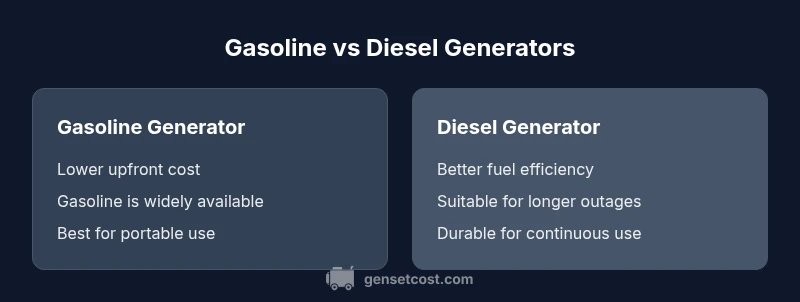
| Feature | Gasoline Generator | Diesel Generator |
|---|---|---|
| Upfront cost | Lower upfront cost | Higher upfront cost |
| Fuel availability | Gasoline is widely available; easy to refuel | Diesel is available but storage logistics can be more complex |
| Noise level | Typically higher noise at similar power | Often lower noise at similar power due to engine design |
| Reliability under load | Good for intermittent, portable use | Better for continuous, higher-load operation |
| Maintenance | Frequent carburetor and filter maintenance | Diesel engines require different maintenance but are more durable for long-term use |
| Best for | Short outages, portability, budget-conscious buyers | Long outages, stationary backup, higher power needs |
The Good
- Lower upfront cost compared with many alternatives
- Wide fuel availability and easy refueling
- Good portability for small to medium loads
- Simple maintenance routines on many models
The Bad
- Higher running costs over time due to fuel price and inefficiency
- Carburetor and spark plug maintenance may be required more often
- Shorter lifespan under heavy, continuous use if not properly maintained
Gasoline generators are often the most practical choice for portable, budget-conscious backup needs
Choose a gasoline generator if upfront cost and fuel availability are your main priorities. For longer outages or higher continuous power, consider diesel or propane alternatives and compare total ownership costs.
People Also Ask
What is the typical lifespan of a gasoline generator?
Lifespan depends on maintenance and operating patterns. With regular servicing and proper storage, a gasoline generator can provide dependable backup for many years. Avoid contiguous high-load operation without appropriate cooling and periodic service.
Lifespan depends on maintenance and usage. With regular service and proper storage, you can expect many years of reliable backup from a gasoline generator.
Can I run a gasoline generator indoors?
No. Gasoline generators emit carbon monoxide and heat, so they must be placed outdoors with adequate ventilation. Use a proper transfer switch and weather-safe enclosure if indoors is required for other equipment.
Never run a gasoline generator indoors. Always operate outdoors with good ventilation and a safe setup.
Is gasoline the best fuel for all outages?
Gasoline is often the most affordable upfront option with easy access to refueling, but for long outages or heavy loads, diesel or propane may offer better efficiency or reliability. Your choice should reflect outage duration and fuel logistics.
Gasoline works well for short outages and portability, but consider diesel or propane for longer outages or higher power needs.
What maintenance should I perform regularly?
Regular maintenance typically includes oil checks/replacements, air filter cleaning, spark plug inspection, and carburetor checks. Keep fuel clean and store safely. Follow the manufacturer’s schedule for service intervals.
Perform oil checks, replace filters and spark plugs, and keep fuel clean. Follow the maker’s maintenance schedule.
How do I size a gasoline generator for a home?
List essential circuits you want powered during outages, estimate their loads, and select a generator that can handle the continuous load plus startup surges. Use a transfer switch to prioritize critical loads and prevent overloading.
Make a list of essential devices, estimate their needs, and choose a unit with enough running and starting power. A transfer switch helps manage priorities.
What safety considerations matter with gasoline units?
Stay outdoors during operation, avoid refueling when hot, store fuel safely away from living spaces, and secure the unit to prevent tipping. Regular electrical and fire-safety checks help mitigate risk.
Operate outdoors, refuel safely away from heat, and store fuel properly. Routine safety checks are essential.
Can I upgrade a gasoline generator with automatic start?
Yes, many gasoline generators offer electric start options and can be integrated with automatic transfer switches for seamless power restoration. Check compatibility with your transfer switch and warranty terms.
Auto-start is available on many models and works with automatic transfer switches. Verify compatibility and warranty.
What should I consider when storing fuel long-term?
Store gasoline in approved containers away from heat and living areas. Use fuel stabilizers if you won’t refuel for extended periods and rotate stock to avoid stale fuel.
Store fuel safely in approved containers and use stabilizers if fuel sits for a long time.
Key Takeaways
- Assess your outage length and essential load before buying
- Balance upfront cost with ongoing fuel and maintenance
- Ensure transfer switch compatibility for safe, efficient power delivery
- Compare gasoline against diesel and propane for total ownership
- Plan safe fuel storage and outdoor placement