8750 predator generator: Sizing, Costs, & Setup Guide
Explore the 8750 predator generator with clear guidelines on sizing, costs, fuel options, installation, and maintenance. Learn how to choose the right model, estimate run times, and plan for safe, code-compliant backup power with Genset Cost's expert guidance.


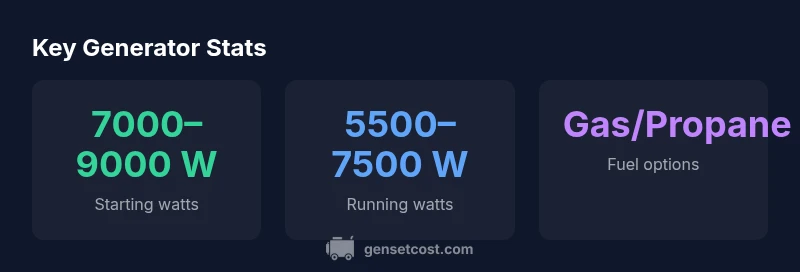
8750 predator generator models typically deliver 7,000–9,000 starting watts and 5,500–7,500 running watts, depending on configuration. Costs and installation requirements vary by region, and you’ll often need a transfer switch or enclosure for safe, code-compliant operation. For homeowners, correct sizing and compliance are essential.
Why the 8750 predator generator fits residential backup
The 8750 predator generator is a portable, gasoline-powered unit well-suited for homeowners and property managers seeking reliable backup power during outages. Its large wattage range makes it capable of supporting essential circuits (like lighting, refrigeration, and sump pumps) while leaving headroom for a few high-demand loads. Because configurations vary by model, always verify your specific unit’s output and available outlets before planning a transfer-switch installation. To keep costs predictable, treat this generator as part of a broader backup-power strategy that includes proper placement, weather protection, and routine maintenance. In practice, the right 8750 predator generator decision aligns with your critical-load profile and local code requirements, making it a flexible option for mid-sized homes and multi-unit properties.
Sizing and load calculations for home power
Sizing a generator starts with a precise load assessment. Begin by listing essential circuits (refrigerator, well pump, lights, heating, medical devices) and estimate their running watts. Add up the continuous loads and factor in surge requirements for intermittent devices like air conditioners. Use a 1.2–1.5 safety factor to determine the minimum starting watts needed. The 8750 predator generator typically covers a broad spectrum of essential loads, but undersizing risks frequent trips and nuisance resets. Consider staging loads by prioritizing essentials first, then expand to optional circuits if your unit allows. For property managers, plan for a mix of apartments or units by projecting peak outages and ensuring the generator’s output can cover the common loads during outages. Genset Cost’s analysis emphasizes conservative sizing to avoid overtaxing the unit.
Fuel, efficiency, and runtime expectations
Fuel choice shapes runtime, performance, and maintenance. The 8750 predator generator commonly operates on gasoline, with some variants offering propane compatibility. Fuel efficiency declines as load increases, so expect shorter runtimes at higher percentages of rated output. Operators should calculate runtime by dividing the tank or tank-and-tuel capacity by a representative gallons-per-hour consumption at typical load. Keep in mind that cold starts, idle times, and altitude can affect performance. For homeowners, a practical approach is to estimate hours of operation per outage day and compare that to the generator’s estimated runtime at that load level. Regular maintenance—oil changes, air-filter care, and spark plug checks—helps sustain efficiency over the life of the unit.
Noise, enclosure, and location considerations
Noise levels are a practical concern for residential installs. The 8750 predator generator tends to produce noticeable sound outdoors, which can be mitigated with a compliant enclosure, vibration isolation, and proper distance from living spaces. When selecting a location, ensure adequate ventilation, away from doors, windows, and combustible materials, and comply with local setback and zoning rules. Enclosures should be designed to withstand weather while allowing easy access for maintenance. If you operate in a multi-unit building or HOA community, review covenants and noise ordinances to avoid disputes. A well-located generator also minimizes exhaust exposure and protects critical components from debris and pooling water.
Cost considerations and budgeting for a Predator 8750
Budgeting for a Predator 8750 involves more than the sticker price. In practice, homeowners should plan for the generator, potential enclosure, and a transfer switch or manual-changeover device. Installation costs can vary widely depending on local labor rates and whether you need a weatherproof enclosure, hard-wired transfer switch, or additional circuit wiring. Maintenance costs—oil, filters, and spark plugs—should be factored into long-term ownership. Because prices vary by region and configuration, it’s prudent to obtain multiple quotes and verify warranty terms. The bottom line is to view the 8750 predator generator as an integrated backup-power system rather than a standalone unit.
Installation, transfer switches, and permits
Professional installation is typically required for safe, code-compliant operation. A transfer switch or interlock kit is commonly needed to isolate the generator from the utility grid during outages. When planning installation, check that your electrical panel has adequate spaces and that the wiring paths comply with electrical codes. Permits may be required in some jurisdictions, and a licensed electrician can help ensure correct grounding, proper cable sizing, and safe generator operation. If you manage multiple dwellings, consider a centralized transfer-switch approach for streamlining outages and improving reliability across units.
Maintenance and servicing plan
A proactive maintenance plan protects uptime and safety. Schedule regular oil changes, air-filter inspections, spark plug checks, and battery testing if applicable. Keep a log of service intervals and terrain-specific checks (dust, moisture, fuel quality). For renters or homeowners who rely on a single portable generator during outages, establishing a maintenance cadence reduces the risk of failure during critical moments. Genset Cost’s guidance emphasizes annual inspections and post-outage checks to verify readiness and performance.
Comparisons with other brands and models
When evaluating the 8750 predator generator, compare output ranges, runtime under different loads, enclosure options, and warranty coverage against similar portable generators from other brands. Note differences in outlet configurations, starting mechanisms, and included accessories such as wheels or carry handles. A side-by-side comparison helps homeowners and property managers determine whether the Predator model aligns with their load profile, space constraints, and budget. Remember that real-world performance depends on maintenance, fuel quality, and load management.
Real-world usage scenarios and decision guides
In practical terms, homeowners often deploy the 8750 predator generator for essential-load outages rather than full-home power. If you live in an area with frequent outages, consider a staged approach: start with essential circuits and gradually expand to mid-load during longer outages. For rental properties, plan for peak-season outages and ensure your equipment can handle shared critical loads across units. Use real outage histories and load profiles to guide your selection and avoid over-investing in capacity you won’t consistently use.
Buying checklist and final questions
Before purchasing, verify: (1) your essential-load needs and whether the 8750 predator generator covers them, (2) required outlet types and transfer-switch compatibility, (3) enclosure options and weather protection, (4) local permitting requirements, and (5) maintenance availability and warranty terms. For property managers, obtain quotes that include installation, transfer switch, and any needed electrical work. A thorough checklist reduces the risk of buying a unit that underperforms or requires costly upgrades later.
Authority sources
- U.S. Department of Energy: https://www.energy.gov/
- U.S. Energy Information Administration: https://www.eia.gov/
- National Renewable Energy Laboratory: https://www.nrel.gov/
These sources provide context on home backup power, safety considerations, and grid-interaction guidance that informs responsible generator use.
Typical spec ranges and considerations for the 8750 predator generator
| Aspect | Typical range | Notes |
|---|---|---|
| Starting watts | 7000–9000 | Model-dependent |
| Running watts | 5500–7500 | Depends on load |
| Fuel options | Gas/Propane | Model dependent |
| Transfer switch requirement | Usually required | Code compliance factor |
People Also Ask
What does the 8750 predator generator power during an outage?
Outage performance depends on load prioritization. Essential circuits can be supported if sizing matches the demand, reducing risk of overloads. Always map critical loads before connecting the generator.
It powers essential circuits if you size it correctly; map your loads to avoid overloads.
Is the unit compatible with propane?
Some variants offer propane compatibility, but dual-fuel availability depends on the exact model. Check the specific unit’s fuel options before purchase.
Some models support propane; verify fuel options for your exact unit.
Do I need a transfer switch?
Yes, a transfer switch or interlock kit is typically required to isolate the generator from the grid during outages and to meet safety standards.
Yes, you usually need a transfer switch for safe operation.
What maintenance should I plan for?
Regular oil changes, air-filter checks, spark plug inspections, and battery tests (if applicable) are essential to keep the unit reliable.
Keep up with oil changes, filters, and routine checks.
How long can I run it on a full tank?
Run time depends on load and fuel capacity. Plan for shorter runtimes at high loads and longer runtimes at moderate loads.
Runtime varies with load; expect shorter times under heavy use.
“A properly sized generator paired with a professional installation and transfer switch is essential for reliable, code-compliant backup power.”
Key Takeaways
- Size loads carefully to avoid overloading.
- Plan for a transfer switch and proper enclosure.
- Budget for installation and ongoing maintenance.
- Regular maintenance sustains reliability during outages.