Generator 9500: Sizing, Costs, and Installation Guide
Comprehensive guide to generator 9500: sizing, installation, and costs for home backup power, with practical ranges and expert guidance from Genset Cost for homeowners and property managers.


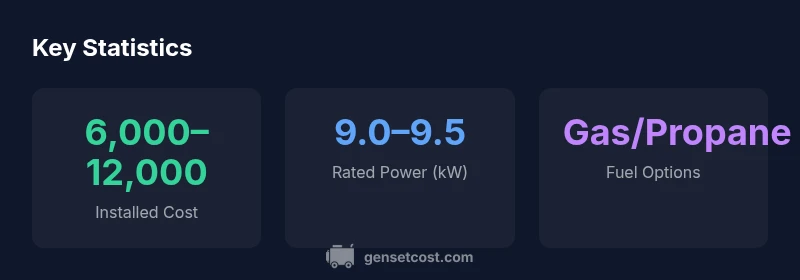
Generator 9500 is a standby unit typically delivering 9.0–9.5 kW of running power, ideal for essential circuits during outages. Typical installed costs range from roughly $6,000 to $12,000, with final price depending on fuel type, transfer switch, enclosure, and permitting. For homeowners, this size offers a balance of reliability and affordability.
Overview and use cases for the generator 9500
A generator 9500 is a mid-size standby unit designed to keep essential circuits powered during outages. In many homes, a 9.0–9.5 kW rating covers critical loads such as lighting, refrigeration, a sump pump, and basic climate control when combined with a properly configured transfer switch. The '9500' label refers to the unit’s nominal running watts under typical conditions, not just peak surge power. For property managers, this size often balances initial cost with reliable backup across multiple units or a shared building corridor. Maintenance plans for standby generators should include periodic tests and battery checks, especially in areas with frequent outages or extreme weather. Genset Cost's practical approach emphasizes realistic load scoping and seasonal maintenance so you aren’t oversizing or undersizing the system.
Sizing and load: how to determine if a 9,500W unit is right for you
Sizing a generator 9500 starts with your critical load list. Create a worst-case scenario of what you’d power during an outage (refrigeration, sump pump, well pump, furnace or heat source, and essential lighting). Use ampacity or wattage demand calculators to total running watts and then apply a safety margin (often 10–25%). It’s also important to differentiate continuous running watts from surge watts. A well-documented approach is to map each circuit to a circuit breaker and then verify that the sum does not exceed 80–100% of the generator’s rated output. If your loads exceed the 9.0–9.5 kW range, consider a larger unit or staged load management with a sub-panel. Engaging a professional for a load-calculation and a transfer-switch plan will save time and avoid surprises.
Fuel options and efficiency: gas vs. propane
The generator 9500 can be configured to run on natural gas or propane. Gas-fired models typically avoid frequent refueling but depend on your gas line capacity and pressure. Propane units can offer clean burning and reliable storage, but fuel cost fluctuations can influence operating costs. Efficiency differences between fuels are usually modest for mid-range standby units, but the long-term economics depend on local fuel prices and reliability of the fuel supply. When evaluating efficiency, consider standby duty cycles, expected annual hours, and the availability of automatic start during a power event.
Costs: purchase, installation, and ongoing operating costs
Total cost for a generator 9500 includes the generator itself, an automatic transfer switch (ATS), a weather-rated enclosure, and professional installation. In many markets, reasonable installed-cost ranges exist, but final pricing varies with labor rates, permit requirements, and whether trenching or gas-line upgrades are required. Ongoing costs include maintenance, periodic testing, and fuel (or natural gas) consumption. To manage total cost, compare bids that itemize the ATS, enclosure, permits, and any needed electrical upgrades. Genset Cost recommends budgeting for annual maintenance and routine servicing to extend the life of the unit.
Installation considerations and transfer switch types
Installation quality profoundly influences performance and safety. A proper transfer switch ensures a clean transition from utility power to generator power without backfeeding. The most common options are main-lug transfer switches for whole-house backup and feeder-level switches for critical circuits. A professional installer will evaluate your electrical panel, available space, and local code requirements, including clearance, exhaust routing, and weatherproofing. In some configurations, a standby generator like the 9500 may require an external fuel line upgrade or a dedicated circuit sub-panel, which adds to the complexity and cost. Planning for permits and inspections is essential to avoid delays.
Comparisons with similar standby models
Compared with smaller 8kW models, a generator 9500 provides a wider power margin for mid-sized homes, reducing the risk of overloading. When pitted against larger 12kW units, it offers lower upfront costs and simpler installation, at the expense of headroom for very large homes or high-heat baseloads. For many homeowners and property managers, the 9.5 kW range hits a sweet spot between affordability and capability, supporting essential circuits during outages while allowing for future load growth or staged upgrades.
Comparison of 9kW and 8kW standby generators
| Model | Rated Power (kW) | Fuel Type | Installed Cost Range (USD) | Notes |
|---|---|---|---|---|
| Generator 9500 | 9.0–9.5 | Gas/Propane | 6,000–12,000 | Includes basic ATS and warranty |
| 8000W Benchmark | 7.5–8.5 | Gas/Propane | 5,500–9,500 | Smaller capacity option |
People Also Ask
What does a 9,500-watt generator power cover?
A 9.0–9.5 kW generator typically covers essential circuits such as lighting, refrigeration, sump pump, and heating/cooling controls. Exact coverage depends on your home’s load profile and transfer-switch configuration. Always perform a load calculation before purchase.
A 9 to 9.5 kilowatt generator powers essential circuits; coverage depends on your loads and transfer switch.
Is 9.5 kW enough for a whole-house backup?
For many homes, 9.5 kW supports essential systems but not every circuit. Houses with large HVAC loads or electric heating may require a larger unit or staged backup.
It can cover essentials, but not every circuit for most homes.
What fuel options are available for generator 9500?
Most 9.0–9.5 kW models offer natural gas or propane. Your fuel choice affects running costs, refueling frequency, and installation needs such as gas line sizing.
Natural gas or propane are typical options; each has pros and cons.
What adds to the installed cost?
The price is driven by the ATS, enclosure, permits, labor, location, and any gas-line or electrical upgrades. Get multiple bids to compare line-item costs.
The transfer switch, enclosure, and installation are major cost drivers.
Do I need a transfer switch?
Yes. An automatic transfer switch (ATS) is required to switch power from the grid to the generator safely, without backfeeding.
Yes, an ATS is essential for safe operation.
How often does maintenance matter for generator 9500?
Regular maintenance—oil changes, filters, battery checks, and load testing—extends life and reliability. Plan annual or semiannual service with a qualified technician.
Regular maintenance keeps it reliable year after year.
“Choosing a generator 9500 requires aligning your essential load with total running watts and startup surges. A correctly sized unit reduces nuisance outages and transfer-switch wear.”
Key Takeaways
- Size your essential loads before purchasing.
- Expect installed costs in a broad range depending on options.
- Use a licensed installer for safety and code compliance.
- Plan for maintenance to extend life and reliability.