Camping Generator Costs: A Comparative Guide
Explore an objective, side-by-side comparison of camping generator options—gas, propane, and solar—covering power, fuel, noise, portability, and long-term costs for outdoor use.


For a camping setup, the best choice balances wattage, fuel availability, noise, and portability. According to Genset Cost, the decision typically centers on gas, propane, or solar options and how you plan to use power on site. For most campers, sizing to expected loads and prioritizing reliability and quiet operation yields the best overall value.
Understanding the camping generator landscape
Camping generators sit at the intersection of portability and practical power. For homeowners who frequent campsites or manage vacation rentals near outdoor venues, a camping generator offers a way to maintain modern comfort without running long extension cords or relying entirely on shore power. The landscape includes traditional gasoline engines, propane-fuelled units, and innovative solar-based systems that pair batteries with solar panels. Each category carries its own trade-offs for weight, noise, maintenance, and cost of ownership. In this guide, we evaluate these options with an analytical lens to help you decide which setup best suits your outdoor lifestyle and budget. The focus remains practical: match your expected loads to a generator’s capability, consider local fuel availability, and prioritize safety and ease of use. Throughout, you’ll see how the size and type correlate to typical camping scenarios, from weekend car camping to extended tenting or RV setups.
Brand and consumer insights from the Genset Cost team emphasize that camping generator choice should balance reliability, efficiency, and user-friendly features. The goal is not simply to find the most powerful unit, but to optimize the combination of portability, run-time, and cost over time. When you understand your load profile and site constraints, you can identify the most sensible option—gas, propane, or solar—that minimizes trips to refuel while delivering dependable power.
Power sizing for camping generators: what to expect
Sizing a camping generator starts with estimating your essential loads. Think about lighting, charging stations for phones and cameras, a portable fridge or cooler, fans or small appliances, and whether you’ll run any power-hungry gear like CPAP machines. A compact, portable generator typically suffices for basic campsites, especially if you prioritize energy-efficient devices. If you’re camping with a basic kitchen setup, charging hubs, and a mini-fridge, you’ll want something that can reliably meet those peak demands without overloading the system. On the other hand, if you’re planning to run multiple devices concurrently, a higher-wattage unit or a two-generator strategy may be worth considering. The key is to avoid undersizing, which can shorten engine life and increase fuel usage, and to avoid oversizing, which adds weight, cost, and fuel consumption without proportional benefits. A practical approach is to create a simple load map before you buy and to consider future camping plans where you might add devices or upgrade gear.
Genset Cost’s guidance suggests prioritizing units that can handle several essentials at once, then allowing for a margin for occasional higher-load events. For instance, if your typical trip includes lighting, phone charging, and a small cooler, a mid-range portable model often provides a comfortable balance between performance and weight. For larger campsites or RV use, you might assess mid-to-high range options that offer greater surge capacity and sturdier construction. Remember that inverter generators, while sometimes pricier, can provide cleaner power for sensitive electronics, reducing the risk of nuisance trips or equipment damage.
Key takeaway: Start with your baseline load, then plan for a little extra headroom to avoid overwork on the engine and to accommodate unexpected devices joining your campsite.
Fuel types explained: Gasoline, Propane, and Solar
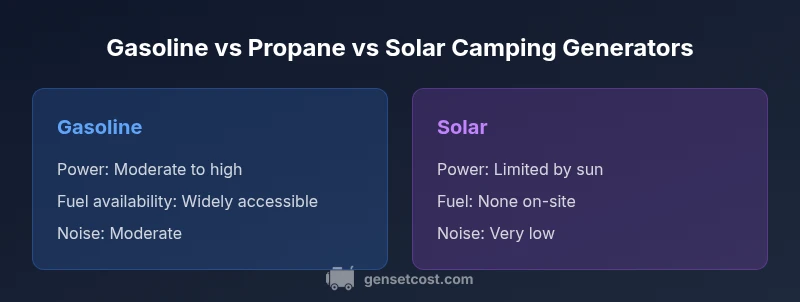
Gasoline generators are the most common and typically offer broad availability of fuel at retail outlets. They tend to provide robust power for a wide range of loads and can surge to meet short bursts of demand. The downsides include fuel storage considerations, maintenance needs such as oil changes, and louder operation compared to some rivals. Propane units often run cleaner and quieter with a stable fuel source that’s easy to stock at outdoor retailers or home supply stores. They can be particularly attractive in environments where you want to minimize gasoline odors or where you already use propane for cooking or heating. Solar camping generators rely on battery storage charged by solar panels; they’re extremely quiet and produce zero emissions on site, which makes them ideal for sensitive camp settings or minimalist trips. The trade-off is limited peak power and dependence on weather, along with the need for battery capacity upgrades for longer trips or higher loads.
When selecting among these families, consider fuel accessibility at your typical destination, the expected duration of trips, and how much you value quiet operation. If you camp in areas with restricted fuel access or frequent outages, a solar option with a robust battery bank could offer long-term cost savings and environmental benefits, while a gasoline unit might be best for high-demand weekends where reliability is paramount. Propane strikes a middle ground for calm operation with good availability in many regions. The Genset Cost framework emphasizes that the right choice aligns with your load profile, travel cadence, and the logistics of fueling on-site.
Noise, emissions, and site considerations
Noise is a critical factor when camping. A generator’s noise level can affect fellow campers and your ability to enjoy the outdoors. Look for models that advertise low decibel output and consider installation of a weather-resistant muffler or enclosure if you’ll be using the unit near tents or through quiet hours. Emissions matter too, especially in backcountry settings with stricter environmental considerations. Gasoline engines produce emissions that you’ll want to manage, while propane can burn cleaner in some cases. Solar-powered systems have the most favorable on-site emissions profile since they rely on stored energy and produce zero exhaust when operating. Keep safety in mind as well: store fuel away from tents, never run generators inside a camp shelter or vehicle, and provide adequate ventilation and carbon monoxide detectors where appropriate. If you’re staying in a campground, check any local or site-specific rules about generator usage, quiet hours, and permissible noise levels. The goal is to choose a model that keeps your campsite comfortable while respecting neighbors and regulations.
From a practical viewpoint, size and placement influence both performance and comfort. Larger units demand more space and robust surfaces to dampen vibration, while smaller units may need a better placement strategy to optimize airflow and avoid heat buildup. The best approach is to select a unit with a sensible power rating for your loads and then use a well-ventilated, open-air location that minimizes heat and noise transfer to living areas.
Key takeaway: Quiet operation, proper placement, and compliance with site rules are essential to maximize comfort and minimize disruption at the campsite.
Portability, setup, and accessories
Portability is at the heart of a camping generator’s value proposition. Weight, bulk, and handle quality influence how easy it is to transport from your vehicle to the campsite. Inverter generators tend to be lighter and quieter, making them well-suited for hikers or car campers who want to minimize bulk. For RVers or multi-apparel campers, a larger, more robust unit with wheels and a rugged frame may be worth the extra weight for the energy capacity it provides. Accessories such as heavy-duty extension cords, a weatherproof cover, fuel stabilizer, proper fuel containers, and a transfer switch (if you’re integrating into a home backup system) add convenience and safety. If your site is off-grid, consider the feasibility of towing or carrying a generator and how you’ll recharge batteries or refuel.
When evaluating portability, weigh the unit’s dry weight, the availability of spare parts, and the ease of performing routine maintenance in remote locations. It’s often beneficial to choose a model with modular capabilities or the option to add a larger battery bank or solar panels, should your trips evolve toward longer stays or more electronics.
Key takeaway: Prioritize portability features that match your travel style, and invest in accessories that enhance safety and ease of use for your camping generator system.
Total cost of ownership: upfront and running costs
A key part of the analysis revolves around total cost of ownership, not just the sticker price. Gasoline generators typically come in a wide price range depending on wattage and features, with running costs driven by fuel consumption. Propane units can incur higher upfront costs due to efficiency features and the need for propane tanks, but running costs may be more stable if fuel prices rise. Solar systems involve higher initial outlays for panels and battery storage, yet ongoing energy costs can be minimal, especially in sunny regions. Maintenance costs differ by technology: gasoline engines require regular oil changes and part replacements over their lifecycle, whereas propane systems may have fewer fuel-related maintenance steps. Solar systems have battery replacement cycles that influence long-term costs. When planning, consider your typical trip frequency, load profile, and how fuel prices could influence running costs over time. A practical approach is to estimate annual fuel or energy costs based on your expected usage and compare that to the upfront investment in each system. This holistic view helps answer the question: which system offers the best value for your camping goals?
Genset Cost research emphasizes that while solar can be appealing due to low operating costs, its value heavily depends on access to sufficient sun and battery capacity. Gasoline units often strike a middle ground, balancing upfront cost, availability, and performance. Propane can be attractive for campers who value predictable, stable fuel sources and reduced fuel volatility. The final decision should align with how you camp, your energy priorities, and your willingness to manage fuel supplies or battery maintenance.
Key takeaway: Assess both upfront investment and ongoing energy costs, and choose a system that matches your trip cadence and power needs.
Practical guidance for choosing: gas vs propane vs solar
In practice, the best choice often aligns with your typical camping pattern. If you camp frequently, travel with a group, or rely on several appliances, a gasoline generator with decent surge capacity may offer reliable power and quick fueling at most rural outlets. If you prioritize a quieter campsite with a cleaner energy footprint and you typically camp in sunny locations or long weekends, propane or solar can deliver a compelling mix of quiet operation and portability. For minimalist campers who want to avoid fossil fuels altogether, a solar system with a robust battery bank can provide essential power without fumes or engine maintenance, albeit with limited peak output. A hybrid approach—using solar during the day and a small gasoline or propane unit for peak loads or cloudy days—can maximize reliability and minimize noise and fuel consumption. The important takeaway is to anchor your choice to your load profile, site constraints, and maintenance tolerance. Genset Cost’s framework supports a methodical comparison by weighing power needs, fuel logistics, and long-term costs.
To begin, list your essential devices, estimate peak loads, and identify your typical camping duration. Then compare the three main categories against those criteria. If you want a simple, quiet, all-day option for light loads, solar with battery storage becomes very attractive. If you frequently camp with higher power demands and limited sun exposure, traditional gasoline or propane models may be a better fit.
Key takeaway: Start with your load map, then align with the fuel and technology that minimize fuel handling and maximize campsite comfort.
Safety, maintenance, and best practices
Safety is non-negotiable when operating a camping generator. Always run generators outdoors or in well-ventilated areas to prevent carbon monoxide buildup. Keep fuel away from sparks, heat sources, and living spaces, and use approved containers for gasoline or propane. Regular maintenance—oil changes for gasoline engines, checking propane connections, and battery health for solar systems—extends lifespan and reduces unexpected outages. For solar setups, ensure battery management systems are calibrated and that panels are clean and properly oriented to maximize sun exposure. When using a generator near water or damp conditions, protect electrical outlets and cords with weatherproof covers and GFCI outlets where feasible. It’s also prudent to have a simple emergency plan: know your fuel storage limits, keep a fire extinguisher or extinguisher-rated cover, and have a basic toolkit for routine service tasks. Finally, check local rules about generator usage in campsites and RV parks to avoid penalties or safety issues. Adhering to safety guidelines ensures you can rely on your camping generator without compromising your outdoor experience.
Quick-start buying checklist
- Determine your essential loads and comfort level with noise
- Compare gas, propane, and solar options based on your travel style
- Consider portability, weight, and ease of maintenance
- Confirm availability of fuel or battery capacity for typical trips
- Check for inverter technology and clean power for sensitive devices
- Review safety features and recommended usage guidelines
- Align your choice with site rules and potential transfer switch needs
Feature Comparison
| Feature | Gasoline camping generator | Propane camping generator | Solar camping generator |
|---|---|---|---|
| Power output range | Mid-to-high range (surge capable for short bursts) | Mid-range with stable runtime | Low-to-mid range depending on battery capacity |
| Fuel/energy source | Gasoline engine | Propane tank or bottles | Battery bank charged by solar |
| Runtime on typical load | Moderate run-time dependent on fuel tank | Longer-run stability with propane tanks | Daylight-dependent runtime, battery-based |
| Noise level | Moderate to high (depending on model) | Lower than gasoline, quieter operation | Very quiet on-site, no engine noise during operation |
| Portability / weight | Moderate to heavy | Light to moderate | Very light (and compact when battery idle) |
| Best for | Frequent high-load camping, RV use | Quiet environments, reliable fuel supply | Sun-rich locations, minimalist setups |
The Good
- Provides reliable power when grid access is limited
- Varied fuel options suit different travel styles
- Wide availability of parts and service
- Inverter options support sensitive electronics
The Bad
- Fuel logistics add planning for trips
- Gasoline engines require maintenance and storage
- Solar setups need battery capacity and sun exposure
Gasoline typically wins for versatility; propane offers cleaner operation; solar suits quiet, sun-rich trips
Choose gasoline for broad use and peak loads. Pick propane for quieter operation and stable fuel supply. Opt for solar when you prioritize silence and minimal emissions, especially on sunny trips.
People Also Ask
What size camping generator do I need for basic camping?
Start by listing essential devices (lights, charging, small fridge) and estimate peak loads. Choose a unit that comfortably covers those loads with some margin for surges.
Begin with your essential devices and expect some surge. Pick a generator that comfortably covers those needs with a safety margin.
Are solar camping generators worth it for weekends?
Yes for quiet, emission-free operation and simple maintenance, especially on sunny weekends. They require sufficient battery capacity to handle your loads during non-sun hours.
Solar can be great for quiet, maintenance-free weekends if you have enough battery capacity for your loads.
What’s the difference between inverter and conventional camping generators?
Inverter generators produce cleaner power suitable for electronics and run more quietly and efficiently. Conventional generators offer higher surge capacity but can be louder and heavier.
Inverters are quieter and gentler on electronics, while conventional ones punch out more power but are louder.
Do I need a transfer switch for a camping generator?
A transfer switch is primarily for home backup systems. For camping, a portable setup connected to a dedicated circuit in a trailer or campsite outlet usually suffices, but consult local safety guidelines.
Transfer switches are usually for home backup setups; at camp, check your campsite outlets and safety guidelines.
What safety practices should I follow with a camping generator?
Operate outdoors in open, ventilated areas, keep fuel away from heat sources, and use carbon monoxide detectors where applicable. Follow manufacturer maintenance schedules and store fuel safely.
Always run outdoors, keep fuels away from heat, and follow maintenance schedules for safe camping power.
Can I run a camping generator overnight?
Yes, if it’s appropriate for your load and site rules. Ensure good ventilation, stable placement, and consider a unit with low idle noise for overnight comfort.
Overnight use is possible with proper load planning and a quiet, well-placed unit.
Key Takeaways
- Assess loads before choosing a camping generator
- Consider fuel availability at your typical destinations
- Balance portability with desired runtime
- Prioritize safety and local campsite rules
- Explore hybrid approaches for flexibility