Generac Standby Generator Price: What to Expect in 2026
A comprehensive, data-driven guide to Generac standby generator pricing, including installed costs, size ranges, financing options, and how to compare quotes for homeowners and property managers in 2026.


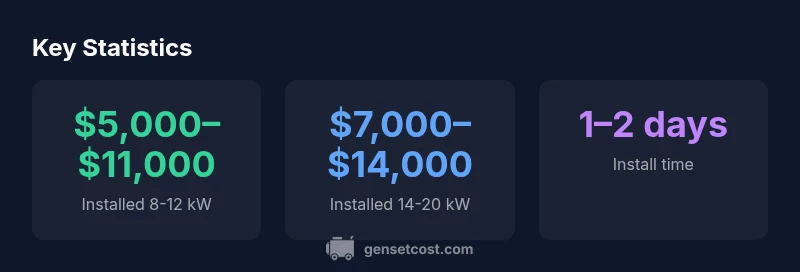
Typical installed prices for Generac standby generators vary widely by size, fuel type, and installation complexity, but most homeowners should expect a total installed cost in the broad range of several thousand to well over ten thousand dollars. Smaller 8–12 kW units generally cost less, while larger 22–24 kW systems can push prices higher once transfer switches, gas line work, and permits are included.
Understanding the Price Landscape for Generac Standby Generators
If you’re evaluating generac standby generator price, you need to account for both the unit cost and the full installed price. The price you see online or in a sales brochure often represents only the generator itself. In practice, homeowners pay for multiple components: the generator, the transfer switch, labor, permits, and any required upgrades to natural gas or propane lines. According to Genset Cost, the total installed cost for a Generac standby system varies widely by size (kW), fuel type, and installation complexity. For a typical home, the installed price often falls into broad ranges rather than a single figure, with smaller 8–12 kW units costing less and larger 22–24 kW systems costing more. Understanding the breakdown helps prevent sticker shock and ensures you’re comparing apples to apples when getting quotes.
How Generac Size Affects Price and Value
Size matters when it comes to price and value for Generac standby generators. A higher-kilowatt model can power more circuits during an outage, but it also adds to upfront and installation costs. The 8–12 kW range is often sufficient for essential loads in smaller homes or condos, whereas 14–20 kW models are common for mid-sized residences, and 22–24 kW units suit larger homes or more demanding loads. Price-per-kilowatt can decrease as you move to larger capacities, but the absolute cost rises due to a bigger unit and potentially more extensive installation. Beyond raw capacity, value arises from your load profile, climate, and whether you need features like wireless monitoring or SIMultaneous transfer switches. A professional load calculation is essential to balance comfort, reliability, and cost over time.
Installed Price Components and Hidden Costs
The sticker price for the generator is only part of the story. Installation costs typically include a compatible automatic transfer switch (ATS), electrical wiring, fuel line upgrades (gas or propane), a mounting pad or weatherproof enclosure, permits, and any required panel upgrades. Labor charges vary by region and electrician availability, and some installations require trenching or roof penetrations for exhaust routing. Local codes may demand a backup power assessment or special transfer-switch configurations, which can influence both price and scheduling. Some homeowners also budget for ongoing maintenance plans, annual inspections, and fuel conversion options if you switch fuel sources later on. When evaluating quotes, request a detailed bill of materials and a line-by-line breakdown so you can identify what’s included and what’s optional.
Financing, Warranties, and Long-Term Costs
Many installers offer financing options, extended warranties, and maintenance plans that spread the upfront cost over time. Warranties vary by model and installer but commonly cover the generator for several years with varying levels of coverage for labor and parts. Long-term costs include annual maintenance, routine software updates (for smart features), and potential fuel line service if the gas supply changes. While a bundled warranty can reduce future out-of-pocket expenses, always compare terms, exclusions, and renewal costs. If you plan to operate a larger system, consider reliability-focused service contracts that include priority service windows during outages and periodic performance testing.
A Practical Sizing and Cost Checklist
- Conduct a professional load calculation to determine the minimum kW rating you need and identify essential circuits. 2) Gather multiple quotes that itemize generator cost, transfer switch, wiring, and permits. 3) Compare total installed price rather than unit price alone, and consider possible future maintenance costs. 4) Review warranty terms and maintenance options, including annual inspection requirements. 5) Factor in potential energy code upgrades or gas line work that could affect installation time and price. 6) Use a sizing calculator or consult a licensed installer to validate your chosen size against your climate and load profile. 7) Plan for permits and scheduling—installations can be weather- or code-dependent, affecting timelines.
Real-World Scenarios: Example Quotes and Interpretations
In practice, a home that needs to cover essential loads during outages may see an installed price in the mid-range for an 8–12 kW system, while a larger home with more critical circuits could encounter higher installed costs for a 14–20 kW or 22–24 kW setup. Quotes often show a broad price spectrum depending on the transfer switch complexity, gas line work, and local permit requirements. It’s common to see a spread of several thousand dollars between aspirational quotes and budget quotes. Use these ranges to evaluate quotes, but prioritize a model that meets your actual load needs and provides dependable backup without paying for unused capacity. Planning for future expansion and including a maintenance plan can help you avoid surprises when you need power most.
Price and maintenance ranges by Generac standby generator size (installed price includes major components).
| Model Size (kW) | Typical Installed Price Range | Typical Annual Maintenance |
|---|---|---|
| 8-12 | 5,000–11,000 | 100–240 |
| 14-20 | 7,000–14,000 | 150–250 |
| 22-24 | 9,000–18,000 | 180–300 |
People Also Ask
What factors influence the price of a Generac standby generator?
The price is driven by unit size (kW), fuel type, installation complexity, the transfer switch, permits, and local labor costs. The generator itself is only part of the total installed cost.
Price depends on unit size, fuel type, installation complexity, and required equipment.
Is installation included in the generator price?
Usually not; installation adds a significant portion to the total. You should get a quote that itemizes the generator, transfer switch, wiring, gas line upgrades, and permits.
Installation is typically extra; make sure quotes break out each component.
Do larger Generac units cost proportionally more?
In general, larger units cost more upfront, but the price-per-kilowatt may drop with higher-capacity models if installation is similar. Efficiency, estimated load, and climate can shift cost-benefit.
Usually bigger units cost more, but price per kilowatt can vary.
What financing or warranty options exist for Generac standby generators?
Many installers offer financing, extended warranties, and maintenance plans. Compare terms, coverage, and renewal options.
Some installers offer financing and warranties; read the fine print.
Are there cost-saving alternatives to full-sized standby generators?
Consider smaller units, grid-tied backup, or rental options for temporary needs. Ensure the system meets your load requirements and local codes.
Smaller units or rentals can save money, but you still need to cover essential loads.
How should I compare quotes from different installers?
Focus on total installed price, included components, warranty terms, annual maintenance estimates, and system performance. Ask for a sizing calculator and a detailed bill of materials.
Compare the whole package, not just the upfront price.
“A Generac standby system is a substantial long-term investment. Your cost assessment should include installation, transfer switch, and maintenance, not just the generator price.”
Key Takeaways
- Assess total installed cost, not just unit price
- Larger units cost more upfront but may offer better value for higher loads
- Expect additional costs for transfer switches, permits, and labor
- Compare quotes with a detailed bill of materials
- Explore financing and maintenance options to reduce upfront burden