Generator 100 Amp: Sizing, Costs, and Setup for Home Backup
Learn how a generator 100 amp fits into a home backup plan—sizing loads, selecting a transfer switch, and budgeting for installation. Practical ranges and guidance from Genset Cost.


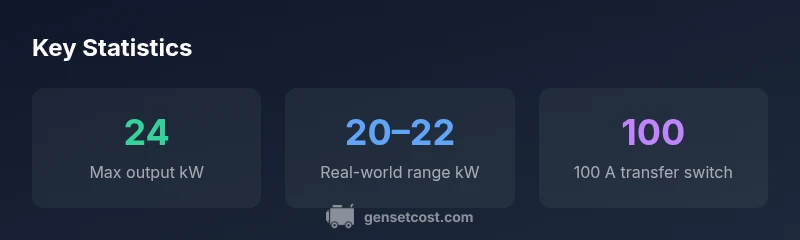
According to Genset Cost Analysis, 2026, a generator rated at 100 amp at 240V can deliver up to about 24 kW of usable power, before losses. In real-world use, expect roughly 20–22 kW due to efficiency and power-factor limits. This size is suitable for essential home circuits with a properly sized transfer switch; full-house loading requires careful panel sizing and possibly higher-output equipment.
What 'generator 100 amp' Means in Practice
A generator described as 100 amp on the output panel indicates the maximum current the device can push through the 240V circuit. For a standard residential setup, this equates to roughly 24 kilowatts of usable power under ideal conditions. Real-world performance is usually a bit lower due to losses in the engine, alternator, wiring, and the inherent power-factor of loads. In practice, a 100 amp generator supports essential loads such as refrigeration, lighting, communications, and some critical HVAC controls while sparing some high-draw appliances. When evaluating a candidate generator 100 amp, compare continuous output (the power you can rely on) with surge ratings (the temporary current needed to start motors). A well-designed system includes a transfer switch so you can safely isolate the generator from the utility and prevent backfeeding. The takeaway: plan around your critical loads and ensure your panel can accommodate the sustained 20–22 kW range while leaving headroom for surges.
How to Size a 100 Amp System for Your Home
Sizing a 100 amp generator begins with documenting your daily power needs and peak loads. Start by listing essential circuits (refrigerator, well pump, lighting, modem/router, sump pump) and estimate their wattage. Add HVAC and water heating only if you truly rely on them during outages. A practical approach is to target a continuous load well below the 24 kW ceiling, often around 60–80% of the generator’s rated output for comfort. Use diversity factors to account for the fact that not all appliances run simultaneously. For example, if essential loads total around 12–18 kW, a 100 amp unit may handle it with headroom for surge. Always verify live loads with your panel labeling or a professional load calculation. The goal is to avoid overloading the generator 100 amp rating, which can reduce efficiency and reliability during a power outage.
Transfer Switches, Installations, and Safety
A transfer switch is the critical bridge between a generator 100 amp and your home's electrical system. You can choose a manual transfer switch, which requires you to physically switch the source, or an automatic transfer switch (ATS) that detects a grid outage and starts the generator automatically. For many homeowners, an ATS paired with a 100 amp transfer switch provides seamless power restoration without climbing into the garage or outdoors. Installation must comply with local electrical codes and requires correct enclosure clearances, proper grounding, and a suitably sized feeder from the generator to your panel. A professional electrician should verify the wiring, grounding, and panel compatibility to prevent backfeeding and equipment damage.
Sizing, Loads, and Real-World Examples
Consider three common scenarios for a generator 100 amp setup. Scenario A focuses on essential circuits only—refrigerator, lights, communications, sump pump—typically 12–18 kW of total continuous load, leaving room for surges. Scenario B covers a larger critical load including a well pump and climate control limits, possibly expanding to 18–22 kW. Scenario C aims for whole-house reliability, which may require load shedding, a larger service upgrade, or a higher-capacity generator. In all cases, the 100 amp rating serves as the design ceiling; you will plan to stay comfortably under that ceiling to minimize startup strain. Real-world usage depends on load diversity and the cadence of appliance cycling."
Costs, Budgeting, and Value Over Time
Cost considerations for a generator 100 amp include the price of the generator itself, the transfer switch, installation, and any panel upgrades. While exact prices vary by brand and installer, homeowners should budget for a setup that includes a properly sized transfer switch, weatherproofing, and a safe, code-compliant exhaust routing. Keep in mind that installation complexity can significantly influence final costs; a simple, above-ground installation will be less expensive than trenching a feeder or upgrading a main service. For long-term value, compare upfront costs against expected lifespan, maintenance needs, and potential insurance or permit expenses. Genset Cost’s guidance emphasizes planning for reliability and service life when evaluating a generator 100 amp.
Maintenance, Servicing, and Lifespan
Regular maintenance keeps a generator 100 amp reliable through power outages. Follow manufacturer-recommended intervals for oil changes, air-filter replacement, and battery checks. Run tests monthly or quarterly to exercise the engine and monitor output. Keep the transfer switch and generator clean from dust and ensure fuel storage complies with local regulations. A well-maintained unit can provide many years of service, especially when kept in a sheltered environment and protected from humidity and temperature extremes. If you anticipate frequent outages, invest in a service plan and periodic professional inspections to catch wear before it becomes a problem.
Planning Your Next Steps: Checklists for Homeowners
- Confirm your essential loads and calculate approximate watts for a 24 kW ceiling.
- Decide between manual or automatic transfer switches based on how seamless you need power restoration to be.
- Have a licensed electrician review panel capacity and wiring for safety and code compliance.
- Factor in ventilation, fuel storage, and generator placement to minimize noise and safety risks.
- Create a maintenance schedule and budget for ongoing service and potential component replacements.
- Obtain written quotes that include generator, transfer switch, wiring, permits, and labor to compare apples-to-apples.
Comparison of typical outputs for a 100 amp generator in common home setups
| Scenario | Output (kW) | Typical Loads | Notes |
|---|---|---|---|
| Essential circuits | 12–18 | Refrigerator, lights, modem/router | Headroom for surge is recommended |
| Critical-loads | 18–22 | HVAC controls, well pump, fridge | May require panel upgrades or load shedding |
| Whole-house (limited) | 22–24 | Broad range of appliances | Highest complexity; verify service capacity |
People Also Ask
What size generator do I need for a 100 amp service?
For most homes with a 100 amp service, a generator in the 20–24 kW range at 240V is appropriate for essential loads and some growth. Always perform a load calculation and consult a licensed electrician to confirm compatibility with your panel and transfer switch.
For a home with a 100 amp service, aim for a 20–24 kW generator after load calculation; have a pro verify panel and transfer switch compatibility.
Can I upgrade to a 100 amp generator without upgrading my panel?
Upgrading to a 100 amp generator often requires panel adjustments or a higher-rated main breaker and feeders to handle the increased continuous output. A licensed electrician should assess whether the existing panel supports the load and whether a subpanel is a better option.
Most likely you’ll need some panel work; get a professional assessment before purchasing.
What maintenance is essential for a 100 amp generator?
Essential maintenance includes oil changes, air-filter checks, spark plug inspection, battery health, and periodic run testing. Keep the transfer switch clean and ensure fuel and cooling systems are in good condition to maximize reliability.
Regular oil changes and periodic testing keep it dependable during outages.
Is a 100 amp generator enough for whole-house backup?
A 100 amp generator can support a substantial portion of home loads, but full-house backup often requires higher capacity or load-shedding strategies. Start with essential circuits and plan for staged restoration if you want full coverage.
It can cover key loads, but full-house backup usually needs more capacity.
What is the difference between manual and automatic transfer switches?
A manual transfer switch requires you to switch sources during an outage; an automatic transfer switch starts the generator and switches automatically when power is lost. ATS typically offers quicker, hands-off restoration but at a higher cost and installation complexity.
Automatic is easier, but more costly to install.
How much does installation typically cost for a 100 amp setup?
Installation costs vary with location, wiring complexity, and whether a panel upgrade is needed. Expect ranges that reflect generator, transfer switch, wiring, and permits, with professional labor ensuring safety and code compliance.
Costs depend on your setup; a professional assessment gives the best estimate.
“A well-designed 100 amp backup system combines correct load sizing, a reliable transfer switch, and professional installation to deliver dependable power when you need it most.”
Key Takeaways
- Size around 20–22 kW for real-world output
- Pair with a transfer switch (100 A recommended)
- Map loads to a dedicated panel for reliability
- Consider panel upgrades for full-house reliability
- Plan for maintenance and professional wiring
- Estimate total cost with installation and permits