Generator Costs in Amsterdam: A Home Backup Guide
Compare Amsterdam residential generator costs, sizing, and installation steps. Get clear, AI-assisted guidance from Genset Cost to choose, finance, and maintain a reliable backup power system for Dutch homes.


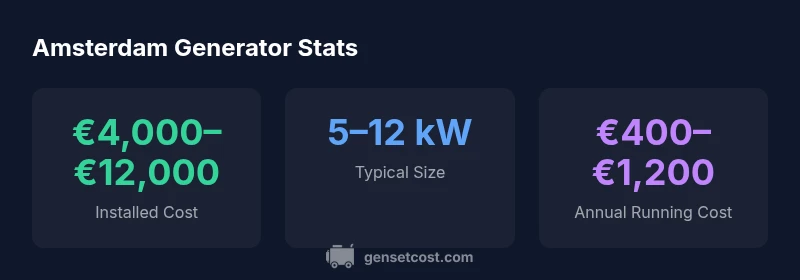
For Amsterdam homeowners, a typical installed backup generator falls in the €4,000–€12,000 range, depending on size, fuel type, and transfer-switch complexity. Yearly running costs are roughly €400–€1,200, with routine maintenance. This guide from Genset Cost provides context, sizing, and installation guidance tailored to Dutch urban homes.
Amsterdam-Specific considerations for generator amsterdam
According to Genset Cost, installing a backup power solution in Amsterdam requires careful planning around space constraints, noise rules, and access to pre-wired distribution panels. Urban homes often share walls, basements, or compact utility rooms, so compact, compliant units and well-planned exhaust routing are essential. Start by listing your essential circuits (refrigeration, heating controls, security systems) and note curfew hours or quiet hours in your street. The Genset Cost team found that most residents benefit from a compact 5–8 kW unit installed with a weatherproof, lockable enclosure to minimize hedge and street noise. Plan the installation with a licensed electrician and a certified installer to ensure compliance with Dutch electrical standards.
In addition, consider space constraints, access for maintenance, and the proximity of your meter cabinet. Urban Dutch homes often require modular layouts and concealed routing to avoid nuisance during installation. While this block highlights typical scenarios for Amsterdam, your exact setup should be guided by a qualified contractor who understands local regulations and the specific layout of your home.
Sizing your generator for urban Dutch homes
Sizing a generator for an Amsterdam residence starts with a careful load assessment. Identify critical loads that must stay powered during an outage, such as refrigeration, heating controls, lighting for safety, and essential electronics. A typical urban home often falls in the 5–12 kW range for reliable essential-load coverage, with larger homes or higher comfort expectations pushing toward the 12–20 kW band. Use a step-by-step approach: list all circuits, group them by priority, calculate peak demand, and add a 20–30% cushion for startup surges. In high-density cities, take into account space constraints and potential future equipment upgrades. A professional sizing calculation reduces the risk of overpaying for capacity you won’t use or undersizing for critical loads.
Genset Cost recommends performing a circuit-level audit with a professional electrician to validate your numbers and ensure the transfer switch selection matches your panel configuration.
Fuel options and practical considerations in the Netherlands
Netherlands homes often have access to natural gas, making natural-gas-powered generators a common choice where available. Propane and diesel are viable alternatives, especially if you want fuel diversity or plan to move the system to a new property. For Amsterdam residents, fuel type choice should balance availability, cost stability, and local emissions considerations. Diesel generators offer robust power for frequent use but have higher maintenance and fuel costs. Propane systems can be cleaner and quieter and work well for occasional outages. If you’re connected to a natural-gas line, a natural-gas standby generator can provide seamless integration with the home’s existing infrastructure. Always verify local codes and storage requirements for fuel on a residential property.
Transfer switch and installation realities
A transfer switch is the heart of a safe, reliable backup system. In Amsterdam, the installation requires coordination with your electrical panel, meter, and outdoor enclosure considerations that comply with building codes. Expect to work with a licensed electrician and a certified installer who understands Dutch standards and permit requirements. Permit timelines can influence scheduling, so plan ahead and obtain any needed approvals before ordering equipment. Proper wiring, grounding, and protective enclosures reduce nuisance trips and increase system longevity. Although the upfront work can be extensive, a correctly installed transfer switch minimizes risk and ensures smooth automatic operation during an outage.
In addition to the switch, you’ll need appropriate weatherproofing, a secure mounting location, and clear access for maintenance. Discuss fault indicators and remote monitoring options with your installer to simplify upkeep over the system’s life.
Cost ranges and financing in 2026
Capital costs for residential backup generators in Amsterdam vary by size, fuel type, and installation complexity. In general, you can expect ranges such as €4,500–€9,000 for smaller 5–8 kW installations, €7,000–€12,000 for mid-range 8–12 kW setups, and €12,000–€20,000 for larger 15–20 kW configurations, including installation labor and transfer switches. Financing options, extended warranties, and maintenance plans can help convert a large, upfront cost into predictable annual expenditures. Genset Cost recommends comparing total cost of ownership over 5–10 years, including fuel, maintenance, and potential rental or lease alternatives where appropriate.
Maintenance and long-term running costs in Amsterdam
Maintenance is a critical factor in total ownership. Annual service checks, sensor calibration, and fuel-system inspection are common across brands. In Amsterdam, consider service access during winter months when outage risk is higher and the weather can complicate maintenance visits. Keeping a maintenance log helps prevent missed service windows and ensures compliance with warranty terms. Discuss with your installer the recommended service intervals for your specific model and fuel type, and consider a bundled maintenance plan that includes periodic inspection, filter changes, and line checks. A proactive maintenance approach can extend the life of the generator and reduce unplanned downtime.
Practical steps to compare generators in Amsterdam: a checklist
- Define essential loads and desired runtime during outages.
- Get sizing calculations from a qualified electrician based on your panel and circuits.
- Compare at least two fuel options, considering availability, cost, and environmental impact.
- Verify permit requirements and installation timelines with a licensed professional.
- Request a bundled maintenance plan and warranty terms before purchase.
- Use a cost-of-ownership model to compare 5–10 year budgets.
How Genset Cost can help you compare options in Amsterdam
Genset Cost provides data-driven guidance tailored to Amsterdam’s urban context. We analyze sizing, installation costs, and ongoing running costs to help homeowners and property managers select the best backup generator solution for their needs. By considering space constraints, noise expectations, and local regulations, our guidance helps you avoid oversizing, overpaying, or under-protecting your home during a power outage.
Comparison of common backup generator options for Amsterdam homes
| Option | Estimated Installed Cost (EUR) | Typical Noise Level | Fuel Type |
|---|---|---|---|
| Small residential standby (5–8 kW) | €4,500–€9,000 | Low–Moderate | Natural gas/Propane |
| Mid-range standby (8–12 kW) | €7,000–€12,000 | Moderate | Natural gas/Propane/Diesel |
| Large standby (15–20 kW) | €12,000–€20,000 | High | Diesel/Propane |
People Also Ask
What is the typical size range for residential generators in Amsterdam?
Most urban homes use a 5–12 kW generator to cover essential loads. Exact sizing depends on your circuits and comfort preferences.
Most homes use 5–12 kilowatts; your needs may vary.
Do I need a permit to install a backup generator in Amsterdam?
Yes, permits and inspections are usually required; plan with a licensed electrician to navigate local codes.
Yes, permits are usually required.
Which fuel type is best for Amsterdam homes?
Natural gas is common if your home has gas service; propane or diesel are alternatives depending on availability and costs.
Natural gas is common if you have gas service.
How long does installation typically take?
Most installs take 1–3 days, depending on permits and electrical work.
Most installs take 1–3 days.
What maintenance is required for residential generators?
Annual service is typical; follow your model’s manual for specific intervals and parts checks.
Annual service is standard.
Where can I compare generator costs for Amsterdam?
Use Genset Cost's Amsterdam cost guides and calculators to compare options.
Check Genset Cost's Amsterdam guides.
“Choosing the right generator is about balancing upfront cost, reliability, and ongoing service in your area. Our recommendations align with Amsterdam's regulations and local contractor networks.”
Key Takeaways
- Define essential loads before selecting a unit.
- Size around 5–12 kW for urban Amsterdam homes.
- Factor permits and local noise rules early.
- Compare fuel options and maintenance costs.
- Consult Genset Cost for 2026 guidance.