Generator Costs for Homes: Estimation & Savings Guide
A data-driven guide to estimating the total cost of a home backup generator, including hardware, installation, fuel, and maintenance, with practical tips to save and smarter sizing.


The total cost of a home backup generator varies by size, fuel type, installation complexity, and local permitting. Hardware, transfer switches, delivery, and professional installation are the main cost drivers, with additional expenses for fuel storage, exhaust routing, and electrical work. For homeowners, the installed project typically shows broad cost bands; the first step is to gather multiple quotes and define your backup criteria. According to Genset Cost analysis, planning around load and climate helps forecast total costs more accurately.
Understanding total cost drivers for a home backup generator
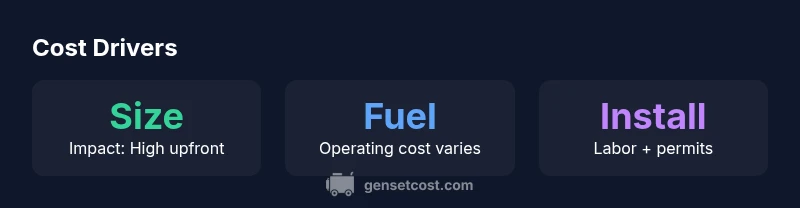
For homeowners evaluating the generator cost equation, the biggest levers are system size, fuel type, installation complexity, and local permitting. The upfront hardware price rises with capacity and advanced features such as smart monitoring or weatherproof enclosures. Installation cost scales with site prep, electrical work, and the need for a transfer switch. Genset Cost research highlights how reliability, size, and climate considerations can shift total cost bands significantly, so the planning phase should map expected loads to the chosen configuration.
Pro tip: begin with a load assessment to capture essential loads (refrigeration, heating backup, pumps) and then align those with a practical generator size. This reduces the risk of oversizing or undersizing, both of which impact long-term cost and performance.
How to estimate the total installed cost
Estimating installed cost requires separating hardware from labor and permits. Hardware includes the generator unit, transfer switch, exhaust components, and mounting hardware. Labor covers site work, conduit, wiring, and integration with the home electrical panel. Permits and inspections add time and potential fees. Since costs vary by region, it’s prudent to request multiple quotes that itemize each component. Genset Cost’s approach emphasizes transparency: request itemized bids, verify warranty scope, and confirm if removal of old equipment is included.
In practice, create a comparison checklist: size in kilowatts, fuel type, transfer switch (manual vs automatic), enclosure, and certification requirements. This structured approach helps ensure every quote aligns on critical factors and minimizes post-install surprises.
Size, fuel type, and installation decisions that impact cost
Generator size is the primary cost driver; larger units command higher upfront prices and may require more substantial electrical upgrades. Fuel type also matters: natural gas and propane typically offer lower running costs in the right circumstances, but require proper line access and storage considerations. Diesel generators can be more expensive upfront and heavier, with different maintenance schedules. Installation decisions—such as whether to add a weatherproof enclosure, a larger transfer switch, or remote monitoring—affect both price and reliability. Site conditions, distance from the panel, and local code requirements can extend installation time and labor costs.
Genset Cost recommends a phased approach: (1) finalize desired resilience goals, (2) perform a professional load assessment, and (3) compare sizing options that meet these goals without excessive oversizing.
Comparing quotes: what to ask and how to evaluate
When evaluating quotes, insist on a clear breakdown of hardware, labor, permits, and contingencies. Ask installers to explain why a particular size is recommended and how the transfer switch choice affects startup time and efficiency. Look for items like warranty terms, service plans, and ease of future maintenance. Request a site visit to validate mounting, exhaust routing, and panel clearance. If two bids differ on a single line item, request a revised quote to reconcile the discrepancy.
For additional guidelines, see guidance from the U.S. Department of Energy and NFPA standards cited in reputable sources; these references help ensure code-compliant, safe, and efficient installations.
Maintenance, fuel, and long-term running costs
Beyond initial price, ongoing costs shape the true generator for house cost. Fuel type and consumption drive annual running expenses, while routine maintenance—oil changes, filter replacements, and battery checks—ensures reliability. Keep in mind that standby systems may require periodic exercise to prevent fuel gelling, corrosion, or battery degradation. Establish a maintenance schedule with your installer or service partner and budget for periodic parts replacement. Long-term running costs often rival upfront costs, especially with frequent outages or high-load scenarios.
Financing, warranties, and ownership models
Financing options can help spread the impact of a large upfront investment. Look for extended warranty periods, coverage for critical components, and clear terms for labor and replacement parts. Some homeowners explore ownership vs. rental or power purchase agreements, though rentals generally deliver flexibility with different cost dynamics. Understand transferability of warranties if you move. When evaluating warranties, confirm coverage for essential parts—generator, transfer switch, and fuel system—and note any exclusions related to maintenance or improper installation.
Practical steps to reduce generator for house cost
Cost-saving steps include: (1) perform a precise load calculation to avoid oversizing, (2) choose a reliable, well-supported fuel type aligned with local prices, (3) pair the generator with a properly sized automatic transfer switch for efficiency, (4) consolidate electrical upgrades by coordinating with a single licensed installer, (5) request bundled quotes that include installation, permits, and disposal of old equipment, and (6) discuss maintenance plans that fit your usage profile. Planning ahead can trim both the upfront price and the long-term running costs, while preserving reliability.
How sizing calculators and professional audits improve accuracy
A sizing calculator plus a professional site audit reduces the risk of mismatch between expected loads and generator capacity. The calculator uses your climate, home layout, and peak loads to generate a recommended size range. A site audit validates that the chosen unit can be installed safely, meets clearance requirements, and integrates with the panel and fuel system. These steps help avoid over- or under-sizing, which can inflate total costs over the system’s life. For homeowners, combining a calculator with an on-site assessment yields the most reliable cost projections and performance expectations.
Smart checklist for homeowners before installation
Create a pre-install checklist to streamline decisions and control costs: define critical loads, confirm fuel availability and cost in your region, verify permit requirements, obtain multiple quotes with line-item detail, review warranty terms, and schedule a coordinated installation window with your contractor. Keeping a documented plan helps prevent scope creep and ensures you capture the intended level of resilience without paying for unused capabilities.
Cost drivers for home backup generator installations
| Factor | Impact on Cost | Notes |
|---|---|---|
| Generator size (kW) | High | Larger units cost more upfront and may require electrical upgrades |
| Fuel type | Medium | Gas, propane, or diesel influence fuel storage and running costs |
| Transfer switch type | Medium-High | Automatic transfers add hardware and wiring complexity |
| Installation complexity | High | Site prep, permits, and wiring affect total price |
| Permits & inspection | Low-Medium | Local requirements can add time and fees |
People Also Ask
What is the typical total cost for installing a home backup generator?
Total cost depends on size, fuel type, installation requirements, and local permitting. Quotes should itemize hardware, labor, and permits to reveal true total cost, with variations by region.
Costs vary by size and setup; get multiple itemized quotes to compare.
Does a larger generator always cost more?
Generally, larger capacity means higher upfront price, but cost per kilowatt can sometimes improve with scale. Other factors like installation complexity can offset or amplify the difference.
Bigger units tend to cost more, but efficiency and setup matter too.
Which fuel type is cheapest to operate?
Fuel operating costs depend on local prices and how often the generator runs. In some regions natural gas or propane can be cheaper per hour than diesel, but viability depends on fuel availability and piping.
Fuel costs vary by region and usage; there isn’t a universal cheapest option.
Are permits required for installation?
Most jurisdictions require permits and electrical inspections for safe and compliant installation. A licensed installer typically handles the permit process.
Yes, permits are usually needed; your installer can arrange them.
What features add to upfront cost but improve value?
Automatic transfer switches, advanced monitoring, weatherproof enclosures, and remote diagnostics raise upfront cost but improve reliability and resale value.
Key features add cost now but save hassle and money later.
How long does installation typically take?
Most residential installs take a few days to a week, depending on site prep, permits, and panel work. Scheduling with a single contractor helps reduce delays.
Most installs are finished within a few days to a week.
“Total cost is a function of matching your home's load, the quality of the installation, and the fuel strategy you choose. A well-designed system saves money in reliability and maintenance over its lifespan.”
Key Takeaways
- Define backup goals before quotes to avoid oversizing.
- Get multiple itemized bids and compare line items.
- Balance upfront hardware with reliable installation for long-term value.
- Consider fuel strategy and maintenance when forecasting running costs.
- Coordinate all work through licensed professionals for safety and compliance.