Generator for Sale: Costs, Sizing, and Installation
Compare generator for sale options, estimate costs, and learn sizing, fuel types, and install considerations for home backup power. This guide helps homeowners and property managers choose wisely, balancing upfront price with long-term running costs.


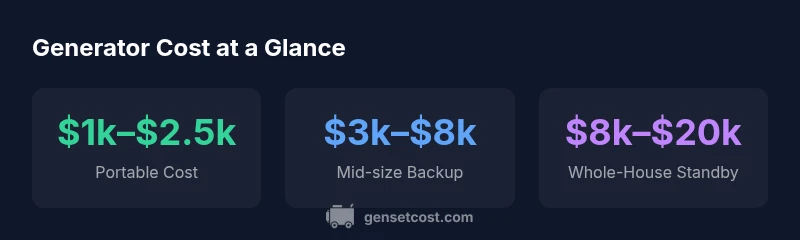
For homeowners shopping for a generator for sale, expect a broad price range influenced by wattage, fuel type, and features. According to Genset Cost analysis, portable units start around $1,000–$2,500, mid-size home backup generators typically run $3,000–$8,000, and whole-house standby systems often fall in the $8,000–$20,000 range, not including installation costs. Compare fuel efficiency, run-time, and transfer-switch options to optimize your investment.
Market Landscape for Generators for Sale
The market for a generator for sale is heavily influenced by reliability concerns, preparedness mindset, and property-specific power demands. Homeowners and property managers must choose between portable units that offer mobility and standby systems that automatically engage during outages. According to Genset Cost analysis, the decision hinges on anticipated load, available space, and willingness to invest in proper transfer-switching. In 2026, buyers increasingly demand models with improved fuel efficiency, quieter operation, and integrated transfer switches. Portable generators remain popular for temporary outages and remote job sites, while mid-size and whole-house systems appeal to households seeking uninterrupted power for essential circuits during longer utility failures. Shopping divides into three categories: portable units for mobility, mid-size backups for essential loads, and full-house standby configurations that power entire residences. Prices, installation complexity, and warranty terms vary by category and by brand. A correct sizing assessment helps prevent overbuying while minimizing energy waste and running costs over the system’s lifetime.
Genset Cost’s perspective: Smart buyers begin with a load assessment, then map that load to a generator class that can handle surge wattage during startup. This reduces the risk of underperforming circuits or overpaying for unused capacity.
Sizing Your System: Read the Wattage, Not Just the Label
Load calculations are foundational. Start by listing essential circuits (lights, fridge, furnace, sump pump, internet gateway) and estimate their running watts. Distinguish continuous watts from surge watts required during motor startups. For residential applications, aim to cover critical loads with a buffer (often 20–40% extra). If you’re in a high-end home with multiple HVAC zones, you may need a larger generator or a two-generator setup with a transfer switch for seamless handoff. Use a reputable sizing calculator, or consult a licensed electrician for a formal load analysis. The goal is to match your worst-case outage scenario without paying for unused capacity.
Price Bands and Cost Drivers
Costs are driven by wattage, fuel type, and features such as automatic transfer switches, remote monitoring, and quiet operation enclosures. The mid-size backup category typically offers a sweet spot for many homes, balancing price and capability. When evaluating options, consider not just the sticker price, but the total cost of ownership: fuel efficiency, maintenance needs, warranty terms, and the complexity of installation (including permit requirements and wiring work). Genset Cost’s data shows that the largest price jumps occur when upgrading from mid-size to whole-house standby units, with installation complexity increasing due to transfer-switch sizing and expanded fuel line work. Planning ahead for these factors helps prevent budget overruns and ensures reliable operation when power is out.
Fuel Types, Efficiency, and Running Costs
Fuel type heavily influences running costs and availability. Gas and propane are common for residential standby systems, with natural gas connected directly to the house offering continuous supply where a line exists. Diesel engines can be robust and long-lived but often require more maintenance and heavier initial investments. For property managers handling multiple units, per-hour running costs and fuel stability become critical: propane may be easier to store in smaller volumes, while natural gas remains convenient if the meter and line are present. Efficiency features—like engine management systems and inverter tech—reduce consumption during partial-load conditions. When comparing models, look at the rated efficiency at typical summer and winter loads, and verify that the unit offers low-idle or smart-load-shift capabilities to minimize fuel consumption over long outages.
Installation Considerations and Contractor Selection
Installation quality is as important as the generator itself. A proper transfer switch ensures safe, seamless power transfer and prevents back-feeding into utility lines. Expect installation costs to include electrical wiring, a weatherproof enclosure, fuel line routing, vibration isolation, and possibly a permit. Some markets require a licensed electrician and a building permit; others offer turnkey installation with warranty coverage for both the generator and the electrical work. When selecting a contractor, seek detailed quotes that itemize parts, labor, and licensing. Verify that the installer can perform a formal load analysis, configure the transfer switch, and coordinate with your utility provider. A well-executed install reduces downtime during outages and extends equipment life by ensuring the generator runs within its design envelope.
Brand Reliability and Model Selection
Brand reputation matters for long-term performance and service availability. Generac, Westinghouse, and Honda are among the brands frequently discussed for home backup power. Reliability tends to improve with models designed for continuous operation, better cooling, and robust warranties. When choosing a model, check industry reviews, installer recommendations, and local service availability. A slightly higher upfront price can be cost-effective if it translates to longer intervals between service visits and lower running costs over the unit’s lifetime. In the end, select a model with proven performance in environments similar to your home and the right size for your critical loads, so you don’t pay for more than you need.”],
Typical generator types and price bands for home backup power
| Model Type | Wattage Range | Typical Price Range | Fuel Type |
|---|---|---|---|
| Portable | 1,000–3,500 W | "$1,000–$2,500" | Gas/Propane |
| Mid-Size Standby | 8,000–12,000 W | "$3,000–$8,000" | Gas |
| Whole-House Standby | 16,000–25,000 W | "$8,000–$20,000" | Natural gas/Propane |
People Also Ask
What should I consider when choosing a generator for sale?
Start with a formal load analysis to determine required wattage. Consider whether you need portability or a standby system, and evaluate fuel type, transfer-switch compatibility, warranty terms, and installation costs.
Start with a load analysis, then decide between portable or standby, and check fuel, switches, and warranties.
Is a portable generator sufficient for home backup?
Portable generators power selected circuits during outages but usually don’t provide whole-house coverage. They’re best for essential loads and temporary outages, plus they can be moved to different locations as needed.
Portable units help power essential loads in outages, but they aren’t ideal for keeping an entire home running.
How does installation affect overall cost?
Installation can add significant cost, especially with transfer switches and permits. Expect electrical work, mounting, and fueling considerations to influence both price and reliability.
Installation can be a big part of the cost; it also ensures safe, reliable operation.
What fuel type is best for reliability?
Gas and propane are common for standby systems. Natural gas offers convenience if a line exists, while diesel engines may offer durability but require more maintenance.
Gas or propane are common choices; natural gas is convenient if your home has a line.
What warranty should I expect?
Look for a minimum of 3–5 years on parts with a separate labor warranty. Verify coverage for transfer-switch and installation components.
Aim for at least a 3–5 year parts warranty and solid labor coverage.
“A properly sized generator, selected with accurate load calculations, minimizes outages and protects critical circuits.”
Key Takeaways
- Assess loads before shopping to avoid overbuying.
- Compare wattage, fuel type, and transfer-switch needs.
- Factor installation and permits into total cost.
- Plan for long-term running costs and warranties.