Generator Costs for Hostels: A Practical Backup Power Guide
Learn how hostel operators estimate backup generator costs, size loads, and plan installation for reliable power during outages, guided by Genset Cost analysis.


Definition: Generator hostels are lodging facilities that rely on on-site backup power systems to keep essential services running during outages. This article analyzes hostel-scale sizing, typical cost ranges, and installation considerations to help owners plan reliable power for dorms, kitchens, laundry, and security. Using data from Genset Cost Analysis, 2026, we outline sizing strategies, fuel choices, and ongoing maintenance needs.
What 'generator hostels' mean for property owners
In the hostel sector, reliable backup power is not a luxury—it's part of delivering consistent guest experiences and maintaining essential operations during outages. A generator hostel refers to a lodging property that relies on a dedicated on-site generator system to power critical loads when the main utility grid is unavailable. According to Genset Cost, the planning process should start with a clear load schedule that captures dorm lighting, common-area climate control, kitchens, laundry, security systems, and IT networks. Framing capacity around peak simultaneous loads—rather than average usage—helps avoid brownouts or missed amenities during busy periods. By treating generators as a core utility, hostel operators can ensure guest comfort, preserve food safety, and protect revenue streams during outages. This section sets the stage for practical sizing and procurement decisions that balance reliability with total cost of ownership.
Typical hostel power loads and prioritised services
Hostels present a mix of continuous and intermittent loads. Priority loads usually include emergency lighting, access control, security cameras, exterior lighting, elevator or stairway lighting, refrigeration for kitchens and snack rooms, laundry equipment, and climate control in common areas. Non-priority loads—like guest-room HVAC during mild weather or guest amenities with flexible timing—can be scheduled around outages when possible. Understanding which loads must stay online immediately informs both generator sizing and transfer-switch design. It also helps in selecting whether a single large unit or a set of modular generators is most appropriate for scalable growth. In practice, a hostel’s load profile often features spikes in the evenings and mornings when rooms may be in high usage simultaneously.
Sizing hostel backup generators: practical guidelines
Sizing for hostel operations requires a structured approach. Begin with a verified load list and a peak-demand estimate that considers all critical circuits and life-safety systems. Add a reasonable margin (e.g., 15–25%) for growth and equipment aging. Consider generator packaging that supports future expansion, and evaluate whether to pair multiple smaller units with automatic sequence starting or a single larger unit with a robust transfer switch. Always account for starting surges of motor loads (pumps, compressors) which can temporarily exceed running ratings. Finally, align the chosen size with regulatory requirements, noise limits, and fuel storage constraints. This section translates theory into a practical, hostel-ready sizing framework.
Cost considerations and installation logistics in hostel contexts
Back-up generator costs for hostels are driven by equipment size, fuel type, local permitting, and installation complexity. Key cost drivers include generator price, transfer-switch hardware, enclosure or sound attenuation, and fuel storage capacity. Installation can be impacted by space constraints, proximity to guest areas, and access for maintenance. For historical properties or urban sites, obtaining permits and coordinating with a fire marshal adds time and expense. To manage costs, hostel operators should request multiple bids, verify warranties and maintenance terms, and consider long-term fuel availability and storage costs. A phased approach—starting with essential loads and expanding as occupancy grows—can optimize outlays while delivering reliable protection.
Fuel options, emissions, and maintenance planning
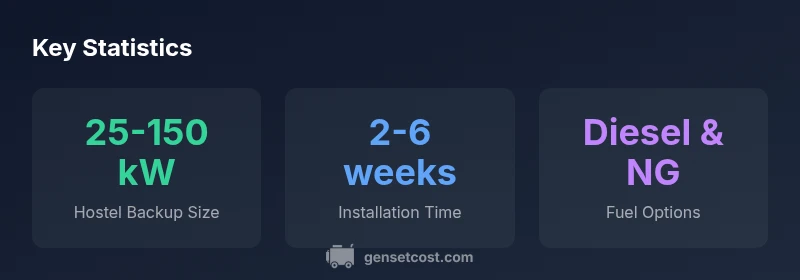
Diesel remains the dominant fuel due to reliability and broad availability, especially in remote locations. Natural gas is gaining traction where supply reliability and distribution exist, offering potential emissions advantages and easier refueling logistics. LPG is used in smaller packages where space is limited. Regardless of fuel type, regular maintenance is essential: annual inspections, oil changes, filter replacements, and load testing. Emissions considerations and local air-quality rules should guide equipment selection. Design-for-maintenance practices—such as easy-access service panels and adequate ventilation—reduce downtime and extend life.
Integration with building systems: transfer switches and controls
A reliable hostel backup system hinges on seamless integration with building controls. An automatic transfer switch (ATS) minimizes downtime by starting the generator when grid power is lost and transferring loads in seconds. A properly configured ATS also prevents backfeed and protects both the generator and the electrical distribution. Advanced controls can coordinate outages with elevator operations, door access, and critical cooling loads, improving response times during outages and reducing human intervention. When selecting equipment, ensure compatibility with existing electrical panels and future expansion plans.
Case study: hypothetical hostel sizing scenario
Consider a mid-size hostel with 120 rooms, a shared kitchen, laundry facilities, and a reception area. A verified load list shows continuous critical loads such as security, lighting, refrigeration, and IT systems. After calculating peak demand and adding a 20% growth margin, the project team selects two diesel generators totaling 90–110 kW with an automatic transfer switch. The installation includes a sound-attenuated enclosure and a weather-tight fuel tank. Over a 10-year horizon, the owners project stable maintenance costs and minimal downtime, illustrating how careful sizing and planning translate into reliable uptime and guest satisfaction.
How to compare options with Genset Cost guidance
When evaluating generator options for hostel properties, compare total cost of ownership, including purchase price, installation, fuel storage, maintenance contracts, and potential downtime. Use standardized load schedules for apples-to-apples comparisons and request references or warranties from manufacturers. Genset Cost recommends validating the load schedule with a professional, requesting a formal performance guarantee, and factoring in long-term fuel availability. A structured procurement process with clear scope and milestones helps ensure you meet guest expectations and regulatory requirements.
Back-up generator sizing for hostel-scale operations
| Space Type | Critical Load Range | Recommended Generator Size | Fuel Type |
|---|---|---|---|
| Small hostel (up to 50 guests) | 8-40 kW | 25-60 kW | Diesel |
| Mid-size hostel (50-150 guests) | 40-90 kW | 60-120 kW | Diesel / Natural Gas |
| Large hostel (>150 guests) | 90-180 kW | 120-180 kW | Diesel |
People Also Ask
What is a generator hostel and who benefits?
A hostel with a dedicated on-site backup generator ensures essential services stay online during outages. This benefits guests, staff, and owners by maintaining comfort, safety, and revenue continuity.
A hostel with a backup generator keeps essentials running for guests and staff during outages.
How do I size a hostel backup generator?
Start with a verified load list of critical circuits, add a growth margin, and choose a configuration (single large unit or multiple smaller units) that aligns with space and budget. Include transfer-switch considerations early.
Size by peak load plus a growth margin and plan for transfer-switch needs.
What fuel types are practical for hostel gensets?
Diesel is the most common choice for reliability and resale value. Natural gas is attractive where supply and proximity allow. LPG is feasible in tight spaces. Consider fuel storage and regulatory constraints.
Diesel is common; natural gas is growing where feasible.
Are permits required for installation?
Regulations vary by jurisdiction but typically include electrical and fire-safety permits. Work with licensed contractors and plan for inspections to avoid project delays.
Check local permits and hire licensed pros.
Is renting a generator better than buying for a hostel?
Renting can work for short-term needs or during transitional phases, but buying with a maintenance contract often offers lower long-term costs and better reliability.
Renting makes sense short-term; buying usually pays off long-term.
How does a transfer switch improve reliability?
An automatic transfer switch starts the generator and transfers loads within seconds of a grid outage, minimizing downtime and preventing backfeed.
Auto-transfer switches boost reliability and safety.
“A hostel backup power system should be treated as a core utility, sized to meet peak load with a healthy margin for growth. That approach reduces outages and protects guest experience.”
Key Takeaways
- Define critical loads before choosing a generator.
- Size with peak demand plus a growth margin.
- Plan for transfer switches and automation.
- Consider fuel availability and maintenance from day one.
- Compare total cost of ownership, not just upfront price.