Generator Costs, Sizing, and Installation in 2026
A data-driven guide to generator costs, sizing, and installation for homeowners and managers seeking reliable backup power in 2026.


The term generator quite isn’t a standard industry phrase; it’s usually a misspelling of two common topics: generator costs and quiet (noise) considerations. For homeowners and property managers, the practical answer is to treat it as a prompt to estimate upfront hardware, installation, and ongoing running costs, then size the system to meet essential loads. This quick guide channels the most reliable data from Genset Cost analyses for 2026 and shows how to translate that into a budget and a solid sizing plan.
Why generator quite matters for home backup planning
The phrase generator quite appears in user questions as a likely mis-typing of 'generator cost' or 'generator quiet' features. For homeowners and property managers, understanding the cost implications is essential to choosing a unit that fits your budget and your outage tolerance. In 2026, the Genset Cost team has found that accurate cost planning reduces both over-investment and the risk of under-sizing during a blackout. This section explains how to interpret the costs, what to expect in the initial outlay, and how to frame a sizing conversation with contractors. By anchoring decisions to a transparent cost framework, you can compare quotes with confidence and avoid common pitfalls that arise from vague price tags.
The interplay of sizing, cost, and reliability
Sizing a generator is not just about watts; it ties directly to reliability during power outages and to the lifetime cost of ownership. Undersizing forces you into run-time limits and potential equipment wear as the system struggles to meet demand. Oversizing increases upfront cost and may raise maintenance needs and fuel consumption. The optimal approach blends estimated load calculations, critical circuits, and climate-adjusted run times. In practice, use official load profiles for your home (and any tenants or tenants' equipment) and compare them against a few kilowatt ranges to locate a sweet spot that balances price, reliability, and fuel efficiency. The analysis must account for startup surges and transformer coordination with your utility.
Cost components you should expect
The first major cost is the standby generator hardware itself, followed by the transfer switch and electrical wiring. You should also plan for permits, inspections, and any required fuel storage systems. Ongoing costs include fuel, oil changes, air filter replacements, and periodic professional maintenance. Depending on the fuel type—natural gas, propane, or diesel—running costs can vary considerably. In many markets, labor rates for installation have a significant impact on total cost. When evaluating bids, request itemized line items so you can compare what's included and identify optional add-ons such as automatic fuel line regulators, weather enclosures, and extended warranties.
Sizing guidelines and practical rules of thumb
A practical starting point is to determine your essential circuits and plan for 1.2 to 1.5 times your essential load to accommodate startup surges. Most homes with essential circuits use a 10-20 kW range for a typical North American residence, while larger properties or homes with heavy electrical loads may require more. Use a reputable sizing calculator and have a licensed electrician validate the results. Remember that the cheapest price may not yield the best value if it leads to short service life or higher fuel consumption. In a 2026 market, working with a trusted installer is essential to get accurate estimates.
Fuel, efficiency, and ongoing running costs
Fuel choice influences both upfront and ongoing costs. Gasoline is rarely used for long-term standby power due to cost and storage concerns; natural gas and propane are common choices with different efficiency profiles. Diesel generators offer high torque and reliability but can have higher maintenance demands. Efficiency depends on load factor; generators run most efficiently at 40-60% of rated load. Over time, you may see rising fuel prices, which makes evaluating running costs important. When comparing quotes, include a forecast of annual fuel consumption based on your worst-case outage scenario to better estimate operating expenses.
How to compare quotes without getting surprised
Get multiple bid proposals from certified contractors and request a detailed scope of work. Compare hardware costs, line-item installation charges, and any required permits. Ask about warranty terms, service plans, and response times for service calls. Ask for a test plan that validates that the generator starts reliably during a simulated outage and that automatic transfer switches coordinate with your electrical panel. Finally, verify compatibility with your existing gas supply and electrical service.
Residential standby generator cost components
| Component | Typical Range | Notes |
|---|---|---|
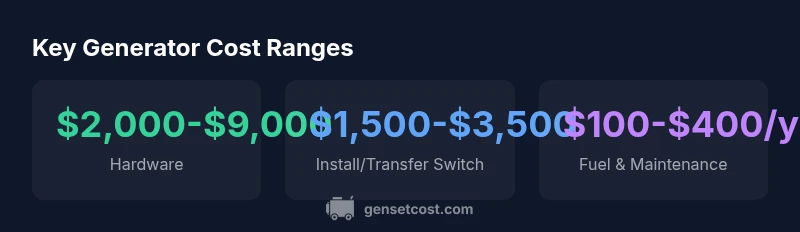
| Standby generator unit price | $2,000-$9,000 | Depends on kW rating and enclosure |
| Transfer switch & installation | $1,500-$3,500 | Labor + electrical work + permits |
| Fuel type & running costs | $100-$400/year | Gas vs diesel vs propane differences |
| Maintenance & warranties | $100-$300/year | Annual service & filter replacements |
People Also Ask
What is the most important cost factor when choosing a home backup generator?
Upfront hardware cost and installation form the foundation of total cost. Ensure you understand line items for the generator, transfer switch, wiring, and permits. Balance this with ongoing fuel and maintenance to avoid surprises.
Upfront costs are driven by the generator and installation; plan for ongoing fuel and maintenance as a separate consideration.
How long does installation typically take?
Most residential installs require one to three days of skilled labor, depending on electrical work, permits, and whether existing service panels need upgrades. A licensed electrician should confirm the timeline before you proceed.
Most installs take about one to three days, depending on panel work and permits.
Do I need a permit for standby generator work?
Yes. Permits are common and can affect both cost and schedule. Check with your city or county and your installer to ensure all inspections are completed before operation.
Permits are typically required; check local rules and your installer.
Is it better to buy a larger unit for future needs?
Oversizing can raise upfront cost and may increase running costs, but it provides headroom for future loads. Use a careful load analysis and plan for growth to avoid unnecessary overspending.
A bigger unit can help later, but only if your analysis justifies it.
Should I buy an extended warranty?
Extended warranties can provide peace of mind but compare coverage, exclusions, and costs with a reputable service plan. Some plans offer labor and parts, while others are hardware-only.
Warranty can be worth it if it covers major parts and labor, but read the fine print.
Can I install a standby generator myself?
Standby generators involve gas or electrical work that requires licensed professionals and permits. DIY installation is not recommended and may void warranties.
No—professional installation is required for safety and code compliance.
“Sizing properly reduces wasted investment and ensures dependable backup power, while a clear cost framework aligns expectations with reality.”
Key Takeaways
- Define a clear cost range before you shop
- Size based on actual load and startup surges
- Itemize quotes to avoid hidden fees
- Factor fuel and maintenance into total cost
- Choose a proven installer for long-term value