Ryobi Generator Buying Guide: Costs, Sizing, and Options
Compare Ryobi generators for home backup: costs, sizing, run time, noise, and installation tips. Get practical guidance from Genset Cost to choose the right Ryobi model for your property and outage planning.


Ryobi generators span portable gas, inverter, and cordless options designed for home backup and outdoor use. When evaluating a Ryobi generator, key factors include wattage range, fuel type, inverter efficiency, runtime, noise, and ecosystem compatibility with Ryobi One+ batteries. This guide helps homeowners and property managers estimate costs, size correctly, and compare models, with insights from Genset Cost.
Ryobi Generator Lineup and Ecosystem
Ryobi’s generator family spans portable gas units, inverter generators, and cordless options that integrate with the Ryobi One+ ecosystem. For homeowners and property managers, the appeal lies in modularity: you can scale backup capacity by adding a larger gas unit or by pairing additional Ryobi batteries with existing tools. When evaluating a Ryobi generator, assess wattage needs, typical outage duration, fuel availability or battery recharge capacity, and the potential installation requirements for safety and code compliance. The Genset Cost team emphasizes that total ownership cost includes upfront purchase, fuel or charge cycles, regular maintenance, and any required transfer-switch or interlock hardware, not just the sticker price.
Sizing Your Backup: How to Choose Wattage
Begin with the essentials—refrigerator, lighting, modem/router, sump pump, and any critical medical devices. List each item’s running and startup watts, then add a comfortable margin (typically 20–40%) to accommodate motor surges. Translate total watts into a compatible Ryobi model by cross-checking continuous wattage ratings and surge capacity. If you rely on Ryobi’s battery-powered solutions, include usable battery capacity and the charger’s input rate. The objective is a target range that sustains essential loads during outages without frequent refueling or recharging, while leaving room for growth over time.
Battery-Powered vs Gas-Powered: Pros and Cons
Ryobi’s battery-powered options leverage the One+ battery platform for quiet operation and zero on-site emissions, ideal for lighter loads and urban settings. Gas-powered units deliver higher peak wattages, longer runtime between refuels, and easier replenishment during extended outages. The trade-off includes more noise, fuel storage considerations, and routine maintenance. A practical approach is a hybrid strategy: a small gas model for core loads supplemented by battery power for intermittent devices, balancing cost, convenience, and resilience.
Inverter Technology and Power Quality
Look for true inverter generators within Ryobi’s lineup. Inverter technology provides stable voltage and clean sine waves suitable for sensitive electronics like TVs and computers. Compare rated continuous wattage to surge wattage and verify that the unit maintains voltage stability at partial loads. For households with delicate electronics, prioritize models designed for clean power output and better efficiency at varied loads.
Fuel, Runtime, and Running Costs
Gasoline generators consume fuel based on load and engine efficiency; running costs depend on local fuel prices, hours of operation, and the generator’s efficiency. Battery options replace fuel variability with battery cycles and recharge time, which can be advantageous during frequent outages if you have reliable charging access. In general, cost-of-ownership calculations should incorporate fuel or battery costs, maintenance intervals, and the potential need for spare parts or seasonal storage supplies.
Noise, Location, and Installation
Gas units tend to be louder than cordless options; plan to place the generator away from living spaces and ensure adequate ventilation. If you plan to connect to home circuits, a transfer switch or interlock kit is essential for safe operation and to prevent back-feeding. Ryobi models are commonly compatible with standard safety accessories and a network of service providers, which can streamline installation and ongoing maintenance. Proper placement, weather protection, and secure mounting extend unit life and reliability during outages.
Cost of Ownership and Warranty
Initial price matters, but total ownership includes fuel or battery costs, maintenance, and warranty coverage. Ryobi models generally span affordable to mid-range price points, with cost variation by wattage and power source. When budgeting, account for optional accessories such as weatherproof enclosures, transfer switches, and routine maintenance kits. Always review warranty terms and service options to minimize long-term risk and ensure timely support.
Ryobi Generators Compared to Closest Competitors
Across the market, Ryobi emphasizes ecosystem compatibility and user-friendly design, especially for existing Ryobi tool users. Pros include lower upfront costs, lighter weight, and broad availability of One+ batteries. Cons may include lower peak wattage on some inverter models and more frequent battery recharge needs versus larger industrial brands. For many homes and apartments, Ryobi offers a practical balance of price, portability, and performance.
Practical Buying Guide: Quick Checklist
Before purchasing, confirm4 essential steps: estimate your essential loads, decide on gas, battery, or hybrid, verify inverter suitability, check transfer switch requirements, assess battery capacity and recharge time, and review warranty/service options. Use this framework to avoid overspending on models that can’t meet daily power needs and to reduce the likelihood of underpowered backup during outages.
Representative specs for Ryobi-style portable backup generators
| Model Type | Wattage Range (W) | Fuel Type | Noise (dB) | Typical Run Time |
|---|---|---|---|---|
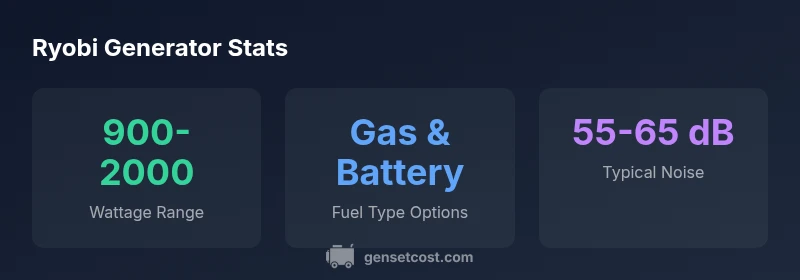
| Gas portable | 900-2000 | Gasoline | 55-65 | 5-12 hours |
| Battery-powered inverter | 600-1800 | Battery (Ryobi One+) | 45-60 | Varies with charge |
| Hybrid/dual-fuel | 1000-3000 | Gasoline | 50-70 | 6-10 hours |
People Also Ask
What size Ryobi generator do I need for a typical home outage?
Start by listing essential loads and summing running watts. Add a safety margin of 20-40% to cover startup surges. Match this target to a Ryobi model with continuous wattage that covers it, and ensure you have a plan for transfer-switch or interlock installation if you want seamless switching.
Calculate your essential loads, add a margin, and pick a Ryobi model that covers the total continuously.
Do Ryobi generators require a transfer switch?
Yes. For safe and code-compliant operation, you should use a manual transfer switch or an interlock kit when connecting a generator to home circuits. This prevents back-feeding and protects utilities and equipment.
Yes—use a transfer switch or interlock kit to safely connect to your home circuits.
Are Ryobi cordless batteries compatible with all Ryobi generators?
Cordless Ryobi batteries power specific inverter models and portable setups within the One+ ecosystem. Check model specifications to confirm which batteries are supported and whether you’ll need a charger or generator-integrated charging option.
Battery compatibility depends on the specific Ryobi model—check the product details.
What is the typical cost range for Ryobi generators?
Prices vary by wattage and type. Typical ranges for portable Ryobi units fall in the mid hundreds to the low thousands of dollars, with additional costs for installation, transfer switches, and weather enclosures.
Costs vary by wattage; budget for upfront price plus installation and safety accessories.
How loud are Ryobi generators?
Noise levels for portable Ryobi generators typically fall in the 50s to mid-60s decibels at a practical distance, with inverter models generally quieter than standard gas units.
Most Ryobi units are noticeable but manageable; location and enclosure help reduce perceived noise.
What maintenance does a Ryobi generator require?
Regular oil changes, spark plug checks, air filter cleaning, and proper fuel storage for gas units. Battery-powered units require battery maintenance and charger care. Follow the owner’s manual for interval schedules and parts replacement.
Keep up with routine maintenance and storage to ensure reliable outages.
“Choosing the right Ryobi generator isn't just about upfront price; it's about aligning wattage, fuel strategy, and the available maintenance options with your outage needs.”
Key Takeaways
- Estimate loads before choosing a model
- Choose between gas, battery, or hybrid based on outage duration
- Inverter models deliver cleaner power for electronics
- Plan for transfer switches and proper installation
- Total cost includes fuel/battery, maintenance, and warranty