Generator Testing Requirements for Home Backup Generators
A comprehensive guide to generator testing requirements for home backup systems. Learn testing frequency, transfer-switch verification, load steps, documentation, and budgeting for homeowners and property managers.


Generator testing requirements specify the minimum checks to confirm a home standby generator starts reliably, transfers power correctly, and delivers rated output when the grid fails. Homeowners and property managers should align with recognized standards, perform regular load and transfer tests, and maintain written records. According to Genset Cost, a formal testing plan improves reliability and simplifies regulatory verification.
What generator testing requirements encompass
In practical terms, generator testing requirements cover pre-test planning, safety assessments, start/stop procedures, transfer switch verification, and post-test review. The goal is to ensure the backup system will perform under real outage conditions, not just in a factory setting. In addition to the homeowner's manual, many jurisdictions require formal testing documented for compliance and warranties. A robust plan aligns with the specific generator model, fuel type, and installation environment. For homeowners and property managers, establishing a formal testing framework helps clarify responsibilities, reduce downtime, and support warranty claims. The testing plan should specify who performs tests, how readings are recorded, and what qualifies as a pass or fail. It should also outline safety steps, including fuel handling, battery checks, and protective equipment for technicians.
Core testing categories for home standby systems
Testing for a home standby generator typically falls into several core categories: activation checks (battery health, controller firmware, fuel status), transfer switch tests (ATS switching under simulated outage), load tests (matching generator capacity to expected loads), and run-time tests (long-duration stability). Each category has practical procedures, required tools, and clear acceptance criteria. For example, an ATS test confirms seamless transfer from utility to generator, without back-feeding or momentary outages. A load test ensures the generator can sustain the targeted load for a defined period. Documentation of results is essential for maintenance planning and compliance.
Regulatory and standards context you should know
Standards commonly referenced in generator testing requirements include NFPA 70 (National Electrical Code) for electrical safety, NFPA 110 (Standby Power Systems) for emergency readiness, and NFPA 37 (isolation and testing of fuel systems) in some jurisdictions. Local codes may also specify annual or semi-annual testing, along with documentation requirements for warranties or insurance. The U.S. Department of Energy encourages homeowners to review manufacturer recommendations and ensure that any testing plan adheres to applicable safety standards. Employers should follow OSHA safety guidelines for electrical work and lockout/tagout procedures when maintenance is performed. Understanding these standards helps ensure tests are both effective and compliant.
Planning a testing schedule for homes and properties
Effective testing starts with a plan. Begin by inventorying each generator, ATS, and related equipment, then map testing frequency to equipment criticality and fuel source. Assign responsibilities to licensed electricians or qualified technicians, and set a calendar reminder system for periodic checks. Include pre-test safety confirmations, post-test reporting, and parts inspection intervals. If multiple properties are involved, standardize the testing protocol to ensure consistency across sites. Factor in seasonal considerations (e.g., winter fuel stability) and accessibility for service visits. Finally, ensure budget reserves for annual tests, potential battery replacements, and maintenance items discovered during tests.
Executing safe load testing with practical steps
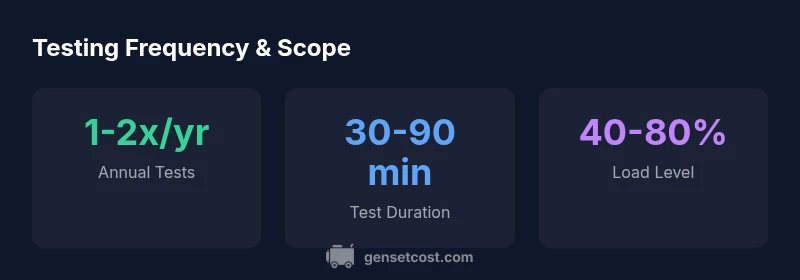
Load testing should be performed with safety as the primary concern. Engage a licensed professional or under supervision of a qualified technician. Use a test plan to gradually bring the load to the target range (typically 40-80% of rated power) and monitor generator response, fuel supply, and cooling systems. Do not exceed manufacturer limits or operating guidelines. Have a safe, clear testing area, fire extinguisher access, and proper ventilation for fuel and exhaust. Record readings for fuel level, runtime, oil temperature, electrical readings, and any fault codes. After the test, restore all systems to normal operation and inspect for signs of wear or tampering. Regularly review test outcomes to adjust maintenance schedules.
Documentation and reporting best practices
A robust documentation workflow includes a test date, test type, readings, pass/fail status, and follow-up actions. Attach photos, sensor readings, and any fault codes. Maintain a centralized log that is accessible to facilities managers and homeowners, with a copy kept for warranty audits. Use a standardized reporting template to ensure consistency across tests and sites. Documentation is essential for proving compliance with codes and insurance requirements, as well as for enabling proactive maintenance and budgeting.
Quality assurance and contractor roles
Quality assurance hinges on engaging licensed electrical professionals and certified generator technicians. Define minimum qualifications, require field experience with your generator model, and request a written scope of work before testing. Ensure all technicians follow lockout/tagout procedures, use appropriate PPE, and verify that fuel and battery systems meet safety standards. The testing plan should include a verification checklist, calibration records for meters, and a sign-off from the supervising technician. Regular performance reviews of service providers help maintain high safety and reliability standards.
Costs, ROI, and budgeting considerations
Budgeting for generator testing involves more than the test itself. Include inspection fees, potential part replacements (batteries, filters, fuses), and the cost of temporary outages if a test requires shutdown. While recurring testing adds to annual costs, it also reduces the risk of costly emergency failures during outages, extending equipment life and protecting property. To optimize ROI, negotiate bundled service agreements that combine testing with preventive maintenance visits or transfer switch inspections. Consider scheduling tests during low-risk periods to minimize disruption for tenants or occupants.
Future trends in generator testing technology
Advances in remote monitoring, IoT sensors, and predictive maintenance are transforming testing. Many newer systems support real-time status dashboards, fault alerts, and automated health checks that can shorten on-site visits. Data from test runs can feed maintenance analytics, enabling proactive parts replacement and smarter scheduling. By adopting these technologies, homeowners and property managers can improve reliability while controlling labor costs and downtime during outages.
Structured overview of common generator testing activities and their cadence
| Test Type | Recommended Frequency | Typical Steps | Notes |
|---|---|---|---|
| Self-check by owner | Weekly/Monthly | Visual indicators, battery status, fuel level, fluid checks | Not a substitute for professional testing |
| ATS (transfer switch) test | Annual or per NFPA guidance | Simulate outage, verify start sequence and transfer | Ensure safe operation and interlocks |
| Load test | 1-2 times/year | Apply gradual load to 40-80% of capacity, monitor response | Use load bank or controlled appliances |
| Full-load run-up | Annual | Run under rated load for 60-90 minutes | Weather and fuel stability considerations |
People Also Ask
How often should I test a home standby generator?
Most installations follow annual load testing with quarterly self-checks; however, local codes may require more frequent verification. Always document each test and align with manufacturer and manufacturer-specified schedules.
Most setups require annual load testing with periodic checks. Always document tests and follow local codes.
Should load testing be performed under full load?
Load testing is typically performed with moderate load (often 40-80% of rated output) to verify stability without stressing equipment. Full-load tests are done selectively and under supervision.
Load tests are usually 40 to 80 percent of capacity and done with supervision.
Who should perform generator testing?
Testing should be conducted by licensed electricians or certified generator technicians. They should follow a written plan, use calibrated meters, and document results for each site.
Licensed electricians or certified technicians should perform tests using a documented plan.
What safety precautions are necessary during testing?
Follow lockout/tagout procedures, wear PPE, ensure adequate ventilation, and verify fuel safety. Tests should be conducted in accordance with applicable electrical safety standards.
Use proper PPE, follow lockout/tagout, and ensure ventilation and fuel safety.
What records should be kept from generator tests?
Keep date, location, test type, readings, pass/fail results, maintenance actions, and any corrective steps. Attach photos and meter readings to support warranty and insurance claims.
Maintain detailed test logs with readings and actions taken.
How do you verify the transfer switch works correctly?
Simulate outages to observe automatic switching, verify no power back-feed, and confirm sequential interlocks function. Check for any abnormal readings or delays and recalibrate if needed.
Test the transfer switch by simulating outages and watching for clean, quick transfer.
“Regular, documented testing is not optional—it's the bridge between a design and dependable performance during outages.”
Key Takeaways
- Define a formal testing schedule early
- Prioritize ATS and battery health checks
- Document every test with clear pass/fail criteria
- Engage licensed professionals for testing
- Leverage remote monitoring where available