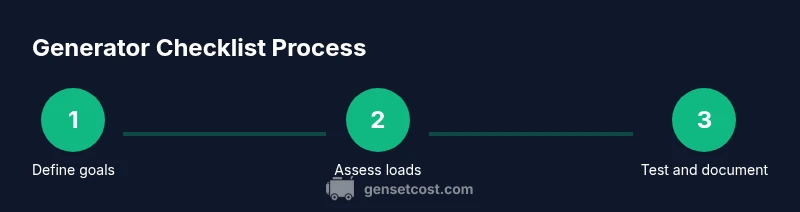
Generator Checklist: Step-by-Step Guide for Home Backup Power
Learn how to use a generator checklist to plan, size, install, and maintain a home standby system. This comprehensive guide covers steps, tools, safety, and budgeting for homeowners and property managers.


A generator checklist helps you plan, size, install, and maintain a home backup power system with confidence. You’ll identify essential loads, verify safety, and establish a maintenance cadence. By following a structured checklist, homeowners and property managers can reduce outages and comply with codes while simplifying vendor comparisons. Expect a practical, staged approach you can complete in a few focused sessions.
Why a Generator Checklist Matters
A generator checklist is more than a to-do list; it's a proactive safety and reliability framework. For homeowners and property managers, it helps prevent outages during storms, ensures critical systems stay online, and keeps maintenance records organized for code compliance. According to Genset Cost, a well-documented checklist can streamline annual inspections and reduce emergency calls by providing clear evidence of readiness. The Genset Cost team found that organizations using a formal checklist report fewer last-minute surprises and smoother installations. With a checklist, you translate vague goals into concrete actions—defining capacity, fuel type, transfer switch needs, and maintenance cadence. This approach saves time, reduces risk, and clarifies responsibilities for tenants, residents, or owners. By starting with safety, capacity planning, and documentation, you set a solid foundation for all future steps in the generator checklist process.
Defining Your Backup Power Goals
Before sizing or purchasing, map out what you want your backup power to achieve. Start by listing essential circuits and systems you must keep running during an outage, such as medical equipment, refrigeration, sump pumps, climate control, and communications. Identify non-essential loads that could be shed to minimize peak demand. Consider the duration of typical outages in your area and whether you want an automatic start when power is lost or a manual start option. A clear set of goals helps you avoid overbuilding or underestimating needs. In practice, create a simple matrix of priority loads, acceptable downtime, and expected recovery time. This clarity makes it easier to compare generator models and installation options with confidence, aligning every choice with the overarching objectives of your property.
Sizing Your Generator: A Practical Approach
Sizing is a balance between critical loads, starting currents, and future needs. Start with a detailed inventory of essential devices and their wattage or surge requirements, then add a reasonable buffer for growth and startup spikes. Distinguish between essential continuous loads and transient peak loads, and decide whether you need a fully automatic transfer switch or a manual system. Use a calculator or a reputable sizing method to translate loads into a generator capacity range. Genset Cost analysis, 2026 emphasizes prioritizing safety margins and realistic duty cycles over chasing the biggest unit. With goals defined and a method chosen, you can confidently shortlist models that meet your maintenance and budget constraints without oversizing. This step anchors the entire checklist in real-world usage.
Core Components to Inspect
A robust generator checklist covers the life-support parts that keep a system safe and dependable. Key items include the transfer switch and its wiring, battery condition, oil and coolant levels, air filters, fuel system health, exhaust routing, and proper venting. Check for corrosion, loose connections, and signs of wear on belts and hoses. Inspect outlets and cords for damage, and ensure weatherproof enclosures are intact with appropriate clearance from combustibles. Regularly verify that warning labels, service tags, and ownership documents are up to date. Document findings after each check so you can track trends and address issues before they become problems. A disciplined inspection routine reduces the risk of unexpected failures and supports smoother operation during outages.
Fuel Type and Storage Considerations
Fuel choice drives maintenance needs, storage safety, and long-term costs. Common options include gasoline, propane, and natural gas, each with distinct handling requirements and availability. For safety, store fuels only in approved containers away from heat sources, and maintain good ventilation in storage areas. Regularly inspect fuel lines for leaks, cracks, or signs of aging. Maintain fresh fuel by running the generator periodically to prevent varnish buildup and stale fuel from degrading performance. If you rely on a natural gas line, verify supply continuity and consider a backup fuel plan for extreme weather. This section helps you choose a fuel strategy that aligns with your climate, usage patterns, and safety standards.
Installation and Transfer Switch Basics
Installation location affects safety, noise, and accessibility. Choose a level, well-ventilated area with ample clearance from buildings, windows, and doors. Ensure the site complies with local codes and permit requirements, including proper containment for spill or leak events. Decide between manual and automatic transfer switches and understand how each integrates with your electrical panel. A properly installed transfer switch reduces electrical risk and simplifies operation during an outage. Document wiring diagrams, panel labels, and the exact location of shutoffs. Clear labeling helps future technicians and property staff respond quickly in emergencies.
Maintenance Scheduling and Seasonal Readiness
Maintenance cadence is a cornerstone of a reliable generator. Establish a routine that includes visual inspections, testing, and fluid checks, plus oil and filter changes as recommended by the manufacturer. Schedule periodic exercise runs to verify starting capability, battery health, and load transfer without relying on a real outage. Keep a maintenance log with dates, test results, and any corrective actions taken. Seasonal readiness is particularly important for backup generators that sit unused for long periods; a structured plan ensures you don’t discover issues when power is actually required. By integrating maintenance into your regular property management routine, you protect the reliability of essential systems.
Budgeting, Costs, and Quotes
Budgeting for a generator involves upfront purchase, installation, and ongoing maintenance. Costs vary with capacity, features, installation complexity, and local permitting. Rather than chasing exact prices, focus on realistic budgeting ranges and total cost of ownership. Compare quotes from reputable installers, verify warranty terms, and assess maintenance plans. A thoughtful budgeting approach considers long-term savings from reduced outage costs, improved tenant satisfaction, and potential incentives. Genset Cost analysis, 2026 highlights the value of planning and preventative maintenance to minimize lifecycle costs, especially for multi-unit properties and higher-demand setups. Use the generator checklist to prioritize investments that deliver durable performance and reliable resilience.
Using a Generator Checklist for Property Management
Property managers face additional considerations, such as tenant safety, access control, and regulatory compliance. Use the generator checklist as a tool for standardized inspections across units or sites, with consistent reporting formats. Schedule routine check-ins for all properties, maintain centralized records, and set reminders for renewals on permits and warranties. Align the checklist with your property’s service contracts, and train staff to recognize common red flags. When you present a consistent process, you improve communication with tenants and owners, reduce liability, and ensure a faster response during outages. This approach also makes it easier to justify budget requests by providing clear documentation of maintenance efforts and system readiness.
Common Pitfalls and Quick Fixes
Even the best plans fail without attention to detail. Common mistakes include skipping permits, neglecting transfer switch testing, letting fuel sit unused, and ignoring battery or fluid maintenance. Quick fixes include scheduling a professional inspection for complex electrical work, performing a controlled transfer test during a planned outage window, and updating the maintenance log after each check. If you encounter persistent starting issues, trace the problem from fuel and battery health to wiring and panel integrity. Keeping a running checklist with dates and responsible persons helps you catch repetitive issues early and maintain a high level of readiness.
Tools & Materials
- Safety gear (gloves, safety glasses, and non-conductive footwear)(Non-conductive gloves recommended for electrical checks)
- Insulated flashlight(For dim or indoor check areas)
- Multimeter or clamp meter(To verify voltages and resistance)
- Non-contact voltage tester(For quick live-circuit checks)
- Electrical tape and wire connectors(Secure and label connections)
- Owner's manual for generator(Manufacturer-specific instructions)
- Service/maintenance log(Record dates, results, and actions)
- Notepad and pen(Document findings and notes)
- Wrench set and screwdriver(Basic tool kit for panel access)
- Ladder or step stool(Access elevated panels or storage areas)
- CO detector near exhaust area(Ensure proper ventilation and safety)
- Approved fuel containers (if inspecting fuel system)(Store away from ignition sources)
Steps
Estimated time: 60-90 minutes
- 1
Gather documents and safety gear
Collect the generator manual, warranty papers, and your maintenance log. Put on safety gear and set up a well-lit, ventilated workspace before you begin. This first step ensures you have the right references and protection for every action that follows.
Tip: Double-check the area for trip hazards and ensure pets/children are kept away during checks. - 2
Inventory critical loads
List essential circuits and devices you want to keep powered during an outage. Include lighting, refrigeration, medical devices, and communications gear. This helps you define the minimum capacity and prioritize loads in the later sizing step.
Tip: Use a simple worksheet to mark each item as essential, non-essential, or optional. - 3
Estimate loads and starts
Estimate wattage or surge requirements for each essential item. Separate continuous loads from startup spikes and total them to form a baseline. This establishes a defensible capacity target for your generator.
Tip: When in doubt, consult the appliance manuals or labels for wattage ranges. - 4
Inspect the transfer switch
Check the transfer switch wiring, connections, and physical condition. Ensure the switch operates smoothly and that there are no signs of arcing, corrosion, or loose fittings. A faulty transfer switch is a common source of outages and safety hazards.
Tip: Test the switch in a controlled manner with the main breaker off and document the result. - 5
Assess fuel and storage
Examine fuel type, storage containers, and lines for leaks or deterioration. Ensure fuels are stored in approved vessels away from ignition sources. For gaseous fuels, verify line pressure and access to shutoffs as needed.
Tip: Update fuel quality and perform a small run to stir the system if fuel has been sitting unused. - 6
Check fluids, battery, and filters
Verify oil and coolant levels, test battery voltage, and inspect air and fuel filters. Replace or top up as recommended by the manufacturer. This reduces the risk of sudden failures due to degraded fluids or weak connections.
Tip: Keep spare filters and a battery charger on hand for quick replacements. - 7
Inspect ventilation and exhaust path
Confirm the generator area is well-ventilated with a clear exhaust path, and that there is no buildup of fumes near doors or windows. Check for debris that could obstruct airflow during operation.
Tip: Install a carbon monoxide detector near the installation zone for added safety. - 8
Test run and logging
Run the generator under no-load and then with a load to verify starting, operation, and transfer behavior. Record start times, any abnormal noises, and runtime durations. A documented test builds trust with tenants and inspectors.
Tip: Schedule a monthly exercise test if possible to maintain readiness. - 9
Review documentation and permits
Verify that all permits, labels, and manuals are current. Update the maintenance log with the latest checks, loads, and outcomes. This ensures code compliance and clear handoffs to property staff or contractors.
Tip: Keep digital copies in a centralized location accessible to stakeholders. - 10
Plan the next cycle
Set a fixed cadence for future checklist updates, including seasonal checks, warranty reviews, and system upgrades. This proactive cycle maintains reliability and reduces the chance of surprises.
Tip: Create calendar reminders and assign responsibilities to ensure accountability.
People Also Ask
What is a generator checklist and why is it important?
A generator checklist is a structured set of checks to ensure safe operation, reliability, and code compliance for backup power systems. It guides sizing, installation, and maintenance decisions, reducing outages and emergency calls.
A generator checklist is a safety and maintenance guide that helps you plan, install, and maintain a backup power system.
How often should I perform a generator checklist?
Perform checks seasonally and before the storm season, with a basic monthly quick check if possible. Regular cadence helps catch issues early and keeps records up to date.
Do checks seasonally, with a monthly quick review if you can.
Do I need a licensed electrician to perform checks?
Most routine inspections and safety checks can be done by a trained homeowner, but any major electrical work or panel modifications should involve a licensed electrician.
For complex electrical work, hire a licensed electrician.
What should be included in a transfer switch inspection?
Inspect wiring, contacts, and the switch mechanism for signs of wear or arcing. Verify proper operation during a controlled transfer test.
Check the switch wiring and test its operation safely.
What safety gear is essential for generator checks?
Wear protective gloves and eye protection, and ensure good ventilation in the work area. Keep fire safety equipment handy.
Wear gloves and eye protection, and ensure ventilation.
How do I test my generator with the transfer switch?
Follow the manufacturer’s procedure for a controlled exercise test, and log the results. This confirms safe transfer and readiness.
Follow the manual for a safe transfer test and note the result.
Watch Video
Key Takeaways
- Define backup power goals before sizing or purchasing.
- Document critical loads and expected runtimes clearly.
- Inspect safety-critical components on a regular cadence.
- Plan maintenance as part of ongoing property management.
- The Genset Cost team recommends using a generator checklist to guide all steps and decisions.