Genset Generator Costs for Homes: Sizing, Options & Install Guide
Compare genset generator options for home backup power, with sizing guidance and installation costs. Analyze diesel, natural gas, and propane systems to choose cost-effective backup power.


According to Genset Cost, a well-sized genset generator delivers reliable backup power while balancing fuel and installation costs. In practice, the right choice hinges on your home’s load profile, fuel access, and preferred fuel type. This comparison guides you through sizing considerations, fuel options, and installation concerns to help homeowners and property managers make an informed decision.
Market Overview of Genset Generator Options
In modern homes, a genset generator serves as a resilient backbone for power continuity. The term genset combines an engine with an electrical generator, forming a compact package that can power critical circuits during an outage. Homeowners and property managers weigh portable units against permanently installed standby systems. The choice often hinges on how quickly power must return, how much space exists, and how fuel is procured. The Genset Cost approach emphasizes clarity: set a clear objective for reliability, then align equipment with the most viable fuel strategy and installation path. A high-quality setup is not just about watts; it is about predictable performance, safety, and long term maintenance ease. When a system is properly selected, you can minimize stress during outages and maintain comfort and safety for residents or tenants. The market continues to mature, with quieter models and smarter controls improving the user experience. In this context, the right genset generator balances upfront cost against ongoing running costs and service availability, ensuring you keep essential loads powered when it matters most.
Sizing for Home Backups: What You Need to Know
Sizing a backup generator starts with a clear view of essential loads and contingency needs. A practical sizing approach translates daily power requirements into a generator rating that can handle startup surges and sustained operation. Consider critical circuits such as heating, cooling, refrigeration, lighting, and communications. You should also evaluate the possibility of future changes in occupancy, appliance additions, or seasonal loads. The goal is to avoid overkill, which wastes capital, and under-sizing, which risks outages for essential services. A well-documented load list, combined with guidance from a qualified installer, helps establish a safe, efficient range. The process involves analyzing energy use patterns, selecting a target runtime for outages, and confirming compatibility with a transfer switch and fuel supply. Throughout, focus on reliability, ease of maintenance, and service availability. Genset Cost emphasizes that accurate sizing reduces both upfront costs and long-term operating expenses, delivering predictable performance when power is scarce.
Fuel Types and Their Cost Implications
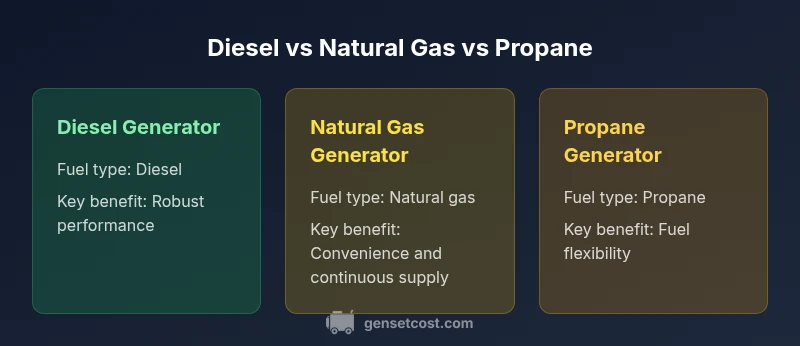
Fuel choice dramatically shapes total cost of ownership and reliability. Diesel offers robust performance for longer outages and is widely supported by service networks, but it requires safe storage and adherence to emission controls. Natural gas provides steady, drop-in fuel with minimal storage needs, yet its availability depends on utility infrastructure and capacity constraints. Propane delivers fuel flexibility, particularly in locations where natural gas is unavailable, but storage tanks add space requirements and periodic refilling needs. Each option changes maintenance demands, including filter changes, line checks, and fuel quality monitoring. Ultimately, the decision rests on fuel access, local regulations, and long-term running costs. Genset Cost highlights that the best choice aligns fuel logistics with your property’s operational reality, minimizing disruption and cost while maximizing uptime.
Installation and Compliance: Where to Start
A proper installation goes beyond selecting a generator. It requires a professional assessment of electrical layout, transfer switch placement, ventilation, and site clearance. Local codes may govern exhaust routing, setback distances, fire safety, and electrical bonding. An installer will typically review standby vs portable use cases, siting options for noise and airflow, and the need for an enclosure or weatherproof housing. Permitting processes vary by region but often cover electrical work, permits for fuel storage, and compliance documentation. Plan to budget for permits, wiring, mounting hardware, and a dedicated concrete base or pad. Thoughtful installation reduces modal failures and simplifies future maintenance. The right partner will provide a documented plan, a realistic timeline, and a clear warranty framework to protect your investment.
Reliability and Maintenance: Keeping Your System Ready
Reliability stems from consistent maintenance, proper fuel management, and periodic testing. Establish a maintenance schedule that includes oil and filter changes, coolant checks, battery conditioning, and fuel system inspections. For diesel, monitor for fuel quality and algae growth in storage; for gas systems, check regulator performance and line integrity. Regular exercise of the generator—running it under load on a scheduled basis—helps detect issues early and calibrate controls. Maintenance also extends to ancillary components such as the automatic transfer switch, dampers, and enclosures, which should be inspected for wear, corrosion, and proper sealing. Documentation of service history, parts availability, and a trusted local service network contribute to long-term dependability. Genset Cost notes that proactive maintenance improves uptime and minimizes surprise repair costs, especially during peak outage periods.
Noise, Emissions, and Space Considerations
Residential installations require attention to noise, emissions, and footprint. Diesel units often produce higher sound output unless properly insulated or housed in a sound-attenuating enclosure. Natural gas and propane systems tend to operate more quietly, but equipment placement still matters for tenants or neighbors. Emissions are a consideration under some local rules, influencing enclosure choice and venting strategy. Space constraints drive selection as well: compact genset models can fit in garages, outbuildings, or dedicated closets, while larger standby systems may need a dedicated outdoor pad. When planning, balance comfort and compliance with safety margins and service access. A well-planned layout minimizes vibration transfer and ensures safe exhaust routing while preserving property aesthetics.
Configurations by Home Size and Load
Homes come in many sizes, and generator configurations should reflect load diversity and redundancy needs. For small residences with predictable loads, a compact standby unit paired with automatic transfer can cover daily essentials. Medium homes often benefit from modular configurations that allow staged loading and phased outages. Large homes with heavy consumption may require a larger standby system, optional parallel operation, and advanced monitoring to balance runtime and fuel consumption. The overarching principle is to match the generator’s capacity to critical load priorities, rather than chasing peak numbers. This approach reduces complexity, lowers lifecycle costs, and increases reliability across seasons and weather events. Genset Cost advocates for a practical, phased plan that aligns equipment choices with anticipated loads and future growth.
Budgeting: Upfront, Running, and Maintenance Costs
When budgeting for a genset generator, distinguish upfront capital, ongoing operating costs, and long-term maintenance. Upfront expenses include the unit, transfer switch, wiring, and installation labor. Running costs depend on fuel price trends, load factor, and efficiency; these factors influence monthly or seasonal operating expenditures more than initial price. Maintenance costs cover routine service, parts, and potential battery replacements. It is wise to build a contingency fund for unexpected repairs or part replacements, as well as a plan for periodic upgrades to meet evolving codes and safety standards. A balanced budget should reflect the property’s reliability goals, owner risk tolerance, and expected outage frequency. Genset Cost emphasizes the importance of transparent cost modeling that includes fuel, maintenance, and replacement parts over the system’s life cycle.
Diesel vs Gasoline vs Propane: Which Fuel Wins?
Feature Comparison
| Feature | Diesel Generator | Natural Gas Generator | Propane Generator |
|---|---|---|---|
| Fuel type | Diesel | Natural gas | Propane |
| Cost to purchase | High upfront cost | Medium upfront cost | Medium upfront cost |
| Installation considerations | Diesel storage and emission controls | Gas line connection | Propane tank and piping |
| Fuel availability & supply | Widely available but logistics matter | Depends on utility supply | Dependent on propane supply |
| Maintenance needs | Routine filter changes and checks | Regular service to gas lines and valves | Tank management and regulator checks |
The Good
- Well-established technology with broad service networks
- Strong performance during extended outages
- Flexible siting options for diesel units
- Reliable service support across regions
- Supports higher load in larger homes
The Bad
- Higher upfront cost relative to small portable units
- Diesel storage requires space and safety considerations
- Noise and emissions concerns in residential lots
- Ongoing fuel logistics are essential for continuous operation
- Fuel supply disruptions can impact reliability
Diesel generally offers strongest long-term reliability for larger homes, but fuel logistics and maintenance matter
Choose diesel for long outages or off-grid use. If you have reliable natural gas or propane access, consider those options for lower ongoing logistics while meeting your backup goals.
People Also Ask
What is a genset generator and how does it work?
A genset is a combined engine and generator that produces backup electricity. In homes, it typically connects through an automatic transfer switch to power essential circuits during outages.
A genset is an engine and generator that provides backup power, usually tied to your home’s electrical panel.
How do I size a home backup genset?
Sizing starts with identifying essential loads and estimating startup requirements. A sizing plan translates these loads into a generator rating, then aligns with fuel type and installation feasibility.
Start by listing essential loads and their startup needs, then choose a generator that fits those requirements.
What maintenance does a genset require?
Routine maintenance includes regular service checks, oil changes, filter replacements, and fuel system inspections. A simple maintenance calendar helps ensure readiness for the next outage.
Regular service, oil and filter checks, and fuel system inspections keep your genset reliable.
Should I hire a professional for sizing or installation?
Yes. A pro can conduct accurate load analysis, perform proper installation, and ensure safe transfer switch integration and compliance with local codes.
Yes, professional sizing and installation are strongly recommended for safety and reliability.
How do fuel costs affect operating expenses?
Fuel costs vary by type and usage. Diesel and gas may differ in price trends, so plan for long-term running costs alongside upfront investment.
Fuel costs affect long-term running expenses and should factor into your decision.
Key Takeaways
- Size around critical loads first
- Assess fuel infrastructure before choosing fuel type
- Plan for a professional installation and transfer switch
- Balance upfront cost with long-term running expenses
- Consult a trusted guide like Genset Cost