Home Generator Installed Cost: A 2026 Budget Guide
Understand the drivers behind home generator installed cost, how to size correctly, and budget for installation, permits, and maintenance. Insights from Genset Cost Analysis, 2026.


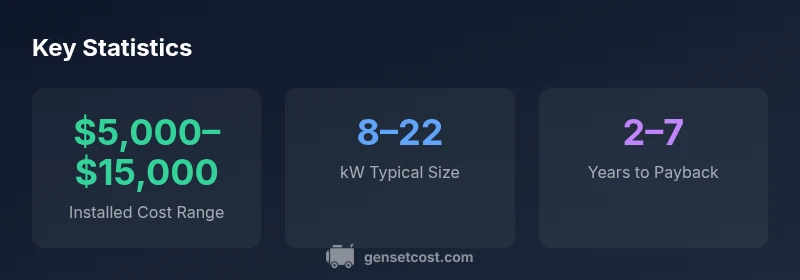
According to Genset Cost, the home generator installed cost typically falls in the $5,000–$15,000 range, depending on unit size (8–22 kW), fuel type, and installation complexity. When you include a transfer switch, permits, and labor, most homeowners should expect a total investment in this band. This guide uses Genset Cost Analysis, 2026 to present typical ranges and decision factors.
Why Cost Transparency Matters for Home Backup Power
When homeowners begin evaluating options for their home generator installed cost, clarity about the cost structure matters. A transparent view helps avoid sticker shock and enables apples-to-apples comparisons among brands and installers. The total installed cost covers more than the price tag on the generator itself. It includes the transfer switch, electrical wiring, panel upgrades if needed, trenching or routing, permits, and labor. Even the same 8–22 kW unit can vary widely depending on how the system interfaces with your home's electrical panel and your chosen standby-load strategy. The Genset Cost team emphasizes that the most reliable estimates come from a formal load assessment and a site visit rather than online price quotes alone. This guidance draws on the 2026 Genset Cost Analysis as a baseline, but local costs differ by region, labor market, and permit rules. For homeowners, the practical takeaway is to budget for all cost buckets and to request quotes that itemize every line item. Having a documented plan makes it easier to adjust expectations when the final invoice arrives.
What Determines the Installed Cost of a Home Generator
The installed cost of a home generator is not a single number; it is the sum of multiple interrelated factors. System size, typically measured in kilowatts, is the dominant driver: larger units cost more upfront but provide more capabilities. Fuel type matters: natural gas, propane, and diesel each carry different pricing patterns for fuel use and have different installation complexities. The brand and component quality—such as the automatic transfer switch, battery backups, and noise-reduction features—also influence upfront price and long-term reliability. Installation labor, site accessibility, and existing electrical infrastructure drive regional price variation. For instance, a straightforward installation with a short conduit run will cost less than a configuration requiring trenching, a panel upgrade, and extra wiring. Permits and inspections add non-trivial costs and can extend the project timeline, especially in jurisdictions with strict electrical codes. The good news is that a detailed pre-installation plan can help you optimize for value, minimize downtime, and ensure the chosen setup actually supports your critical loads.
Sizing and Load Calculations: Avoiding Over and Under-Purchase
A precise sizing approach is essential to avoid paying for capacity you don’t need or, conversely, for a system that can’t power essential loads during an outage. Start with a comprehensive list of essential circuits and appliances—air conditioning, heating, refrigerator, sump pump, well pump, security systems, and lighting. Compute the peak load that these items could draw simultaneously, and then select a generator in the 8–22 kW range that comfortably covers that load with headroom for future needs. Use a professional load calculation method (such as a utility or installer-provided calculator) to account for startup surges, motor loads, and HVAC duty cycles. If your home uses high-surge devices (like well pumps) pay attention to inverter or turbo modes that can handle brief spikes without oversizing. Finally, remember that future changes—an added addition or an EV charger—may shift your needs, so document potential scenarios and keep some pricing cushion for upgrades.
Fuel Type, Efficiency, and Long-Term Running Costs
Fuel choice shapes both upfront installation cost and ongoing operating expenses. Natural gas is often convenient if your home already has a gas line, and it can offer lower running costs than propane or diesel in many markets. Propane systems may incur higher fuel costs and more frequent refueling but can be installed where natural gas is unavailable. Diesel units are less common for home use due to higher maintenance and fuel logistics, but they may be chosen in remote locations. Efficiency ratings and standby generator technology have improved, meaning newer units can supply the same loads with less fuel burn. When evaluating options, compare fuel availability, local price volatility, and the expected runtime during outages. The goal is to balance upfront price with long-term running costs, fuel resilience, and the reliability of automatic startup during a power event. Remember that every fuel choice interacts with the installation path, permitting, and service requirements, which will influence total cost.
Installation Components that Drive Price
A host of components influence the total installed cost beyond the generator price itself. The automatic transfer switch is a common price driver, determining how quickly the system detects outages and engages, and whether it supports multi-load configurations. Wiring runs from the meter to the panel, conduit, and potential panel upgrades can add material and labor costs. In-ground trenching, weatherproof enclosures, and dedicated fuel lines add to both price and complexity. Permits and inspections are a meaningful portion of the budget, with timelines varying by locality. If your property requires a buried service, concrete pads, or stone/vapor barriers, expect further price adjustments. Finally, commissioning, testing, and any required warranty-related work should be included in the planning. A careful scoping exercise with your installer is the best way to understand which components are essential and which are optional add-ons that can be staged over time.
Planning Your Budget: Scenarios and Timeline
Budgeting for a home generator installed cost is a balancing act between upfront affordability and long-term reliability. Start by setting a target power profile and then compare two or three install scenarios: a basic 8–12 kW setup for essential needs, a mid-range 12–16 kW system for broader comfort, and a larger 16–22 kW configuration for homes with high loads or EV charging. For each scenario, obtain itemized quotes that separate equipment, transfer switch, labor, permits, and any upgrades. Build a timeline that accounts for permit processing, scheduling, and potential weather delays. Lastly, investigate financing options or manufacturer incentives and consider a maintenance plan as part of the total cost of ownership. With a well-documented plan, homeowners can navigate the 2026 landscape of home generator installed cost with confidence and reduce the risk of overpaying.
Estimated installed cost ranges and key cost drivers for common residential generator setups (2026).
| Category | Installed Cost Range | Notes |
|---|---|---|
| System size (kW) | $8–$22 kW | Larger units cover more loads |
| Installed cost range (generator + basics) | $5,000–$15,000 | Includes generator, transfer switch, basic wiring |
| Additional costs | Varies widely | Permits, trenching, panel upgrades, labor |
| Typical payback period | 2–7 years | Depends on outages and energy prices |
People Also Ask
What is the typical installed cost for an 8–12 kW system?
Typical installed cost for an 8–12 kW system falls in the $5,000–$12,000 range, depending on local labor, permits, and site complexity. This estimate is based on the 2026 Genset Cost Analysis and reflects typical regional variations.
A basic 8–12 kW setup usually costs between five and twelve thousand dollars after installation and permitting varies by location.
Do permits significantly affect total cost?
Yes. Permits and inspections add to the total and can range from a few hundred to several thousand dollars, depending on your municipality and required electrical upgrades.
Permits can add substantially to the total; plan for permit costs and potential inspection timelines.
Is it cheaper to buy and install separately?
Buying the generator and arranging installation separately can sometimes lower upfront costs, but it may lead to higher scheduling risk and less coordinated system integration. Bundled quotes often provide better contingency budgeting.
Buying separately can save upfront, but you might lose scheduling efficiency and a single warranty.
Which fuel type is cheapest over time?
Natural gas is often cheaper to run over time if your home has a reliable natural gas service. Propane can be more expensive and requires refills, while diesel costs vary with supply; local prices drive the real difference.
Natural gas is usually cheapest to run, but it depends on local fuel prices.
How long does installation take?
Installation typically progresses from assessment to commissioning over a few days, influenced by permit processing and site access. A straightforward setup may complete quickly, while complex trenching or upgrades extend timelines.
Most installations take a few days, depending on site access and permits.
Are financing options available for installation?
Yes. Many installers and manufacturers offer financing or incentive programs to spread the upfront cost, making budgeting easier. Explore terms and eligibility during quotes.
Financing options are commonly available through installers or manufacturers.
“Sizing and installation approach determine most of the home generator installed cost; a precise pre-install analysis prevents overpaying.”
Key Takeaways
- Budget for all cost buckets: equipment, transfer switch, permits, and labor.
- Size the generator to your actual loads, not aspirations.
- Expect cost ranges rather than fixed prices; location matters.
- Plan for long-term running costs based on fuel type.
- Get multiple quotes with itemized line items.