Honda 2200 Generator Review: Costs, Sizing & More Guide
Comprehensive review of the honda 2200 generator, covering costs, sizing, fuel use, noise, maintenance, and setup tips for homeowners and property managers.


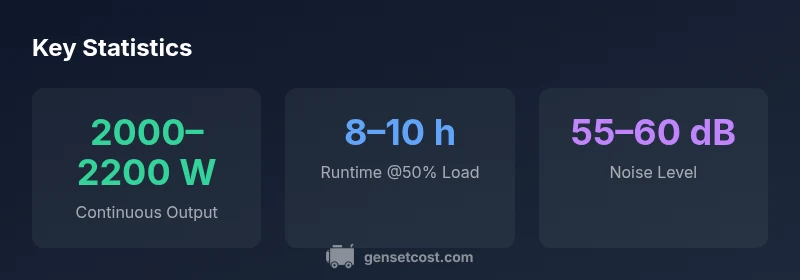
The honda 2200 generator is a portable inverter-powered unit in the 2,000–2,200 watt class, designed for reliable, clean power on the go. It’s commonly used for home backup, camping, and small-worksite loads. This review weighs upfront costs, operating efficiency, noise, and long-term ownership to help homeowners and property managers decide if it fits their power needs and budget. According to Genset Cost, this class offers an excellent balance between portability and performance.
Overview of the Honda 2200 Generator Class
The 2kW inverter class is the sweet spot for homeowners who want clean, stable power without the bulk of larger open-frame units. The honda 2200 generator name is widely used in consumer discussions to describe portable inverter models around this wattage range. Inverter technology converts fluctuating engine output into steady electricity suitable for computers, phones, and refrigerators, reducing risk of brownouts. Size and weight are carefully balanced to allow one person to move the unit with relative ease, yet provide enough runtime on a tank of fuel. In this section, we’ll break down how the class differs from traditional open-frame generators, how noise and vibration are managed, and what you should expect in terms of fuel economy and typical operating modes. We’ll also set expectations on availability, support networks, and when a 2kW inverter makes sense for simple backup power or outdoor use.
Sizing Your Home Backup: How Much Power Do You Need?
Power needs vary widely; the goal is to avoid under or over-sizing. Start by listing essential loads: lights (140–500W), refrigerator (600–800W when starting; 100–200W running), modem/routers (10–60W), fans, and small appliances. A Honda-class 2000–2200W generator can typically handle a handful of these at once, but you should avoid simultaneous hard-start loads like central AC or water heater. Use a load calculator or sizing guidance to estimate wattage and surge requirements. Then plan for runtime: how many hours you expect to bridge outages or run a campsite? The 2kW inverter class tends to run on regular unleaded gasoline and can deliver stable output for several hours at moderate loads. Finally, consider extension cords and transfer switches to minimize voltage drop and ensure safety. If you expect to power larger loads regularly, consider stepping up to a higher-wattage model or pairing with a battery system to smooth peaks.
Efficiency, Fuel Use, and Runtime Realities
Fuel efficiency for the 2kW inverter class improves as loads approach the mid-range of its capability. In real-world use, you’ll see the best economy when the generator runs at a steady, moderate load rather than constantly starting and stopping loads with heavy surges. Fuel capacity and the type of gasoline you use also influence runtime; ethanol-blended fuels may require stabilizers to prevent aging. Expect longer runtime at half-load scenarios, with shorter bursts when handling peak surges. Practically, this means planning outages with conservative load sets: essential lights, refrigeration, and a modem/router. If you frequently need higher peak power, you may need a larger unit or a dual-gen pairing strategy for extended outages.
Noise, Vibration, and Portability
Inverter generators in this wattage range prioritize quiet operation and low vibration. Sound levels are typically described in broad bands and depend on engine speed and load. For most setups, the Honda-class units operate at a comfortable ambient level, enabling night-time operation in a home setting or a campsite without overwhelming neighbors. Portability is aided by compact frames, carrying handles, and favorable weights for single-person transport. Placement matters; keep the unit on level ground, away from doors and vents, with proper clearance and a serviceable exhaust path. Using a weather-resistant cover and a stable, vibration-absorbing surface can further improve perceived quietness and longevity.
Maintenance, Durability, and Longevity
Routine maintenance is straightforward for most 2kW inverter units. Key tasks include periodic oil changes, air-filter inspection, spark plug check, and fuel system stabilization if the unit will sit unused for extended periods. Durable components and a robust chassis help exposure to dust and heat, common in outdoor use. Regular service by an authorized dealer ensures that parts such as spark plugs, filters, and gaskets are within spec. As with any portable power solution, keeping the unit dry, clean, and protected from direct moisture prolongs life. Long-term lifespans depend on consistent maintenance and proper storage practices during off-season use.
Cost of Ownership and Financing Options
Upfront price is a major consideration in the total cost of ownership for a Honda-class inverter. Budget for fuel, maintenance, and occasional parts replacements alongside the purchase price. Fuel costs depend on usage patterns and local fuel prices, while maintenance costs scale with hours of operation and local labor rates. Warranty coverage varies by model and region, but longer warranties generally reflect higher-quality components and dealer support. Financing or leasing options can reduce initial burden, especially for property managers evaluating multiple backup power assets. In summary, the long-term value rests on how often you rely on the unit and how you maintain it over time.
Setup Scenarios: When to Choose this Generator
For homeowners, a Honda-class 2kW inverter is ideal when outages are common but do not require heavy-duty relief from large appliances. For camping or small-job sites, it provides dependable, clean power without excessive noise. Property managers who need a portable, low-maintenance unit for partial-load scenarios may find this wattage range sufficient for refrigeration, lighting, and essential electronics. If you anticipate frequent simultaneous heavy loads (air conditioning, well pumps, ovens), consider higher-wattage options or a hybrid approach using a battery system to smooth demand. Always verify local regulations and ensure proper transfer-switch compatibility when linking to a home panel.
Honda vs Competitors: How it Stacks Up
Compared with other portable inverter generators in the same class, Honda’s reputation for reliability and dealer support often stands out. Some competing models may offer lower price or lighter weight but could compromise on noise, durability, or availability of service. The trade-off typically centers on runtime efficiency and peak surge handling — where Honda-class units tend to perform consistently. When evaluating alternatives, factor in fuel economy, maintenance intervals, warranty terms, and after-sales service. The key is aligning the unit’s capabilities with your typical usage pattern, whether you’re protecting a fridge during outages or powering camping gear on weekend trips.
The Good
- Clean inverter power suitable for sensitive electronics
- Compact and portable for one-person transport
- Reliable engineering and broad dealer support
- Good fuel efficiency for its class
- Easy maintenance with widely available parts
The Bad
- Higher upfront cost versus non-inverter open-frame models
- Limited running time at higher loads compared to larger units
- Availability can be variable during peak seasons
Best for portable, reliable backup with quiet operation
This class delivers stable, clean power for essential loads with convenient portability. While higher upfront costs are common for inverter technology, the long-term fuel savings and ease of use often justify the investment for mid-range home backup or outdoor use. The unit suits homeowners and property managers who prioritize reliability and compact design over raw surge capacity.
People Also Ask
What appliances can a honda 2200 generator safely power at the same time?
A typical setup includes lights, a refrigerator, and a modem/router, with additional small devices if loads don’t surge. Avoid running central AC or other high-demand appliances concurrently. Use a load calculator to estimate wattage before startup.
Most homeowners can run lights, a fridge, and a router together. Avoid heavy-surges like central AC at the same time.
Is the honda 2200 generator a good home backup option?
Yes for many homes, especially where outages are common but loads remain modest. It delivers clean, stable power for essential circuits and can be paired with a transfer switch or manually connected for limited loads.
Great for basic backup—essentials stay powered without heavy machinery running.
What maintenance should I expect?
Regular oil changes, air-filter checks, spark plug inspection, and fuel stabilization if stored long-term are typical. Follow the manufacturer’s schedule and have a service plan with an authorized dealer for parts.
Keep up with oil, filters, and fuel-stabilization to maximize life.
How does fuel type affect performance and cost?
Gasoline is standard; ethanol blends can affect storage stability and engine performance. Using stabilizers and fresh fuel improves reliability. Costs vary with fuel prices and consumption at your load.
Use fresh fuel with stabilizer for best results and predictable costs.
How does it compare to other portable inverter generators?
Honda units are renowned for reliability and dealer support, often at a higher upfront price. Competitors may offer lower cost or lighter weight, but long-term service and availability vary. Your decision should balance price, warranty, and expected use.
Honda is typically more reliable with stronger support, though pricier.
Key Takeaways
- Assess your load before buying to avoid under- or over-sizing
- Prioritize inverter-based portability for sensitive electronics
- Plan for ongoing fuel and maintenance costs
- Compare warranties and dealer support across brands
- Keep loads within the unit’s sustainable operating range