How a Generator Works: Drawing Power for Home Use and Sizing
Discover how generators produce electrical power, what drawing power means, and how to size, install, and compare home backup costs with practical steps, safety tips, and budgeting guidance.


According to Genset Cost analysis, a home generator converts engine motion into electrical power the moment it detects an outage. Drawing power means supplying your home's circuits without overloading the unit, using a transfer switch (manual or automatic) to route power from utility to generator. This quick answer previews the core ideas of sizing, fuel, and operation.
What drawing power means for home usage
Drawing power describes how a generator supplies your electrical loads during an outage. It’s not just about peak wattage; it’s about how the load on each circuit is managed, how starting surges are handled, and how the system transitions from grid power to generator power. For homeowners, understanding this concept helps in choosing a unit that can handle essential circuits (lights, fridge, HVAC controls) without sacrificing critical comfort. According to Genset Cost analysis, the practical takeaway is to size for realistic, not theoretical, demand and to plan for future needs as appliances evolve. By framing drawing power as load management, you begin to see why proper transfer switching and automatic controls matter for reliability and safety.
You’ll also hear about running watts versus starting watts. Running watts cover continuous loads once the generator is online, while starting watts account for the temporary surge when motors (like a furnace or a well pump) kick in. This distinction drives both the selection of the generator size and the design of the electrical system around the unit. A miscalculation can result in nuisance trips, shortened equipment life, or inadequate power during peak usage times.
Tools & Materials
- Safety gear (glasses, gloves)(Protective equipment for any handling of fuel or wiring)
- Service manual for your generator(Manufacturer instructions for model-specific steps)
- Digital watt meter(Helpful for precise load measurements during sizing)
- Fuel containers and appropriate fuel type(Keep in approved containers away from living areas)
- Transfer switch (manual or automatic)(Critical for safe power transfer from grid to generator)
- Basic hand tools (wrenches, screwdriver set)(For mounting and wiring connections)
Steps
Estimated time: 2-6 hours
- 1
Assess your loads
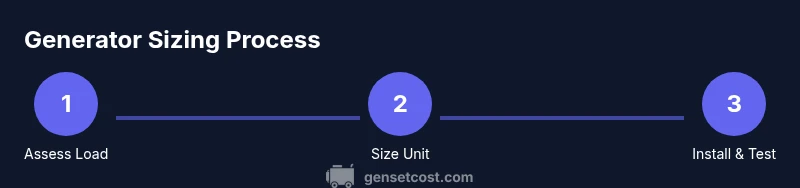
List essential circuits and estimate their running and starting watts. Use appliance manuals or a watt meter to determine realistic demands. This step defines the minimum generator size to cover essential power without overbuilding.
Tip: Document both peak and continuous loads; plan for future additions like EV charging or extra HVAC. - 2
Choose the generator size
Select a unit rated for the total running watts plus a buffer for starting surges. Avoid undersizing, which leads to frequent trips, or oversizing, which increases upfront cost and fuel use. Compare at least two reputable models.
Tip: Allow for a 20–25% safety margin to accommodate load growth. - 3
Plan the transfer switch
Decide between a manual or an automatic transfer switch. An automatic switch reduces outage time and improves safety, but may cost more upfront. Ensure the switch is compatible with your panel and generator.
Tip: Have the installation designed by a licensed electrician to meet local codes. - 4
Prepare the installation space
Choose a dry, well-ventilated outdoor location with ample clearance from structures and openings. Install proper exhaust routing, ignition protection, and weatherproof enclosure if needed. Signal and control wiring should follow code requirements.
Tip: Never place a generator indoors or in an enclosed space due to CO risk. - 5
Perform wiring and connections
Connect the generator to the transfer switch and the home’s panel per the manufacturer and local code. Verify grounding, fusing, and circuit compatibility. Do not bypass safety features.
Tip: Double-check neutral and ground connections to avoid stray currents. - 6
Test operation and safety checks
Run a controlled test to verify automatic start, transfer delay, and load distribution. Check for abnormal noises, overheating, or fuel issues. Record any faults and address them before full-time use.
Tip: Keep a log of test results for maintenance planning. - 7
Develop a maintenance plan
Schedule regular oil changes, filter replacements, and battery checks. Use manufacturer recommendations to set service intervals and preserve warranty coverage. Regular testing helps catch issues before outages occur.
Tip: Rotate fuel periodically to prevent stale fuel from degrading performance.
People Also Ask
What does 'drawing power' mean in generator operation?
Drawing power refers to supplying your home’s electrical loads with a generator, while managing startup surges and ensuring the unit isn’t overloaded. It requires proper sizing, a safe transfer switch, and correct wiring to maintain reliability during outages.
Drawing power means the generator supplies your home's loads safely with appropriate sizing and a transfer switch. This ensures outages are handled without overloads.
How do I determine the right generator size for my home?
Start by listing essential circuits and their wattage, then add a buffer for starting surges. Compare running watts versus starting watts and choose a model that covers the total running load plus surge. When unsure, consult a professional.
Begin with essential loads and their wattage, add a surge buffer, and pick a model that covers running and surge loads. When in doubt, ask a professional.
What are the main cost factors beyond the upfront price?
Beyond purchase price, consider fuel type and efficiency, installation, transfer switch, maintenance, and possible upgrades to your electrical panel. Long-term running costs depend on fuel price and consumption patterns.
Beyond price, fuel type, installation, and maintenance drive long-term costs. Fuel price affects running costs over time.
Do I need a transfer switch?
A transfer switch is strongly recommended for safety and reliability. It prevents back-feeding into the utility grid and ensures orderly switching between power sources.
Yes, a transfer switch is essential for safe, reliable operation and to prevent back-feed.
What maintenance is required for a generator?
Regular oil changes, filter replacements, battery checks, and periodic exercise runs are part of normal maintenance. Follow the manufacturer schedule to protect warranty and performance.
Keep up with oil changes, filters, and battery checks, and run it periodically to stay ready.
Is it safe to run a generator indoors during a power outage?
No. Generators produce carbon monoxide, which is deadly in enclosed spaces. Always place the unit outdoors, with proper ventilation and clearances.
Never run a generator indoors or in enclosed spaces; run it outside with ventilation.
Watch Video
Key Takeaways
- Size by load, not guesswork or slogan.
- Use a transfer switch to ensure safe, automatic power transfer.
- Factor in fuel type, availability, and long-term costs.
- Plan maintenance to protect warranty and reliability.
- Consult a licensed electrician for installation.