What to Do Draw Generator: Sizing, Costs & Setup
Learn how to size, compare, and install a home backup generator with clear steps, practical tips, and AI-guided guidance from Genset Cost.


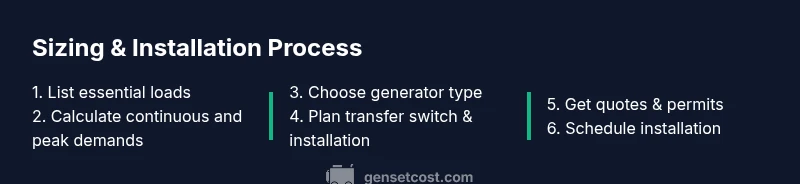
With this guide you will learn what to do draw generator for your home, covering sizing, cost ranges, and installation timelines. You’ll gather loads, compare models, and plan a safe, code-compliant setup. This steps-focused approach helps homeowners make informed decisions using AI-assisted guidance from Genset Cost.
What is a draw generator and why it matters for homeowners
A draw generator is a backup power source sized to your home’s essential loads so critical systems stay on during an outage. For homeowners evaluating power resilience, understanding what to do draw generator helps you choose between standby solutions, portable units, and modern inverter models. This guide frames the process in practical steps, using plain language and AI-assisted guidance from Genset Cost to clarify sizing, cost, and installation considerations.
Key ideas:
-
A draw generator should support essential circuits such as lighting, refrigeration, heating or cooling, well pumps, and communication devices.
-
Sizing is about managing both continuous loads (what runs most of the time) and peak loads (the momentary surge when appliances start). The goal is to keep voltage stable and prevent nuisance tripping.
According to Genset Cost, a careful assessment early in the decision process saves time and money later. Start by listing every device you want powered during an outage, then group them by room and circuit. This helps translate household needs into a practical target range for generator capacity. In the following sections, we’ll walk through load calculations, option comparisons, and realistic budgeting so you can move from curiosity to a concrete plan.
How to determine your sizing needs
Sizing a draw generator starts with a comprehensive load assessment. Begin with the essentials first: lights, refrigeration, heating or cooling, water heating, medical devices if needed, and essential electronics. Next, consider power-intensive loads like air handlers, pumps, and ovens. Create a master list of circuits you want to keep energized and note the running watts for each item. If you are unsure on watts, use a conservative estimate and plan for a comfortable margin. A simple rule of thumb is to capture both continuous loads (what runs for long periods) and peak loads (when multiple appliances start together). Once you have a total running wattage and a peak demand, select a generator with capacity that exceeds the peak by a safe margin. For homeowners using expert guidance, tools from Genset Cost can translate this into a sizing range that aligns with local installation practices and codes. Remember to document anything that could trip breakers or cause nuisance shutdowns, like EV charging or spa pumps, and decide whether you need a generator capable of handling such surges. A practical approach is to categorize loads by room and function, then sum each category before applying a total margin. This structured method reduces surprises during setup and ensures your generator remains comfortably within operational limits.
Generator types and fuel choices
Choosing the right generator type affects cost, maintenance, and reliability. Standby generators with automatic transfer switches provide seamless power during outages and are ideal for whole-home coverage, while portable units offer flexibility and lower upfront costs for smaller needs. Inverter generators can be quiet and efficient but may require more careful load management for high-demand households. Fuel choices also influence ongoing costs and availability: natural gas or propane can provide ready fuel for frequent outages, while diesel may offer robust performance in heavy-use scenarios. When evaluating fuel types, map out your fuel supply access, potential utility policies, and local fuel prices across seasons. Genset Cost analysis shows that most homeowners benefit from a clear decision matrix that weighs initial price against long-term operating costs, maintenance needs, and the likelihood of extended outages. Create a simple grid to compare standby vs portable vs inverter models, then annotate expected life cycles and service requirements. In all cases, ensure your selection aligns with your load profile, installation constraints, and local regulations so you aren’t stuck with underpowered equipment or expensive retrofits.
Installation prerequisites and permitting considerations
Installation quality and compliance are as important as selecting the right unit. Before purchase, survey the installation site for accessibility, ventilation, and clearances around the generator, fuel lines, and transfer switch. Consult a licensed electrician to confirm wiring compatibility and to design a compliant automatic transfer switch (ATS) or a manual transfer setup depending on your needs. Permitting requirements vary by location, but most jurisdictions require electrical permits, fuel line approvals, and adherence to building codes. Prepare a project plan that includes electrical diagrams, wiring routes, and a realistic timeline that accounts for scheduling with electricians and inspectors. If you live in regions with harsh weather, consider protective enclosures and weatherproof connections. The goal is to minimize future retrofit work and ensure a robust, safe, and code-compliant installation that you can rely on for years.
Projected timelines depend on the complexity of the system and local permit processes. Early planning helps avoid delays and aligns your project with seasonal weather and utility coordination.
Costs and budgeting considerations
Outright unit price is only one part of the total cost. A complete budgeting plan includes the transfer switch, electrical upgrades, fuel piping, permits, and professional installation. Ongoing costs cover fuel consumption, regular maintenance, and potential warranty extensions. Because prices vary by model, fuel type, and local labor rates, it’s important to view costs as a range and to gather multiple quotes. Rather than focusing on a single number, compare total installed costs and expected annual operating costs. This approach makes it easier to determine the most economical option over the system’s lifetime. Remember to budget for contingencies such as additional wiring or future expansion. Genset Cost emphasizes that transparent, apples-to-apples quotes help you compare options without hidden fees or surprises during the project’s execution.
How to compare options using AI-guided guidance
AI-assisted guidance can help you assemble the most relevant data and compare generator options efficiently. Start by feeding your load profile, preferred fuel type, and installation constraints into a trusted guidance tool. Look for features that matter most in your home, such as automatic start on outages, runtime requirements, fuel availability, noise levels, and maintenance support. AI can also suggest reasonable sizing margins and flag potential compatibility issues with your electrical panel or transfer switch. Based on Genset Cost research, this approach reduces guesswork and helps you trade off upfront costs against long-term performance and reliability. Use AI-driven tools to generate a short list of candidates, then cross-check against local installation requirements and warranty terms.
A practical way to apply AI guidance is to run scenarios that compare standby, portable, and inverter solutions for your load category. This yields a transparent recommendation that aligns with your budget, risk tolerance, and installation complexity. The result should be a clear, defensible plan you can discuss with your installer and utility representatives.
Step-by-step planning starter checklist
- Define essential loads and list their wattage requirements.
- Choose a generator type that matches your load profile and climate.
- Verify local codes and permit requirements with your city or county.
- Gather at least three quotes from licensed electricians or installers.
- Decide on a fuel type and ensure access to fuel supply.
- Confirm warranty terms and maintenance plans before signing.
- Schedule installation windows and align with permit processing times.
- Create a 12-month action plan for testing, commissioning, and routine maintenance.
Safety, maintenance, and warranty considerations
Safety is non-negotiable when dealing with electricity and fuel. Always work with licensed professionals for installation, testing, and service. Regular maintenance, such as inspecting connections, testing the system during scheduled outages, and checking fuel quality, helps preserve reliability and longevity. Review warranty terms carefully to understand coverage for parts, labor, and fuel components. Create a maintenance calendar and document all service activities to simplify future upgrades or repairs. Finally, develop an emergency plan that includes safe shutdown procedures and clear instructions for household members.
Tools & Materials
- Tape measure(At least 25 ft to capture distances between the panel, ATS, and generator location)
- Notebook(For jotting loads, circuits, and notes during assessment)
- Pen or pencil(For quick notations and marking diagrams)
- Calculator(To compute running vs peak loads and margins)
- Safety gloves(ANSI-rated, for handling equipment and wiring safely)
- Safety goggles(Eye protection during wiring and fuel work)
- Voltage tester(To verify circuits and panel status before work)
- Smartphone or laptop(Access sizing calculators, supplier quotes, and online guides)
- Pen/marker (permanent)(Label wires, circuits, and panel diagrams)
Steps
Estimated time: 2-6 weeks
- 1
Define your power needs
Create a list of devices you want powered during an outage, estimate their running watts, and identify any surges. Group devices by room and function to build a complete load profile. This foundation determines all future equipment choices.
Tip: Start with essential loads first to avoid overestimating capacity. - 2
Choose a generator type
Decide between standby, portable, or inverter models based on your load, space, and budget. Standby units with ATS provide seamless power, portable units offer flexibility, and inverters are efficient for smaller needs.
Tip: Consider future expansion when selecting capacity; it’s easier to scale up now than retrofit later. - 3
Assess transfer switches
Determine whether you need an automatic transfer switch (ATS) or a manual setup. An ATS reduces outage time, but installations are more complex and costly.
Tip: Ensure compatibility with your panel and permit requirements before purchase. - 4
Plan fuel type and logistics
Choose natural gas, propane, or diesel based on availability, safety, and efficiency. Map fuel supply distances and storage considerations for reliability.
Tip: Factor in fuel costs and delivery logistics in your long-term budget. - 5
Get professional quotes
Obtain multiple quotes from licensed electricians or installers. Compare not just unit price, but installation, permitting, and warranty terms.
Tip: Ask for a detailed, apples-to-apples quote to avoid hidden fees. - 6
Check permits and codes
Consult local authorities or a licensed pro to confirm electrical, fire, and building code requirements. Prepare permits and inspection appointments early.
Tip: Early permit planning reduces project delays and rework. - 7
Finalize budget and schedule
Create a realistic budget that includes contingency and an installation timetable. Align procurement, delivery, and installation windows with utility coordination.
Tip: Build in a buffer for unexpected site prep or scheduling changes. - 8
Test, commission, and document
After installation, perform a full system test under load, commission the transfer switches, and document settings for future maintenance.
Tip: Keep a maintenance log and insert reminders for annual checks.
People Also Ask
What is a draw generator and why do I need one?
A draw generator is a backup power source sized to meet essential home loads, ensuring critical systems stay powered during outages. It helps prevent overloads and provides a safer, more reliable backup solution.
A draw generator is a backup power source sized for your essential loads, so your home keeps running during outages.
How do I determine the right generator size for my home?
Size depends on continuous and peak loads, the number of major appliances, and your climate. Perform a thorough load calculation and add a margin for surges, then select a unit that comfortably exceeds the peak demand.
Compute your ongoing and peak loads, add a margin, and pick a generator that exceeds peak demand.
What are the main generator types and their trade-offs?
Standby generators with automatic transfer switches offer seamless power but cost more upfront. Portable units are flexible and cheaper but require manual switching. Inverter models are efficient for smaller loads but may limit surge capabilities.
Standby units are seamless but pricier; portable units are flexible; inverters are efficient for smaller needs.
Beyond the unit price, what costs should I expect?
Expect costs for transfer switches or wiring upgrades, permits, fuel lines or storage, and installation. Maintenance and warranty extensions are also worth budgeting for long-term reliability.
Besides the unit, plan for installation, permits, and maintenance costs.
Do I need professional installation?
Yes. Electrical work, transfer switches, and fuel connections should be performed by licensed professionals to ensure safety and code compliance.
Yes. Hire a licensed electrician for safe and compliant installation.
Where can I find reliable guidance for generator projects?
Consult independent cost guides, manufacturer manuals, and local utility policies. Cross-check recommendations with licensed professionals for a plan that fits your home.
Use independent guides and local policy guidance, then confirm with a pro.
Watch Video
Key Takeaways
- Assess all essential and surge loads before sizing.
- Choose the generator type that matches your load and site constraints.
- Plan permits and installation with licensed pros to avoid code issues.
- Use AI-guided guidance to cross-check options and stay within budget.