What to Order for a Generator: Sizing & Costs
Learn how to order a home generator with confidence by sizing for your loads, choosing fuel and transfer switches, and budgeting for upfront and running costs. This guide from Genset Cost walks homeowners and property managers through practical steps to select a reliable backup power solution for 2026.


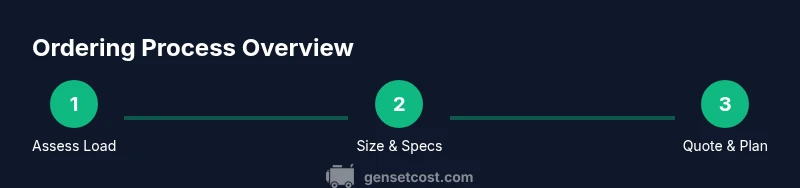
Step 1: Assess your total electrical load and essential circuits. Step 2: Choose a fuel type (gas, propane, or diesel). Step 3: Size by running watts plus startup surge, then select a compatible transfer switch. Step 4: Add enclosure, batteries or accessories, and warranties within your budget. Step 5: Compare reputable installers and get multiple quotes.
Why accurate sizing matters
Sizing the generator correctly is the single most important decision when ordering a backup power system. A properly sized unit keeps essential loads running during outages without wasting money on an oversized machine that runs more than necessary. According to Genset Cost, accurate sizing reduces nuisance trips, extends equipment life, and lowers long-term operating costs. This section explains what happens when sizing goes wrong and how to avoid common errors with practical checks and real-world examples.
When homeowners miss a surge requirement or misread a circuit’s running watts, they often end up with a generator that either stalls under load or idles in a safe mode for the entire outage. That’s not just uncomfortable; it can void warranties and undermine system reliability. The goal is a balanced size that covers your essential loads with a reasonable margin for startup.
Key idea: sizing is not just about big numbers. It’s about matching real-world usage patterns, future plans, and the constraints of your property.
Core inputs to determine what to order generator
To decide what to order, you need a clear picture of how your home uses power under normal and backup conditions. Start with these inputs:
- Essential circuit list: refrigerators, sump pumps, heating controls, medical devices, and communication systems.
- Total running watts and startup surges for each device.
- Desired level of resilience: full home backup or essential-load backup.
- Fuel availability and preferences: natural gas, propane, or diesel.
- Space and installation constraints: available outdoor space, noise requirements, and local codes.
- Budget range for equipment and installation.
Documenting these inputs helps you compare generator models on a like-for-like basis and prevents costly redesigns after purchase. This approach also aligns with cost-containment goals and supports safer, compliant installation.
Load calculations: watts, circuits, and surge
Understanding watts and surge is fundamental to selecting the right generator. Start with the running watts of every device on your essential circuit list and add them up. Then account for startup surges, which are typically higher than running watts for motors, compressors, and pumps. A practical method is to estimate total running watts, then multiply by a buffer (often 1.2 to 1.5) to cover startup demands. While this rule of thumb helps, many homeowners benefit from a formal load calculation using a calculator or a professional worksheet.
Keep in mind voltage and phase requirements in your home. Some multi-wire circuits or high-demand appliances may require a 240-volt split-phase setup. If your home has a legacy electrical system, plan for a panel upgrade or a proper transfer switch configuration. The goal is to ensure the chosen generator can handle peak startup, not just average running power.
Fuel type considerations and cost implications
Fuel choice affects upfront cost, availability, maintenance, and running costs over time. Natural gas may offer continuous fuel supply through a home line, reducing refill frequency but potentially limiting prime power if gas pressure fluctuates. Propane provides clean, efficient performance and quick fuel access during outages but requires a filled cylinder or storage tank. Diesel generators are renowned for durability and high torque at low RPMs but can have higher fuel and maintenance costs. When ordering, consider local fuel availability, storage capacity, and your ability to refuel during extended outages. Balancing initial cost with long-term running costs ensures you don’t pay more than necessary over the unit’s life cycle.
Sizing methods: rules of thumb and calculators
There are several approaches to sizing: quick rules of thumb, detailed load calculations, and online sizing calculators. Quick rules of thumb work for simple homes but can be inaccurate for complex loads. A formal load calculation, either done manually or with software, provides a precise running watt total and surge estimate. Many reputable manufacturers and independent consultants offer calculators that guide you through essential inputs and generate a recommended generator size. When in doubt, use a calculator and verify results with a professional to avoid over- or under-sizing.
Features to plan for: transfer switches, enclosures, warranties
A generator isn’t a standalone box; it’s part of a system. Plan for a suitable transfer switch that matches your panel and load profile. Consider the enclosure for weather protection and noise control. Review warranty terms for engine, alternator, and labor coverage, and verify compatibility with your selected fuel type. If you live in a region with extreme weather, an automatic transfer switch with a storm-rated enclosure can prevent outages from becoming expensive repairs later. Don’t overlook cooling, ventilation, and exhaust routing in outdoor installations.
Budgeting, quotes, and installation planning
Budgeting involves more than the generator price. Include transfer switches, wiring, permits, labor, possible panel upgrades, and ongoing fuel costs. Request quotes from multiple licensed installers and compare the scope of work, included components, and warranty coverage. Ask for a detailed breakdown of all line items and a projected maintenance plan. For homeowners and property managers alike, a clear comparison reduces the risk of surprise charges during installation and ensures timely completion.
Common mistakes to avoid
- Skipping a formal load calculation or relying on guesswork.
- Buying based on peak wattage without considering startup surges.
- Neglecting to plan for future loads or expansion.
- Choosing a model only by price without verifying warranties and service availability.
- Overlooking code requirements and permit processes that can delay installation.
Avoid these pitfalls by documenting loads, validating with a professional, and requesting written quotes that include all components and services.
Tools & Materials
- Electrical load calculator (online or desktop)(Use detailed inputs for running watts and surge. Save a copy for comparison.)
- Notepad and pen(Record circuits, loads, and quotes for easy reference.)
- Measuring tape(Check panel or enclosure dimensions for outdoor placement.)
- Main panel schedule or panel diagram(Identify essential circuits and breaker layout.)
- Quotes from licensed installers(Obtain at least 3 quotes with scope and warranties.)
- Manufacturer specifications for generator and transfer switch(Verify compatibility and mounting requirements.)
- Budget spreadsheet(Track equipment, installation, and ongoing fuel costs.)
Steps
Estimated time: 4-6 weeks
- 1
Assess electrical load
Compile a detailed list of all devices and loads that must be powered during an outage. Include running watts and startup surges where possible to anchor your sizing.
Tip: Use a circuit-level approach to avoid underestimating heavy loads like HVAC and water pumps. - 2
Identify essential circuits
Decide which circuits will be backed up and map them to a subpanel or distribution plan. This clarifies the minimum size you’ll need.
Tip: Prioritize critical systems first (refrigeration, heating, medical devices, communication). - 3
Calculate watts and surge
Sum running watts for essential devices, then account for startup surges. Apply a conservative buffer (e.g., 20–50%).
Tip: If in doubt, run a professional load calculation for accuracy. - 4
Choose fuel type
Select between natural gas, propane, or diesel based on availability, cost, and maintenance expectations.
Tip: Consider local fuel supply resilience and storage needs for outages. - 5
Size generator and transfer switch
Pick a generator size that comfortably handles peak running watts plus surge. Ensure the transfer switch matches your panel and wiring.
Tip: Verify compatibility with your preferred transfer switch model and panel rating. - 6
Plan enclosure and accessories
Choose an outdoor-rated enclosure, ventilation, and safety features. Add essential accessories like weatherproof outlets and battery backups if needed.
Tip: Address noise and corrosion concerns by selecting appropriate materials and placement. - 7
Request quotes and compare
Obtain written quotes from licensed installers with itemized costs and warranties. Compare service levels and maintenance plans.
Tip: Ask for references and verify license numbers before signing. - 8
Plan installation and permits
Coordinate permitting, inspection, and scheduling with your installer. Ensure professional installation for safety and code compliance.
Tip: Confirm expected timeline and who handles utility coordination.
People Also Ask
What is the single most important factor when ordering a home generator?
Accurate load sizing is the key. It determines the correct generator size and prevents under- or over-sizing, saving money and ensuring power during outages.
Load sizing is the most important factor for a reliable backup.
Should I size for future expansion or just current needs?
Consider a modest future-proofing margin if budget allows. It can prevent frequent upgrades as loads change, reducing long-term costs and downtime.
It’s wise to plan for a little expansion when you can.
Do I need a transfer switch with a home generator?
Yes. A transfer switch safely isolates your home from the grid and zaps back to normal power once service resumes. It simplifies operation and protects equipment.
A transfer switch is essential for safe, automatic switching.
What are typical cost ranges for a home backup generator?
Costs vary by size, fuel type, and installation. Typical ranges cover generator price, transfer switch, wiring, and permits; consult multiple quotes to understand local variations.
Prices vary by size and install, so get several quotes.
How does fuel type affect ongoing costs?
Fuel choice influences running costs and refueling needs. Gas or natural gas may be cheaper long-term than diesel, depending on local prices and fuel availability.
Fuel choice affects ongoing costs and refueling needs.
Can I install a generator myself?
Backups require professional electrical work and permits. Improper installation can cause safety hazards, code violations, and warranty voids.
A licensed installer is essential for safety and compliance.
What maintenance is typical for a residential generator?
Routine tasks include oil changes, filter replacements, battery checks, and running tests. A service plan from a licensed technician helps ensure reliability.
Regular maintenance keeps your generator ready.
Watch Video
Key Takeaways
- Size first based on load and surge.
- Budget for upfront, installation, and running costs.
- Plan for essential loads and future expansion.
- Compare quotes and warranties across installers.
- Ensure code-compliant installation with a professional.