How to Size a Generator for House: A Homeowner's Guide
A comprehensive, step-by-step guide to sizing a home generator for reliable backup power, including load calculation, essential loads, and safety considerations for 2026.


Sizing a home generator correctly ensures you stay powered during outages without overspending. This guide explains how to size by calculating running and starting watts, prioritizing essential loads, and choosing a generator size range with margin for future needs. Follow these steps to avoid under- or over-sizing and meet code requirements. Quick, practical steps help homeowners and property managers plan effective backups.
How sizing a home generator matters
Sizing a generator for a house is not only about picking a number off a chart. It determines how reliably you stay powered during outages, how much fuel you burn, and how much you spend upfront and over time. According to Genset Cost, the most robust approach begins with a thoughtful load calculation rather than guesswork. You must distinguish between essential loads that must stay on during an outage and nonessential loads that can wait. Understand the difference between running watts (the continuous power a device uses) and starting watts (the surge required when motors start). Factors such as climate, heating or cooling systems, water heating, refrigeration, and electronics all influence the result. The goal is to size so your basement, kitchen, and living spaces retain the power you rely on, while keeping within your service panel’s capacity and local electrical codes. A well-sized system also minimizes generator run time, reduces wear, and improves long-term reliability for 2026 home backup strategies.
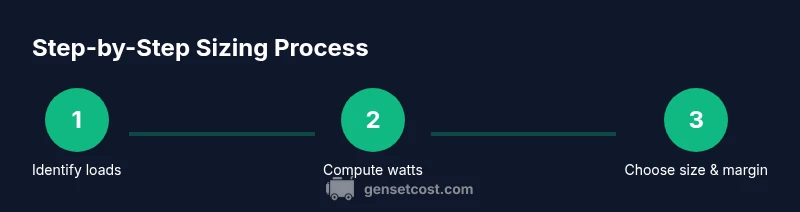
Step 1: Identify essential versus nonessential loads
Begin by listing devices you must have during an outage. Essential loads typically include refrigeration for food safety, heating or cooling controls for comfort, water heating, sump pumps, medical equipment if applicable, lighting, and communication devices. Nonessential loads include optional entertainment systems, spare outlets, and secondary circuits that can be curtailed during an outage. By clearly tagging items as essential or nonessential, you create a baseline that anchors your sizing effort. This step reduces the risk of oversizing or undersizing and makes it easier to justify a recommended generator size to your installer or electrician. Keep in mind that some loads have a startup surge—HVAC units and well pumps, for example—that should be anticipated in later calculations.
Step 2: Gather panel and appliance wattage data
To size accurately, collect voltage and wattage information from your main service panel and each appliance. Look for nameplate data on equipment that shows running watts or VA (volt-amps), and note the circuit’s amperage rating. If a device lists only amperage, you’ll need to convert using standard formulas or refer to the manufacturer’s specifications. For complex systems like multi-stage furnaces or heat pumps, consult the manuals or a professional. This data gathering is the foundation for precise calculations and helps you avoid guesswork when you or your contractor is determining the correct generator size.
Step 3: Calculate running watts and starting watts
Sum the running watts of all essential devices to determine your baseline demand. Then account for starting watts for devices with motors—compressors, sump pumps, and air handlers often require a surge when they start. The total of running watts plus the startup surges represents the minimum you’ll want the generator to handle simultaneously. Remember that some equipment may share circuits, so consider how loads interrelate. This step highlights whether you need a modest sized unit for a tight baseline or a larger unit capable of handling multiple surges at once.
Step 4: Apply demand factors and diversity to avoid oversizing
Diversity factors recognize that not all appliances run at full load at the same moment. Applying a reasonable diversity reduction prevents sizing your generator to the sum of all labeled watts. Industry guidelines and code references provide conservative ranges for different home configurations, climate zones, and HVAC setups. Using a measured approach helps you avoid the common pitfall of oversizing, which increases initial cost and ongoing fuel consumption while reducing efficiency. Use credible sources or a professional calculator to choose a realistic demand factor for your home.
Step 5: Size a range and margin for future needs
After calculating the peak demand, select a generator size within a practical range that includes a built-in margin, typically based on your anticipated future loads. A modest margin accommodates planned additions such as electric vehicle charging or extra climate controls without forcing a complete replacement. Don’t chase every potential future need with excessive oversizing; balance cost, fuel economy, and the likelihood of new equipment. A well-chosen range provides flexibility and longer useful life for your backup system while avoiding frequent upgrades.
Step 6: Decide on fuel type, transfer switches, and installation considerations
Choose a fuel type that aligns with your home’s fuel infrastructure and local availability—natural gas, propane, or liquid fuels each have pros and cons. A transfer switch is essential for safe and code-compliant power transfer and eliminates back-feeding risk. Consider the space for the generator, exhaust routing, ventilation, and noise levels suitable for your property. If you’re uncertain about wiring or permitting, a licensed electrician or professional installer can help you plan the layout, safely connect the generator to your home, and secure the necessary permits. This planning reduces risk and simplifies the installation process.
Step 7: Safety, permits, and professional review
Electrical work involves risks, so follow safety protocols and local codes. Turn off power at the main panel before inspecting any circuits and wear PPE. Verify that the installer handles transfer-switch installation and that the panel and service entrance will support the added load. Obtain any required permits, and schedule a post-installation inspection if your jurisdiction requires it. A professional sizing assessment reduces the risk of undersizing or oversizing, improves reliability, and ensures compliance with current standards.
Authority sources and practical references
For further reading on home electrical systems and wiring standards, consult reliable sources such as the U.S. Department of Energy, OSHA safety guidelines for electrical work, and the NFPA’s standards for electrical installations. These references provide context for safe sizing, installation practices, and enforcement expectations to support your decision-making process. Remember to verify any guidance with a local licensed professional, as codes can vary by region and update frequently.
Quick reference checklist and next steps
- Define essential loads and identify nonessential items. - Gather panel and appliance wattage data. - Calculate running and starting watts, including startup surges. - Apply diversity and set a practical size range with margin. - Decide on fuel type and install a transfer switch. - Confirm permits and safety requirements with a licensed professional.
Tools & Materials
- Digital watt-meter(Measure running wattage of appliances and loads)
- Non-contact voltage tester(Verify circuit status and ensure safety)
- Load calculation worksheet(Record appliances and rating data)
- Notebook or laptop(Compute totals and review results)
- Safety gear (gloves, safety glasses)(Protect yourself during electrical work)
- Calculator or sizing software(Optional for quick math checks)
Steps
Estimated time: 60-180 minutes
- 1
Identify essential versus nonessential loads
List items you must have during a power outage. Classify appliances as essential or nonessential, noting their role in comfort, safety, or food preservation. This baseline helps set expectations for the generator size and avoids over- or under-sizing.
Tip: Begin with the fridge/freezer and heating system to establish a baseline. - 2
Gather panel and appliance wattage data
Collect labeled wattage or VA information from the main panel and individual devices. If a label is missing, refer to the manufacturer’s specs or use a credible estimate. Accurate data prevents mis-sizing and ensures code compliance.
Tip: If label data is missing, document sources and plan to confirm with a professional. - 3
Calculate running watts and starting watts
Sum running watts for all essential loads. Add startup surges for devices with motors to understand the maximum the generator must handle at startup. This ensures the unit can handle both steady operation and occasional surges.
Tip: Include a cushion for startup spikes to avoid tripping. - 4
Apply demand factors and diversity to avoid oversizing
Apply practice diversity factors so you aren’t sizing to the sum of all labels. This reflects that not every device runs at full power simultaneously and prevents unnecessary cost and fuel use.
Tip: Cross-check with local guidelines or a sizing calculator for your home type. - 5
Size a range and margin for future needs
Choose a size within a practical range, including a reasonable margin to accommodate planned upgrades. Balance upfront cost and long-term flexibility.
Tip: Avoid extreme oversizing; it reduces efficiency and increases maintenance costs. - 6
Decide on fuel type, transfer switches, and safety
Select a fuel type that fits your infrastructure (natural gas, propane, or diesel). Plan for a transfer switch to safely isolate home power and prevent back-feeding.
Tip: Ensure proper ventilation and clearances around the generator location.
People Also Ask
What is the difference between running watts and starting watts?
Running watts reflect continuous power needs, while starting watts cover the surge when motors start up. Always size for the higher starting wattage of motors in your load list.
Running watts are continuous power; starting watts cover motor surges. Size for the higher starting wattage.
Should I oversize to handle future loads?
It's wise to include some headroom, but excessive oversizing increases cost and reduces fuel efficiency. Aim for a practical range that accommodates a few planned additions.
Plan for some headroom, but avoid overdoing it; find a practical range.
Do I need a professional load calculation?
Yes. A professional load calculation ensures accuracy, safety, and code compliance. It’s especially important for homes with sensitive electronics or complex HVAC.
Yes. A professional load calc helps ensure safety and code compliance.
Which fuel type is best for home standby systems?
The best fuel depends on availability and costs in your area. Natural gas and propane offer reliable supply in many homes, while diesel is common for larger units.
Natural gas or propane work well for most homes depending on your setup.
Is a transfer switch required?
A transfer switch is essential for safe and code-compliant power transfer and prevents back-feeding into the grid.
Yes, a transfer switch is essential for safe switching.
What safety steps should I follow during sizing?
De-energize circuits, wear PPE, and follow local electrical codes. If unsure, hire a licensed electrician.
De-energize circuits, wear PPE, and follow codes; hire a pro if unsure.
Watch Video
Key Takeaways
- Identify essential loads first
- Differentiate running vs starting watts
- Add a safety margin, but avoid oversizing
- Use a transfer switch for safe installation
- Consult a licensed electrician for final sizing and permit compliance